12-06-2026 14:50
 François Freléchoux
Bonjour, Voici la brève description d'une Mollis
10-06-2026 21:16
François Freléchoux
Bonsoir,Le dernier du jour, en attendant votre avi
11-06-2026 19:01
 William Slosse
Hello all,In an attempt to make a culture of a sus
11-06-2026 19:03
 Nicolas VAN VOOREN
Chers membres d'Ascofrance,Le site sera placé en

09-06-2026 18:32
Camille MertensSur morceau de roseau immergé 0,5 - 0,7 mm de dia
10-06-2026 12:54
Steve ClementsBonjour encore, Pouvez-vous m'aider, s'il vous pl
10-06-2026 21:07
François Freléchoux
Toutes les tiges de gentianes jaunes de l'an passÃ
10-06-2026 13:41
François Freléchoux
Bonjour à nouveau, Voici une trouvaille d'hier.
Ascomiceto raro
Pérez Joe,
09-02-2010 19:41
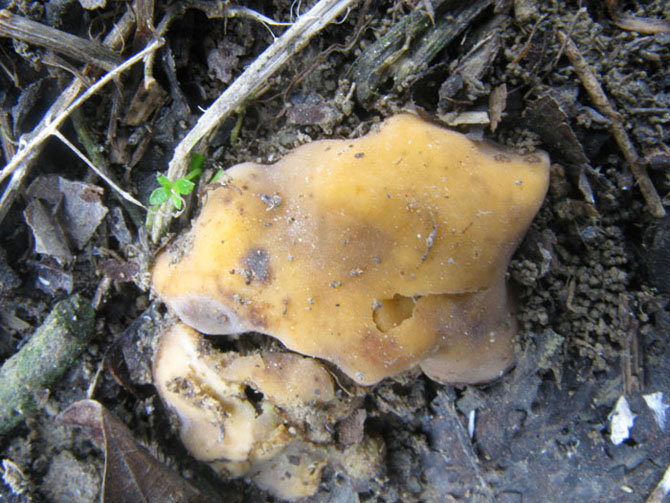
Step image of an ascomiceto collected in the South of Spain. In principle not acknowledge or gender. Is a convex receptacle and gap of about 28 mm long and 12 mm in width. The color is rather Orange. Has a few hyphae in the edge that adhere to the substrate (land and) (Woody remains). The margin is covered with brown hair, wall septados thick and the base emerging globose cell (similar to Tricharina).These are of varied length (I measured one of 700 µm) and rounded apex.The spores are highly variable, with diffuse gútulas up to 22 x 13 µm.ellipsoidal, smooth, hialinas. ASCI not amyloid, with 8 spores uniseriadas, 190 x 15 µm. (base aporrinca). Parafisis multiseptados, hialinos, 5 µm in the sumidad.
Habitat: in the clay soil, covered in sheets humidificadas a walnut on the verge of an olive grove.
This ascomiceto me has baffled. The closest thing It would be macroscópicamente, Rhizina undulata, distances, clear!
Any contribution would be welcome
J.L Pérez Butrón
Paso imágen de un ascomiceto recolectado en el sur de España. En principio no reconozco ni el género. Es un receptáculo convexo y hueco de unos 28 mm de longitud y 12 mm de anchura. El color es más bien anaranjado. Tiene unas hifas en el borde que se adhieren al sustrato (tierra y restos leñosos). El margen está cubierto de pelos marrones, septados de pared gruesa y con la base que emerge de células globosas (similar a Tricharina). Éstos son de longitud variada (he medido alguno de 700 µm) y el ápice redondeado. Las esporas son muy variables, con gútulas difusas de hasta 22 x 13 µm. elipsoidales, lisas, hialinas. Ascas no amiloides, con 8 esporas uniseriadas, de 190 x 15 µm. (base aporrinca). Parafisis multiseptados, hialinos, de 5 µm en la sumidad.
Hábitat: en el suelo arcilloso, cubierto de hojas humidificadas de un nogal, al borde de un olivar.
Me tiene desconcertado este ascomiceto. Lo más parecido macroscópicamente, sería Rhizina undulata, salvando las distancias, claro!
Cualquier aportación será bienvenida
J.L.Pérez Butrón