
14-08-2016 23:15
 Alex Akulov
Dear friendsCan you help me to find the descriptio

05-06-2026 11:02
Thomas Læssøehttps://svampe.databasen.org/observations/10596691
04-06-2026 11:36
Gernot FriebesHi,found on Vaccinium myrtillus.Asci: IKI –, 8-s
05-06-2026 12:10
 François Freléchoux
Capitotricha sp. sur Lonicea caerulea Caractères
19-05-2026 10:27
Patrice TANCHAUDBonjour, récolte récente sur terre retournée i
04-06-2026 18:39
Gernot FriebesHi,I collected this species in two different locat
22-05-2026 13:29
Gernot FriebesHi,I am curious to hear your opinion on this mater
Rutstroemia from a Bosnian mountain
Nihad Omerovic,
28-09-2023 22:11
Looking for opinions on this Rutstroemia; I considered R. alnobetulae - spore size, shape and content match, but there's no IKI blue reaction with paraphyses.
Date: 10. 09. 2023.
Habitat/substratum: peat bog fragment around a mountain stream, 1800 m elevation, with Alnus, Salix, Pinus mugo, on a dead twig, possibly from Alnus glutinosa.
Spore size: Me = 26.5 × 6.2 µm ; Qe = 4.3 (some over 28 µm)
Asci: around 170 µm, croziers +
Could not make proper section - ascoma was gelatinous and then kind of squishy.
Last picture is twig section.

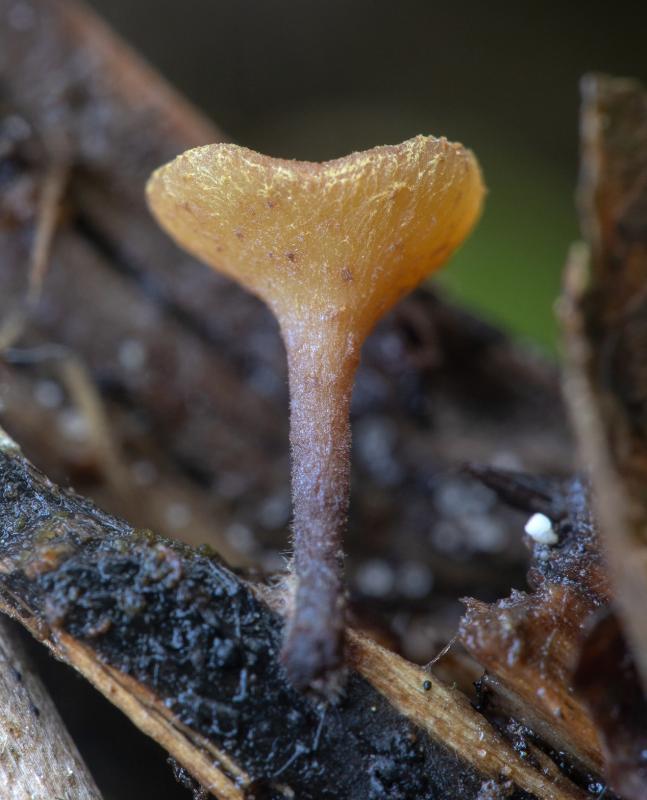
Nihad Omerovic,
28-09-2023 22:13
Re : Rutstroemia from a Bosnian mountain
Macro
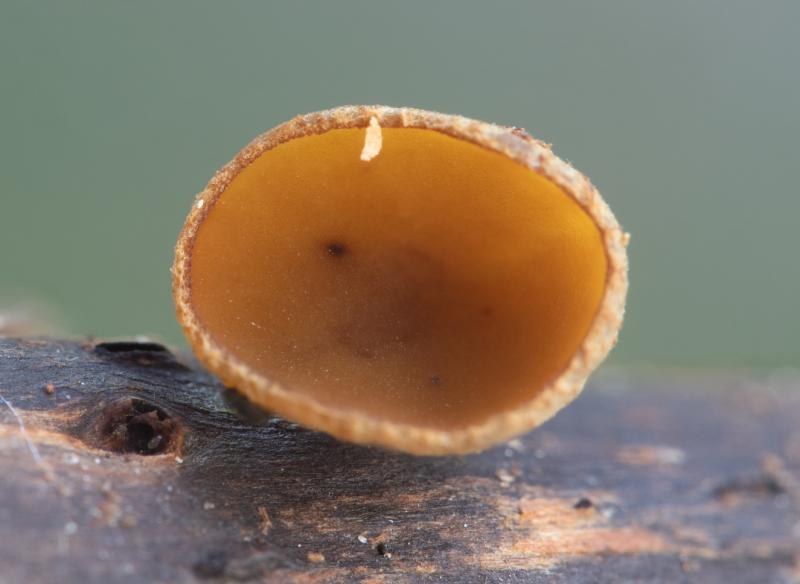
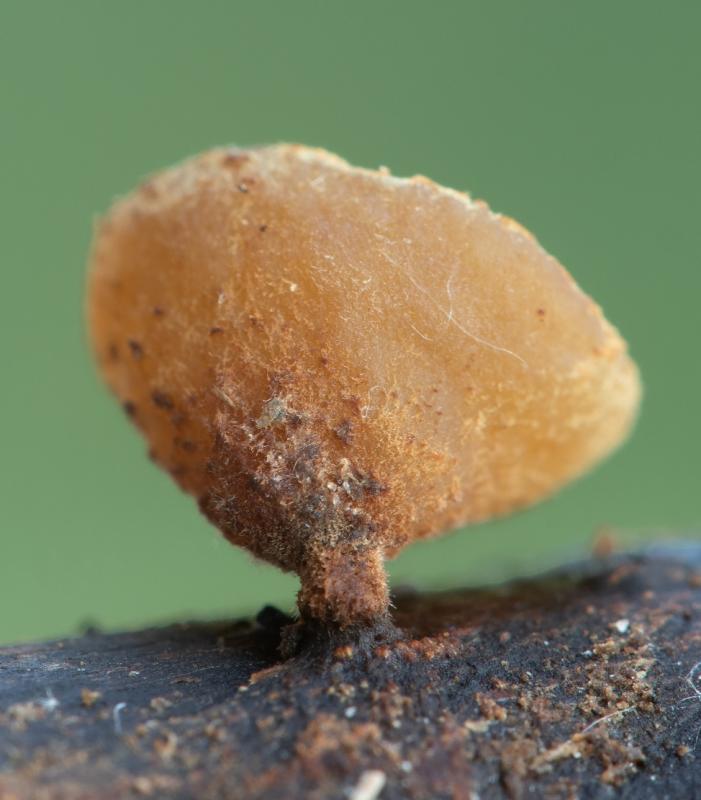
Nihad Omerovic,
28-09-2023 22:20
Re : Rutstroemia from a Bosnian mountain
spores
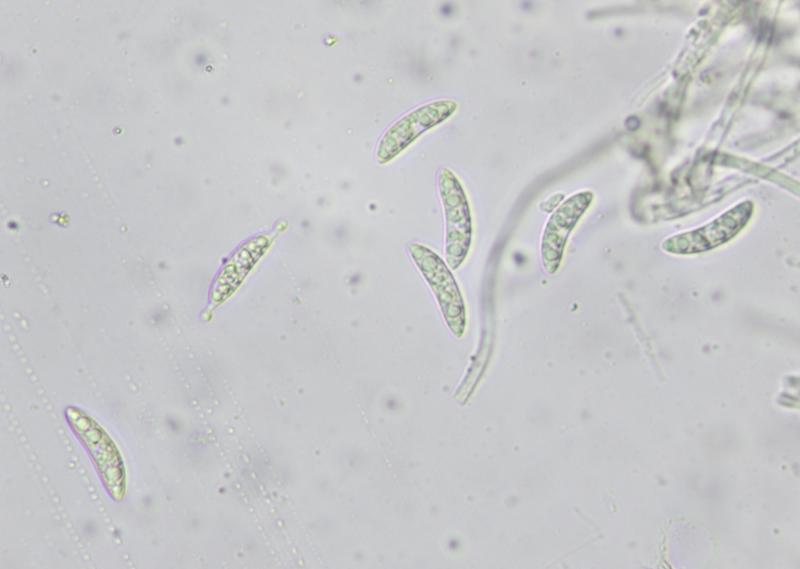

Nihad Omerovic,
28-09-2023 22:22
Re : Rutstroemia from a Bosnian mountain
paraphyses, ascus tip IKI

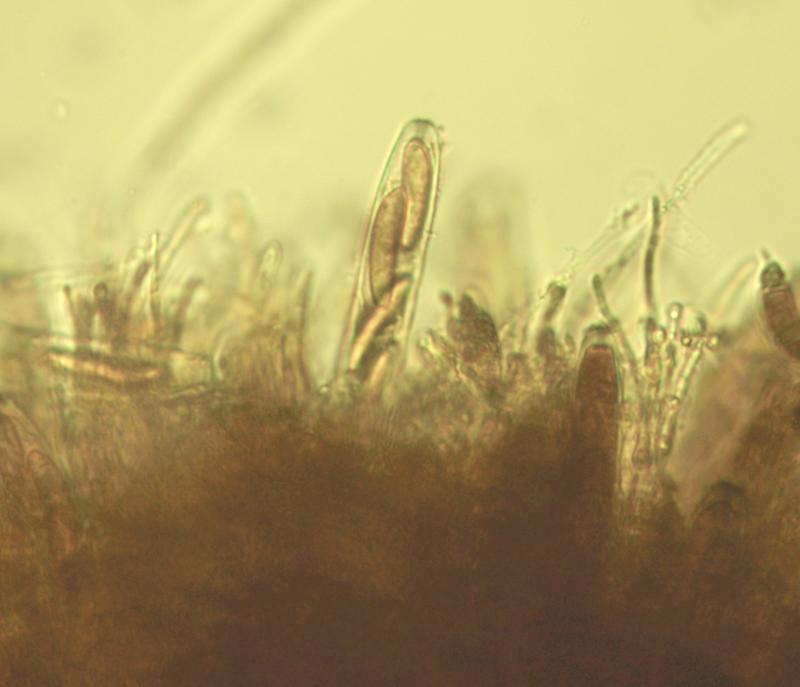
Nihad Omerovic,
28-09-2023 22:23
Re : Rutstroemia from a Bosnian mountain
sections

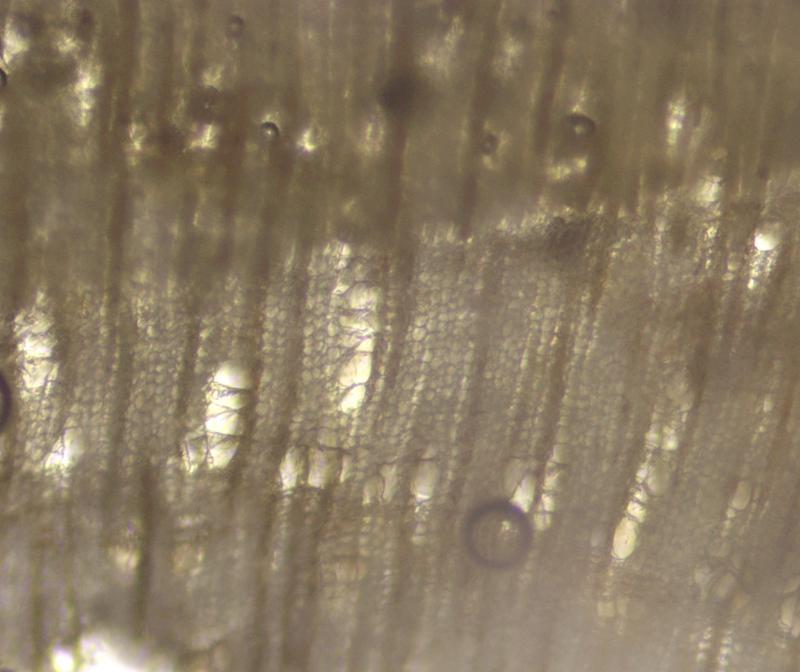
Hans-Otto Baral,
29-09-2023 09:50

Re : Rutstroemia from a Bosnian mountain
Alnus is the only possible genus among the three trees you mentioned. You can verify it by a radial section by looking for the ladder-like perforations.
Spores etc. fit that species. I am not sure how constant this reaction of the VBs is. The VBs look correct. Also I am not sure if this reaction works on herbarium material.
Nihad Omerovic,
29-09-2023 23:27
Re : Rutstroemia from a Bosnian mountain
Thank you.
Radial section:
Radial section:
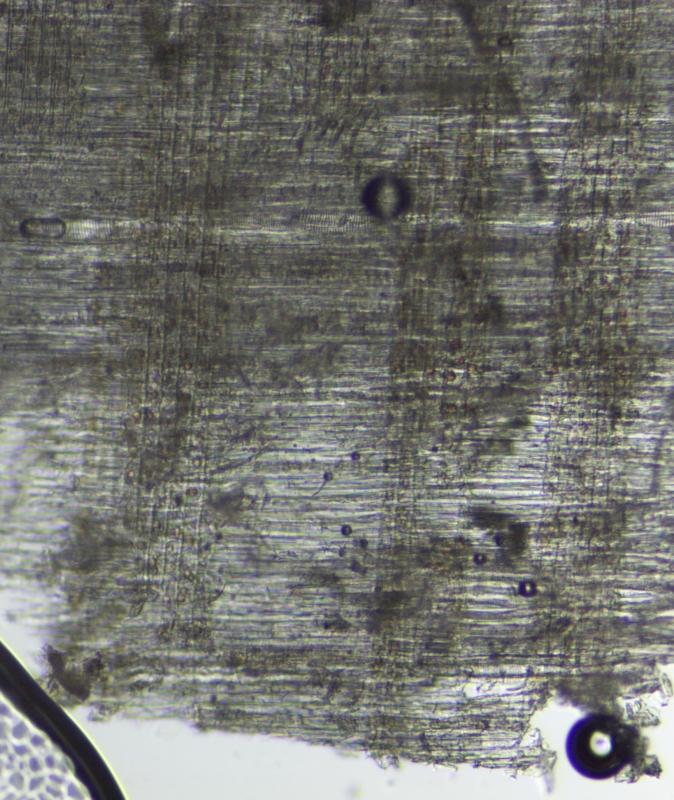
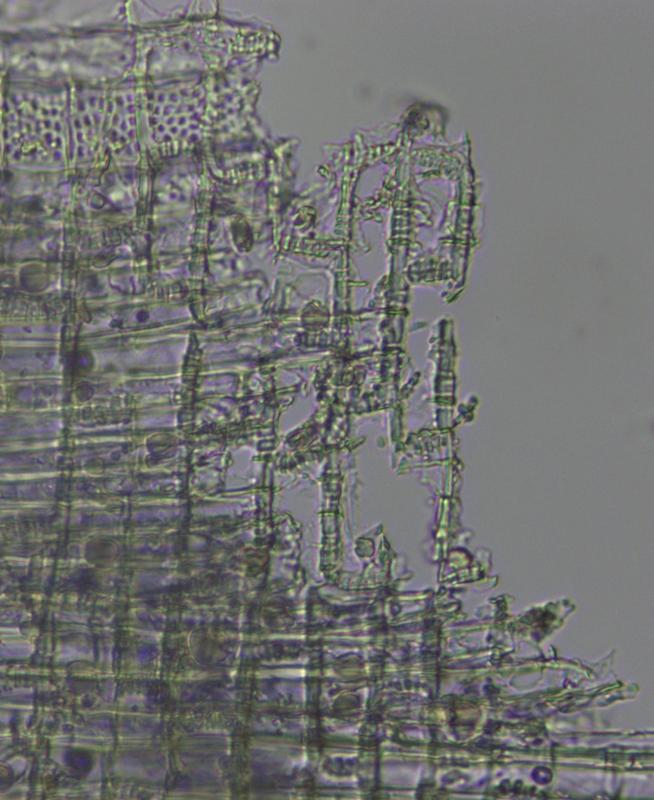
Hans-Otto Baral,
30-09-2023 20:33
Re : Rutstroemia from a Bosnian mountain
Sorry I failed to say that you must hit the vessels. The rows of larger cells in your cross section show such ladders in radial section. Vessels are often very abundant but here they are more scattered. Bad luck!
Nihad Omerovic,
01-10-2023 19:08
Re : Rutstroemia from a Bosnian mountain
Thank you for the explanation.
I made several cuts/photos but posted only these two.
Could this be the "ladder"?
I made several cuts/photos but posted only these two.
Could this be the "ladder"?

Hans-Otto Baral,
01-10-2023 20:36
Re : Rutstroemia from a Bosnian mountain
Yes it is, very good. So it is clearly a Betulaceae and only Betula comes in consideration besides Alnus.