
12-06-2026 14:50
 François Freléchoux
Bonjour, Voici la brève description d'une Mollis
10-06-2026 21:16
François Freléchoux
Bonsoir,Le dernier du jour, en attendant votre avi
11-06-2026 19:01
 William Slosse
Hello all,In an attempt to make a culture of a sus
11-06-2026 19:03
 Nicolas VAN VOOREN
Chers membres d'Ascofrance,Le site sera placé en

09-06-2026 18:32
Camille MertensSur morceau de roseau immergé 0,5 - 0,7 mm de dia
10-06-2026 12:54
Steve ClementsBonjour encore, Pouvez-vous m'aider, s'il vous pl
10-06-2026 21:07
François Freléchoux
Toutes les tiges de gentianes jaunes de l'an passÃ
10-06-2026 13:41
François Freléchoux
Bonjour à nouveau, Voici une trouvaille d'hier.
Conidiomata on Magnolia leaves
Enrique Rubio,
19-11-2019 20:05
 Dear all
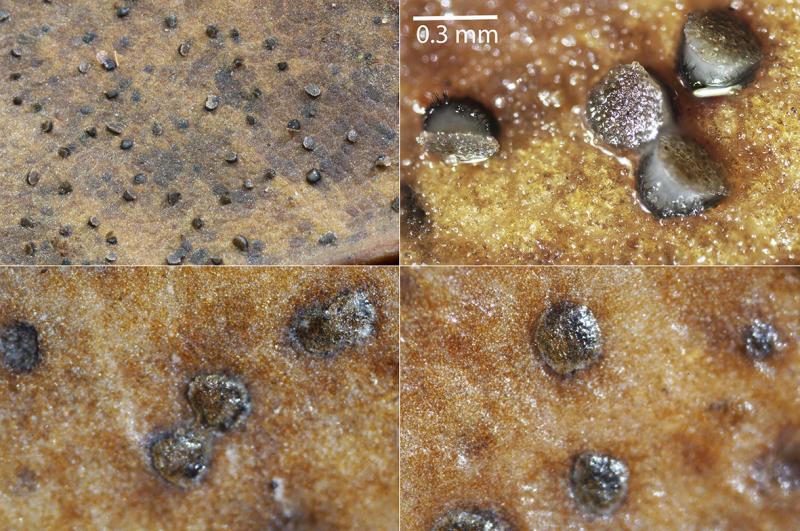
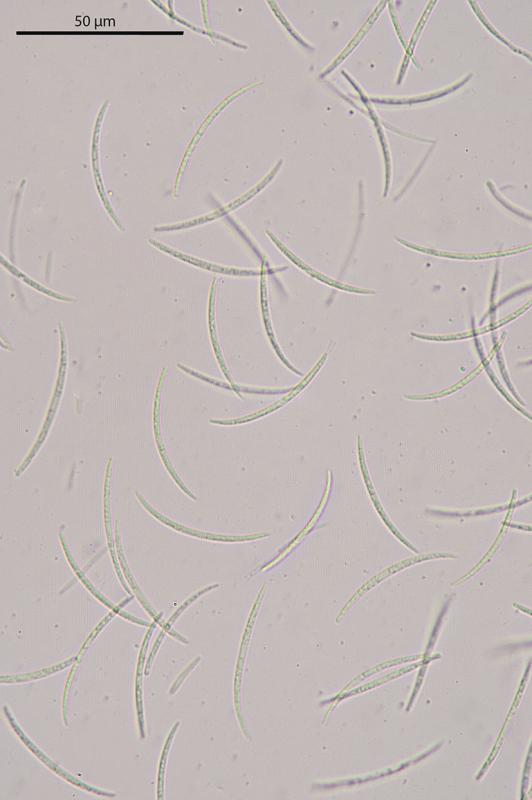
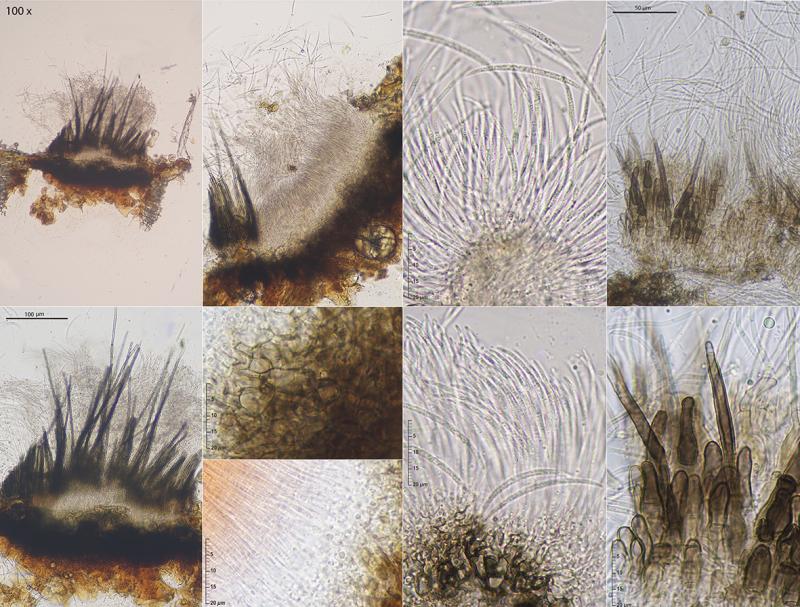
I would very much appreciate any suggestion about this fungus growing on fallen dead leaves of Magnolia grandiflora at the sea level.
The conidiomata (acervular?) are 0.2-0.5 mm in diameter, are opened by means of a lid as in some genera of Helotiales (Hysterostegiella), and they are surrounded by a crown of dark brown setae up to 300 microns long. The conidia seem to be holoblastic, hyaline and sickle-shaped.
Many thanks for help me again

Hans-Otto Baral,
19-11-2019 20:20

Re : Conidiomata on Magnolia leaves
Looks like a Trochila by macroscopy! But possibly not related.