
09-06-2026 18:32
Camille MertensSur morceau de roseau immergé 0,5 - 0,7 mm de dia
10-06-2026 12:54
Steve ClementsBonjour encore, Pouvez-vous m'aider, s'il vous pl

10-06-2026 21:16
 François Freléchoux
Bonsoir,Le dernier du jour, en attendant votre avi
10-06-2026 21:07
François Freléchoux
Toutes les tiges de gentianes jaunes de l'an passÃ
10-06-2026 13:41
François Freléchoux
Bonjour à nouveau, Voici une trouvaille d'hier.
10-06-2026 11:53
Steve ClementsBonjour, This disco is abundant on dead stems of
10-06-2026 10:45
François Freléchoux
Bonjour à nouveau, Encore une détermination qui
08-06-2026 10:16
 Spooren Marco
I don`t have a clou about this fungus,it is not in
10-06-2026 09:24
François Freléchoux
Bonjour, J'imagine que cette détermination ne do
 Hi to everybody
I am surprised with these semi-inmersed perithecia growing in cow dung in southern Spain. There doesn't seem to be a well defined clypeus and the asci are neither amyloid nor dextrinoid, although they have an inconspicuous apical apparatus. The spores, surrounded by a wide gelatinous sheath after its expulsion from the asci, have no germ slits and they have a small caudal hyaline dwarf cell and an apical germinative pore.
In theory the closest genus should be Hypocopra, but there are many evidences and contradictions against this genus.
Do you have any idea that might help me?
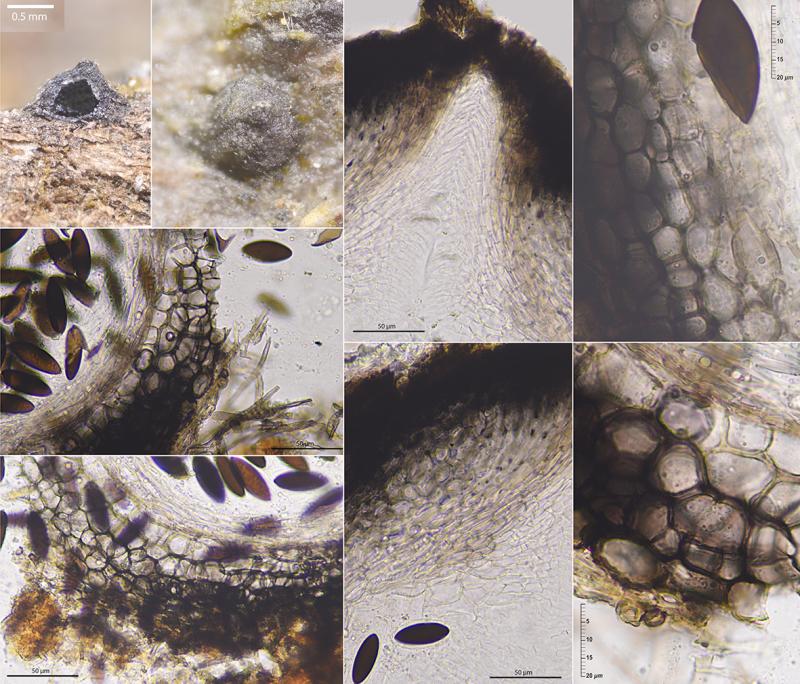
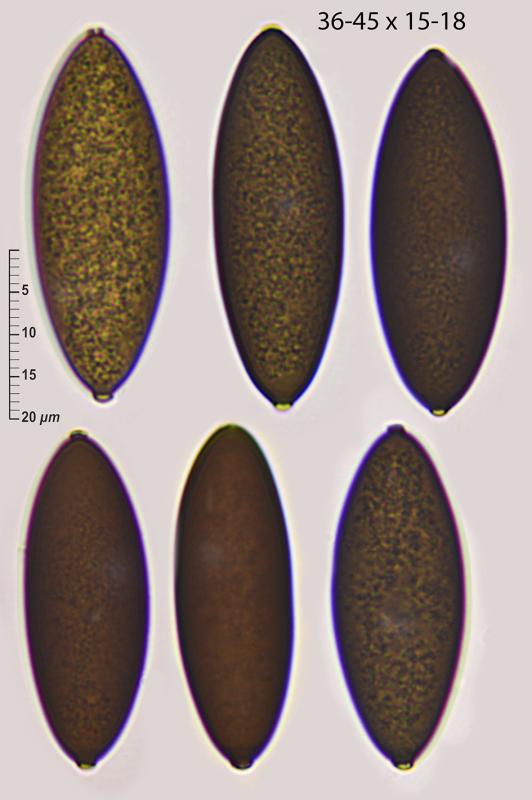
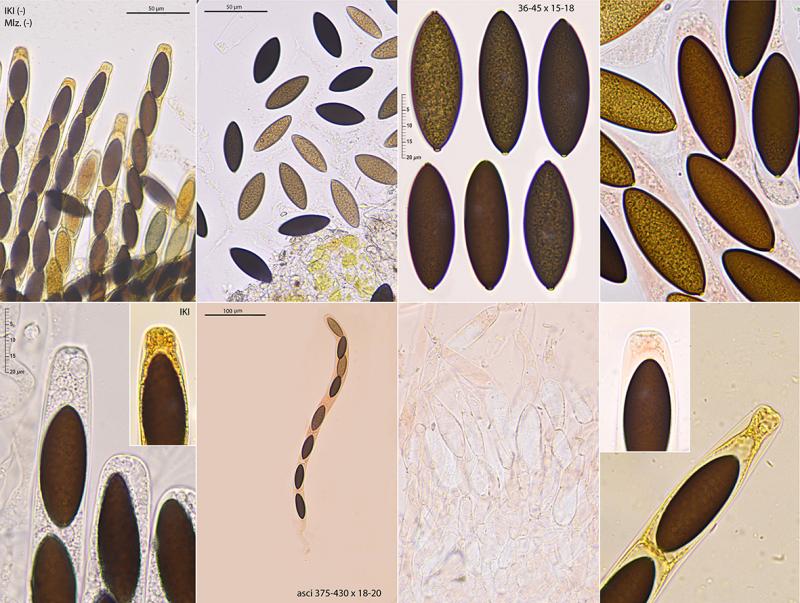

I'm so glad to hear from you.
I guess this mushroom needs to be sequenced. I will keep you informed.
Thanks again.

Cheers,
Andy

Not at all certain that it is an Apodospora; normally this genus has only one germinating pore, but it seems on Enrique's pictures that the spores have two pores. Normally they also have a gelatinous envelope.
Michel.
The gelatinous envelope of the spores is very broad and not as delimited as in Apodospora, but in principle I think this could be a suitable genus as Miller says.
But the material is very scarce and I have asked the collector to try to get more.