
11-06-2026 19:01
 William Slosse
Hello all,In an attempt to make a culture of a sus
10-06-2026 21:16
 François Freléchoux
Bonsoir,Le dernier du jour, en attendant votre avi
11-06-2026 19:03
 Nicolas VAN VOOREN
Chers membres d'Ascofrance,Le site sera placé en

09-06-2026 18:32
Camille MertensSur morceau de roseau immergé 0,5 - 0,7 mm de dia
10-06-2026 12:54
Steve ClementsBonjour encore, Pouvez-vous m'aider, s'il vous pl
10-06-2026 21:07
François Freléchoux
Toutes les tiges de gentianes jaunes de l'an passÃ
10-06-2026 13:41
François Freléchoux
Bonjour à nouveau, Voici une trouvaille d'hier.
10-06-2026 11:53
Steve ClementsBonjour, This disco is abundant on dead stems of
Violaceous Otidea on submediterranean situation
Enrique Rubio,
04-12-2011 13:40
 Hi to all:
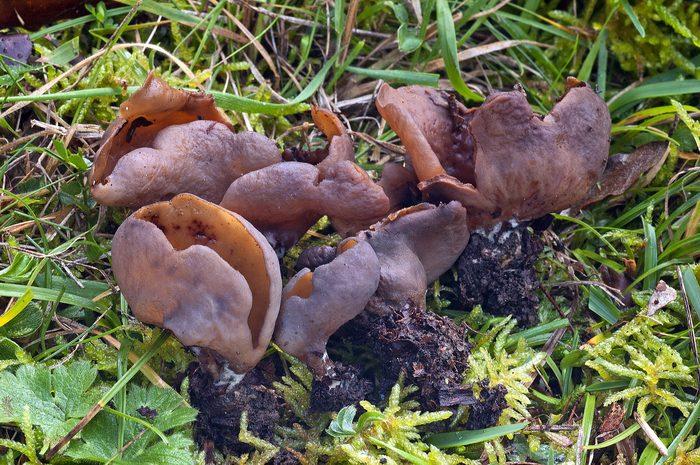
We don't know this nice Otidea species that grows on calcareous and submediterranean situation under Corylus avellana in the north of Spain. Ascomata are 40 mm broad and 30 mm high, substipitate, split down on one side. Hymenium vivid ochraceous. Excipulum furfuraceous and lilac-violaceous. These colours quickly fading with age.
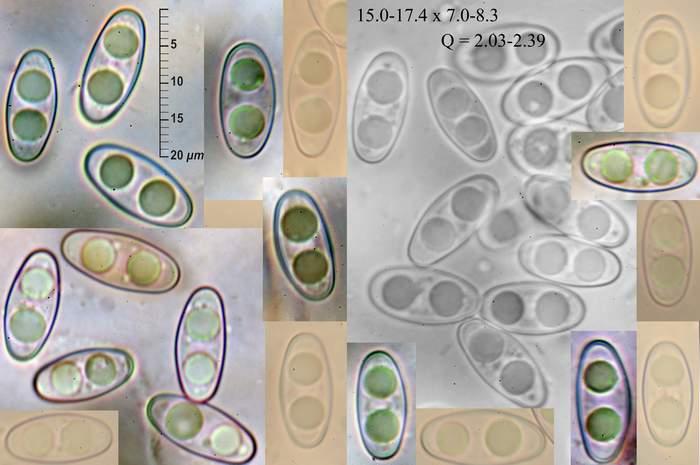
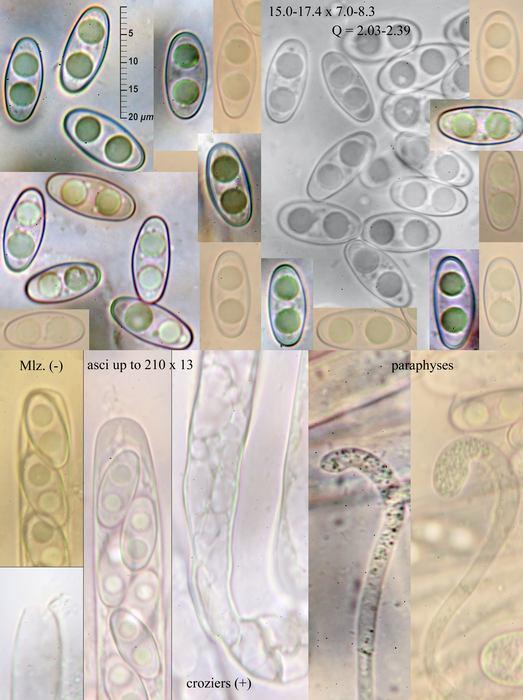
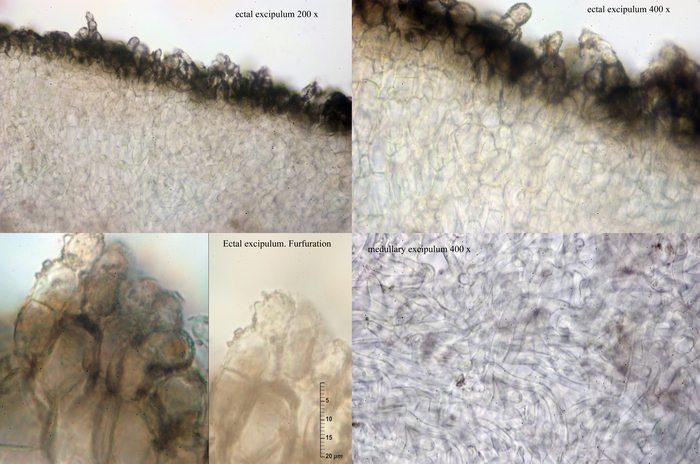
Spores 15,0-17,4 x 7,0-8,3 µm; Q =2,03-2,39. Medullary excipulum tectura intricata. Ectal excipulum angularis to prismatica with chains of 2-4 elements with incrustate and pigmentate walls that form the external furfuration.
When we collect this fungus, we think in O. caeruleopruinosa, but the color of the hymenium and the spore size are very different. We don't know O. lilacina, but maybe our species is unknow.
What do you think?
Many thanks for your help
Raúl Tena Lahoz,
04-12-2011 14:52

Re : Violaceous Otidea on submediterranean situation
Hola Enrique
Supongo que habrás contemplado Otidea "subgrandis" de la Clave de Nicolas:
http://www.ascofrance.fr/uploads/forum_file/12891.pdf
Otro mensaje donde hablan de ella:
http://www.ascofrance.fr/search_forum/3628
Un abrazo,
Raúl
Supongo que habrás contemplado Otidea "subgrandis" de la Clave de Nicolas:
http://www.ascofrance.fr/uploads/forum_file/12891.pdf
Otro mensaje donde hablan de ella:
http://www.ascofrance.fr/search_forum/3628
Un abrazo,
Raúl
Enrique Rubio,
04-12-2011 17:03
Re : Violaceous Otidea on submediterranean situation
Yes, Raúl. But I have any additional information about this nom. prov. By the other hand my spores are broader than O. subgrandis.
Many thanks!
Enrique
Many thanks!
Enrique
Michel Hairaud,
04-12-2011 19:35

Re : Violaceous Otidea on submediterranean situation
Hi, Enrique,
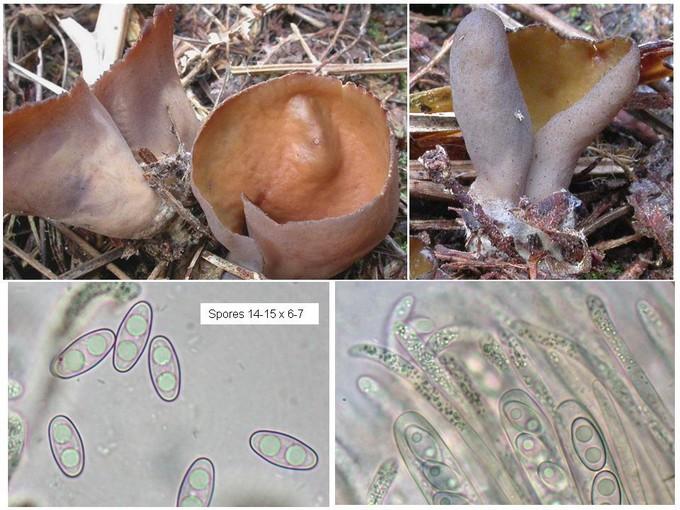
Is it really different from O. bufonia ? Here is a colection from Ile de Ré last W end with slightly narrower spores We find it with intermediate colours, from greyish to violet .
l
I can add that Ile de ré is also under a submediterranean climate
Amitiés
Michel
Is it really different from O. bufonia ? Here is a colection from Ile de Ré last W end with slightly narrower spores We find it with intermediate colours, from greyish to violet .
l
I can add that Ile de ré is also under a submediterranean climate
Amitiés
Michel
Enrique Rubio,
04-12-2011 19:43
Re : Violaceous Otidea on submediterranean situation
Hi Michel
I think this genus is very difficult. Your ascomata are similar, but the spores are smaller ....
I don't know if this difference is so important or not for the delimitation of the species.
Many thanks, Michel
I think this genus is very difficult. Your ascomata are similar, but the spores are smaller ....
I don't know if this difference is so important or not for the delimitation of the species.
Many thanks, Michel
Nicolas VAN VOOREN,
05-12-2011 22:04
Re : Violaceous Otidea on submediterranean situation
Hi Enrique.
The spore shape is typical of the O. bufonia group. Although I didn't study collections with spore-width greater than 7 µm, I'm not sure this character should be retain to separate species in the bufonia complex.
The microscopic features and the special colour of the apothecia drive to O. mirabilis.
Cheers.
The spore shape is typical of the O. bufonia group. Although I didn't study collections with spore-width greater than 7 µm, I'm not sure this character should be retain to separate species in the bufonia complex.
The microscopic features and the special colour of the apothecia drive to O. mirabilis.
Cheers.
Enrique Rubio,
07-12-2011 11:04
Re : Violaceous Otidea on submediterranean situation
OK., Nicolas
Many thanks!
Enrique
Many thanks!
Enrique