05-10-2016 22:32
Bernard CLESSE
Sur le cône pourri d'épicéa où se trouvait Ham
06-10-2016 18:18
Could someone help me to obtain this original desc
02-10-2016 20:47
Rubén Martínez-Gil
Hola a todos. Gracias a la ayuda recibida en otro
03-10-2016 01:06
Elisabeth StöckliBonsoir, Voici une espèce sur feuilles mortes de
05-10-2016 20:39
Bernard CLESSE
Bonsoir à tous,Sur le même cône d'épicéa où
04-10-2016 23:28
Bernard CLESSE
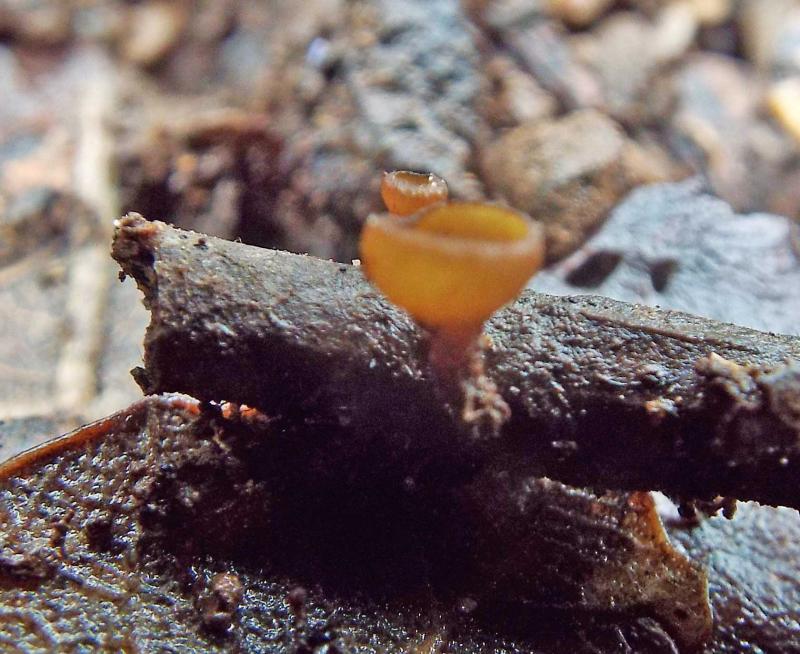
Voici un petit asco jaune sur cône pourri d'épic
Buenos dias a todos, sobre Ceratonia siliqua he encontrado estos histerotecios que siguiendo las claves Eric W.A. Boehm me lleva a Gloniella spp, pero cuando entro en las claves de Gloniella no me encaja con ninguna especie, a ver si me podeiss decir si voy por buen camino:Acoma histerotecio carbonaceo, de 0,5 a 1,5mm de largo, elipsoide, no esta logintudinalmente estriado, con surco longitudinal que se ensancha en la madurez, en grupos y juntadose con otros.
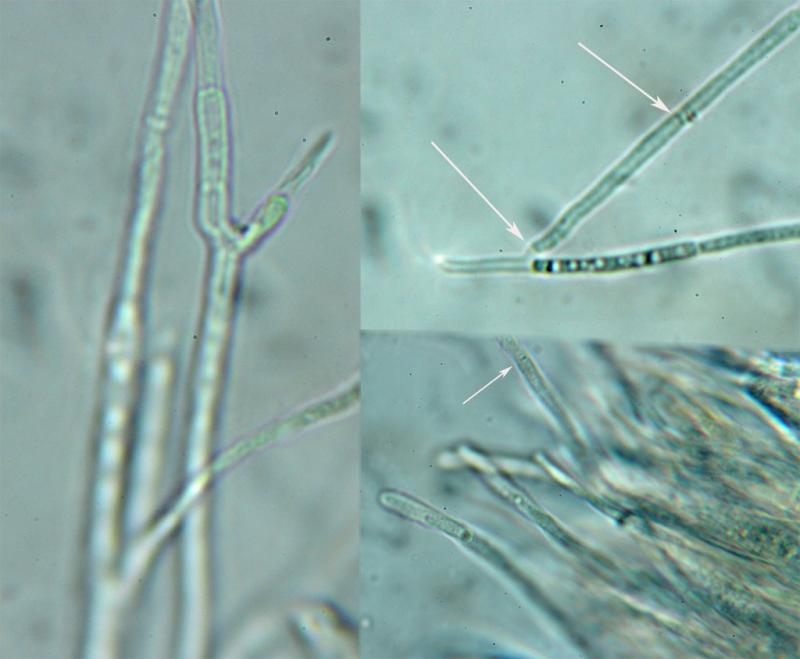
Hamatecio, forma una matriz gelatinosa, parafisis de 1 a 2 micrómetros de ancho, no aprecio septos ni ramificaciones.
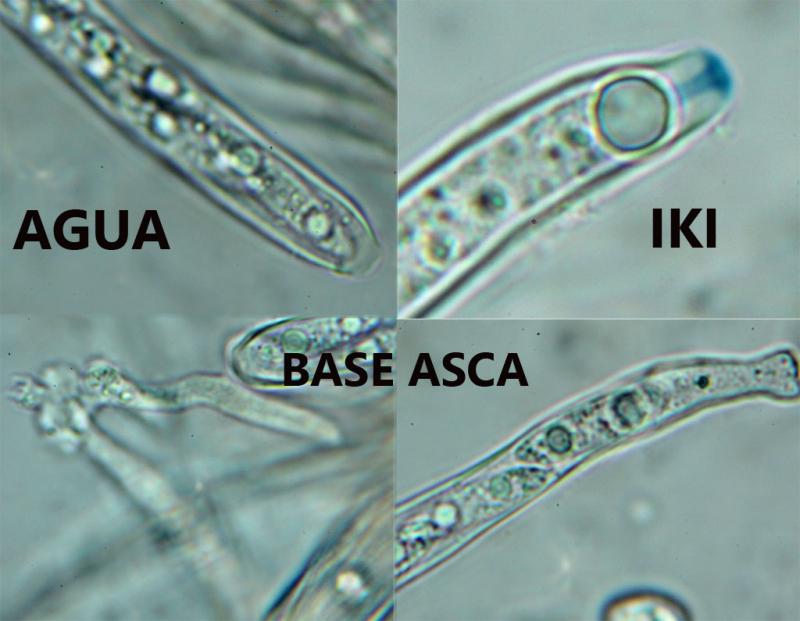
Ascos clavados, octosporicos entre 58 y 68 de largo X 12 y 17 de ancho.
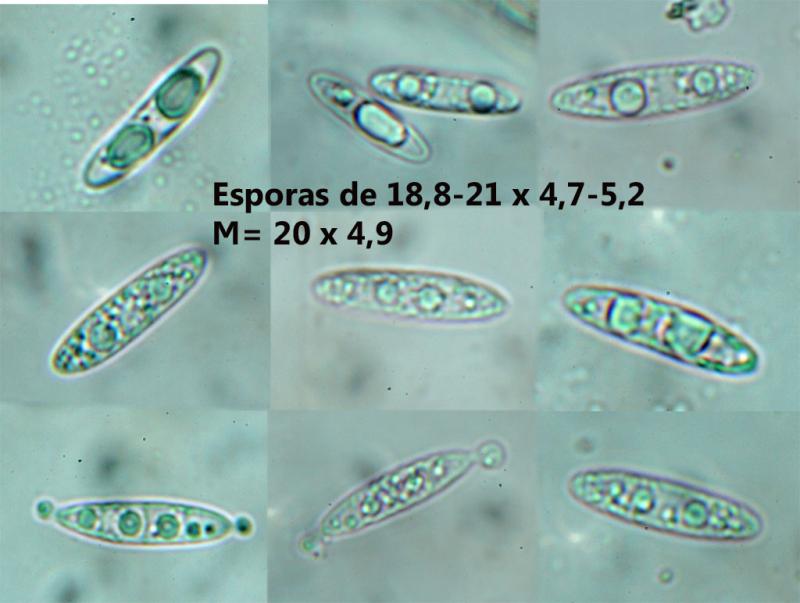
Ascosporas fragmosporas, fusiformes hialinas siempre he contado 5 septos, entre 20 y 28 largo X 3 y 4 ancho micrómetros.
alguna idea?
gracias
Angel
Hi Angel,
The closest species are pteridicolous, and it's slightly different. So that one on Ceratonia is probably new.
Alain
for me it looks like a lichen: the appearance of the hysterothecium, the ascus structure, the iodine reaction, the algae which are shown on the first two pictures. But maybe I'm wrong... I'm not a specialist...
Best, Uwe
Hi Uwe,
not impossible as you said. I didn't see really the idione reaction on Angel's photo, but the question must be put.
Angel, can you check there isn't thallus ?
Alain
haciendo secciones transversales no aprecio ningun talo, me parece el aspecto de un histerotecio de Hysterial tipico pero tampoco soy ningún especialista.
gracias por vuestras opiniones.
un saludo
Angel
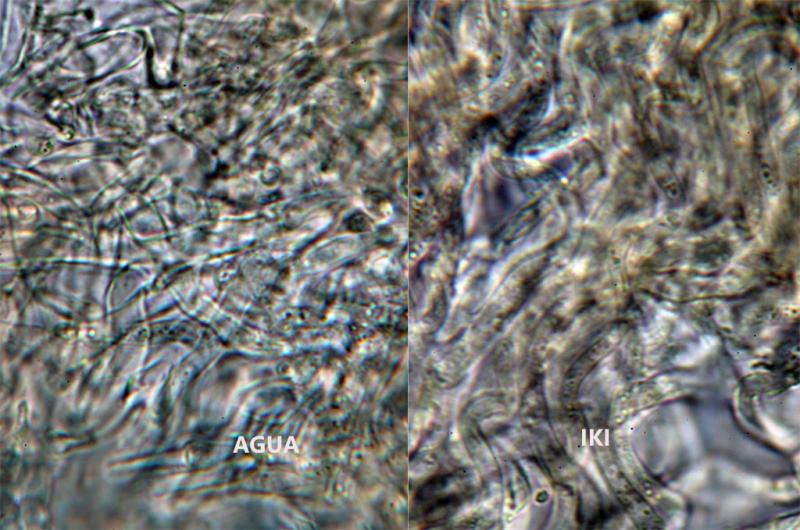
I see on picture six a red reaction of the ascus, similar to reactions which I saw in lichens. I didn't know these red reaction from other members of the Hysteriaceae. That's why I thought of a lichen. But mabye I'm wrong...
Best, Uwe
You're probably right Uwe. The genus Opegrapha could be a good way for research. For example : http://www.afl-lichenologie.fr/Photos_AFL/Photos_AFL_O/Texte_O/Opegrapha_niveoatra.htm
Gracias por vuestra ayuda Uwe, Alain
un saludo
Angel