
16-04-2021 22:02
 Bo Valeur
Hi thereThis Nice Lachnum was found on a dead bran
06-04-2025 18:26
Yanick BOULANGERBonjour à tousSur bois durApothécie (02 – 05)
08-04-2025 11:22
 Mathias Hass
Hi, I have some trouble with this Lophodermium. I
04-04-2025 11:56
 Edvin Johannesen
These 0.2-0,4 mm diam. flat to slightly convex, gr

03-04-2025 18:26
Lennert GeesHello there!I found this species on dung of an unk
03-04-2025 16:45
 Castillo Joseba
Me mandan el material seco de Galicia (España),
01-04-2025 23:18
Yanick BOULANGERBonsoirRécolté par un ami sur dans un tas de bra
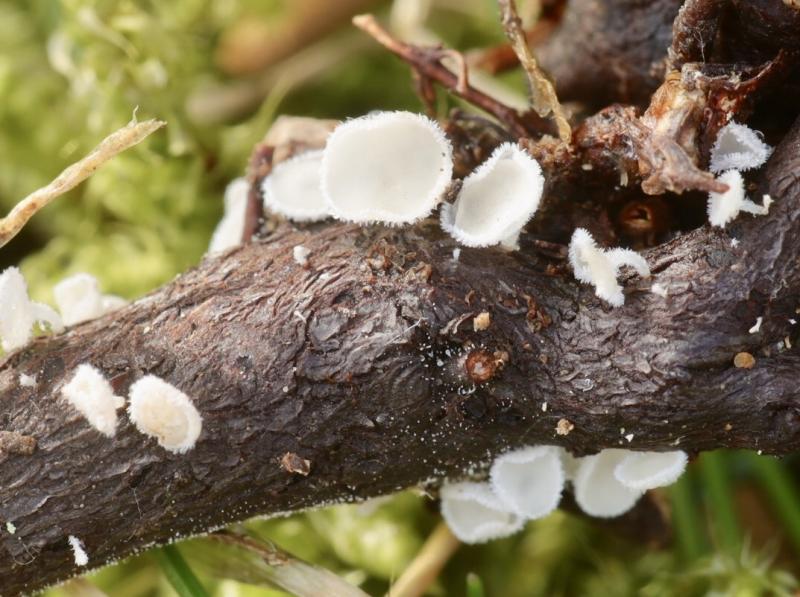
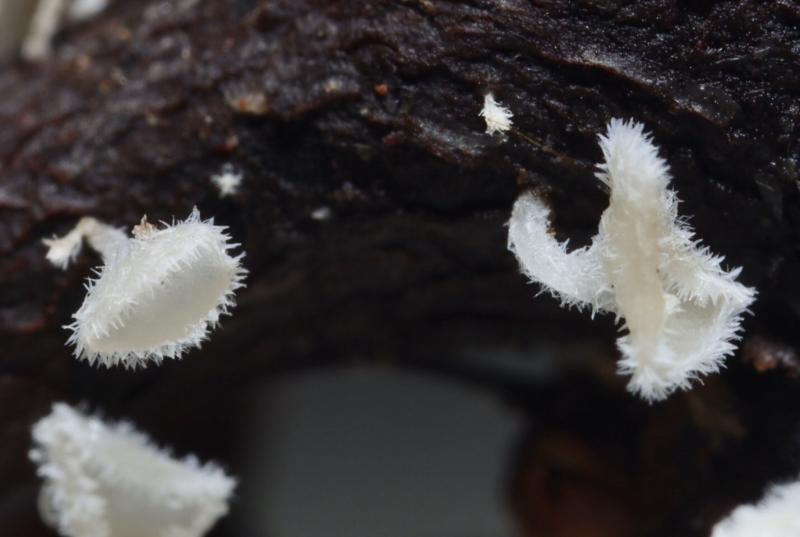
Hi thereThis Nice Lachnum was found on a dead branch of Calluna vulgaris under mosses on 26.February 2021 in NWZ Denmark.
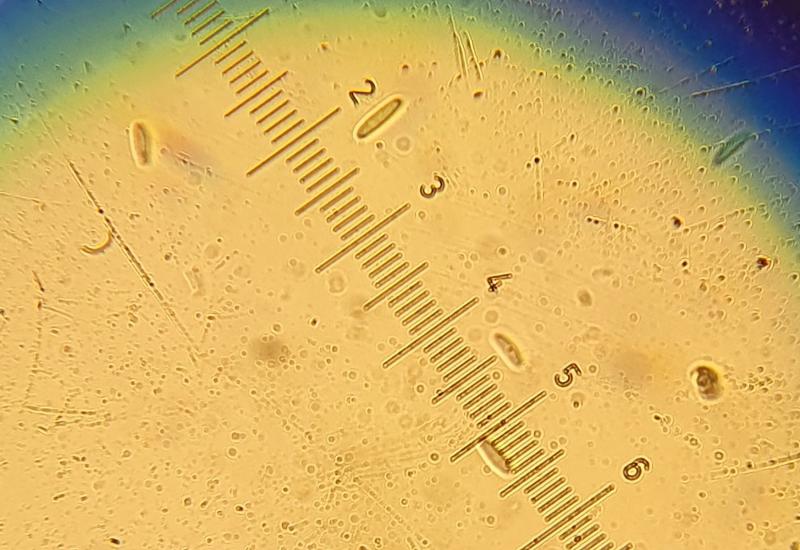
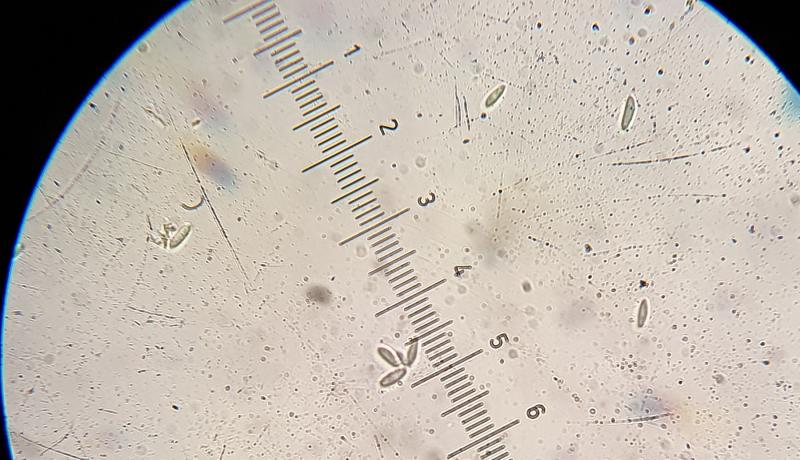
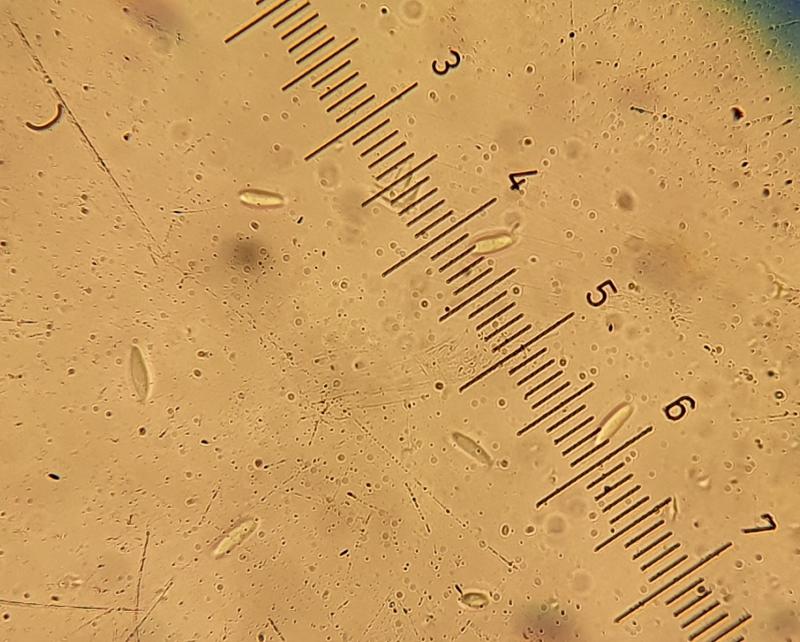
the spores are abouot 10 um Long and 3-3.25 broad. Wonder if it could be Lachnum callunae. Spore picture, 10 stribes are 22.5 um.
Thanks
Bo/Denmark
salut
Ce joli Lachnum a été retrouvé sur une branche morte de Calluna vulgaris sous des mousses le 26 février 2021 dans la ZNO du Danemark.
les spores mesurent environ 10 um de long et 3-3,25 de large. Je me demande si ça pourrait être Lachnum callunae. Image de spores, 10 stribes font 22,5 um.
Merci
Bo / Danemark


Hi Bo,
I do not know what Lachnum callunae is . Is it in the sense of Dascysyphus callunae Rehm ou a lately described species I overlooked ?
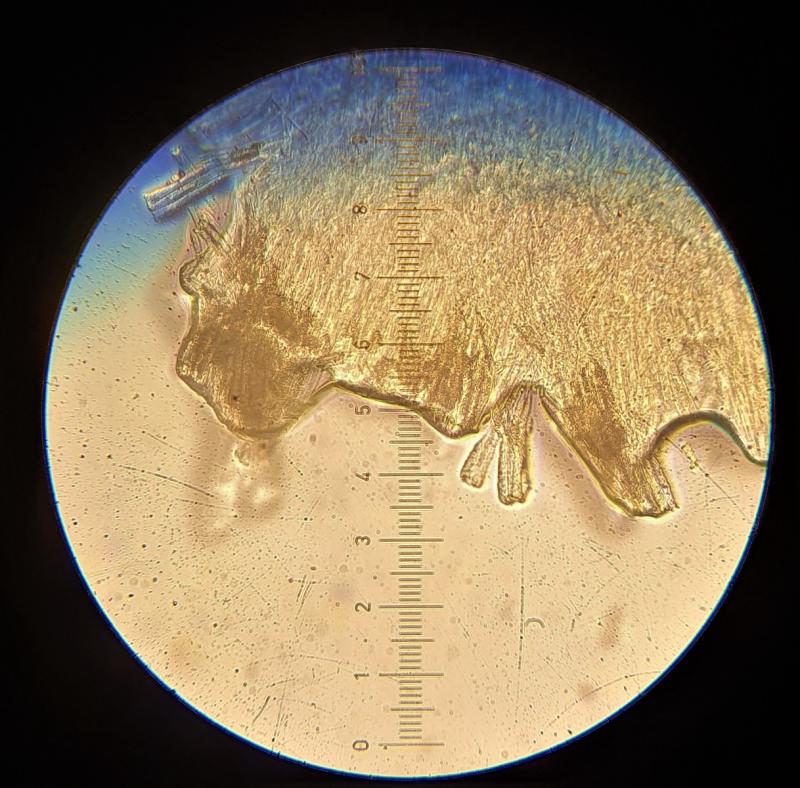
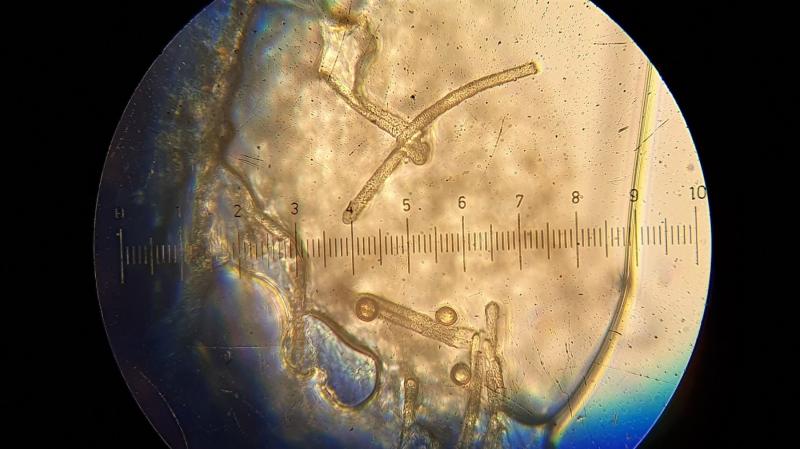
Your macro pictures shows a fungus with the appearence of a species common on Calluna (and other substrates) : L. virgineum , which is characterized by present croziers and no Vbs in paraphyses. Paraphyses are protruding the asci by 20-30 µM and rather broad (5-7 µm) . All these characters you can check in water mounts.
Are you sure about the 3-3,25 µm broad ? From the scales you show, they appear about the distance between 2 strikes.
Amitiés
Michel
I am new to microscope, but the calibration should be ok. The spores looks different in size, and surely I can be wrong on this matter. The distance between the strikes should be 2,25um, so some of the spores are rightly this size. Others looks a bit thicker on a new picture uploaded, but again pictures are taker with a Mobile phone, and perhaps not good enough. L. virgineum Is common in Denmark, so it seems more likely to be the one.
Thanks again.
Bo
Salut Michel et merci pour votre réponse. Lachnum callunae Baral ined. est sur la liste danoise, mais je n'en sais pas plus.
Je suis nouveau dans le microscope, mais l'étalonnage devrait être correct. Les spores ont une taille différente et je peux sûrement me tromper à ce sujet. La distance entre les frappes devrait être de 2,25 um, donc certaines des spores ont à juste titre cette taille. D'autres semblent un peu plus épais sur une nouvelle image téléchargée, mais encore une fois, les images sont prises avec un téléphone portable, et peut-être pas assez bonnes. L. virgineum Est commun au Danemark, il semble donc plus probable que ce soit celui-là.
Merci encore.
Bo
Hi Bo,
There actually is a Dasyscyphella callunea (nom. prov.) in a Lachnum key by Zotto . It seems that hairs in your collection are verrucose till the top , so it matches with Lachnum
Michel
I will look into the key you mailed.
Bo

I will see if it's possible for me to document any of your suggestions on Monday. I don't have iodine, but perhaps some Melzer can be used instead.
Bo
You are right I did not use immersion oil.
It ended up as Lachnum sp., but i did find a L. Calluna in 2023, which is accepted in Denmarks Svampeforum. It no easy.at all...:)
The 12 accepted danish finds are listed here.
https://svampe.databasen.org/taxon/69628