
18-02-2022 16:40
 Bernard CLESSE
Sur brindille morte de feuillu (non identifié mai
20-02-2022 20:49
 Riet van Oosten
Hello, Found 19-02-2022, on a fallen branch, Quer
18-02-2022 18:04
Bernard CLESSE
Bonsoir à toutes et tous,Pourriez-vous m'aider à


16-02-2022 20:58
 Rubén Martínez-Gil
Hola a todos.Subo unas fotos de un asco que hemos
14-02-2022 14:00
William de JongHi everyone,Two weeks ago I found a Pestalotiopsis
16-02-2022 18:44
Bernard CLESSE
Bonsoir à toutes et tous, Récemment j'ai trouvÃ
¿Pyrenula?
Josep Torres,
17-02-2022 00:10
 Hola.
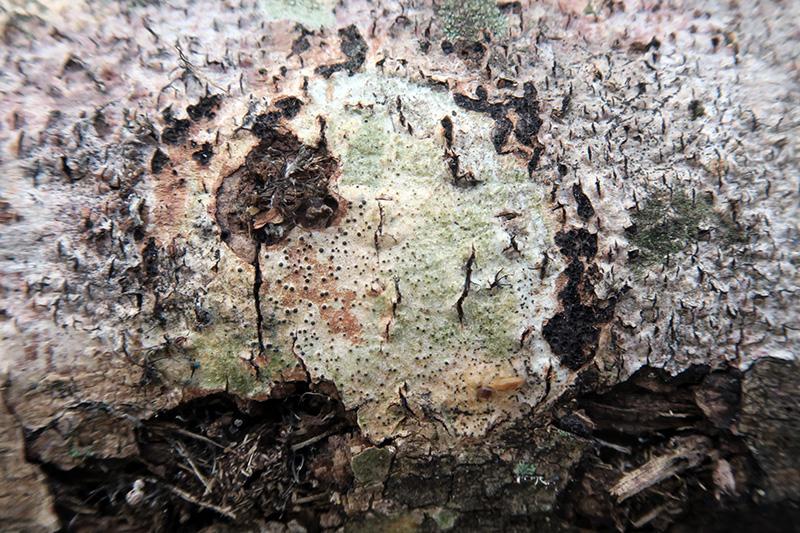
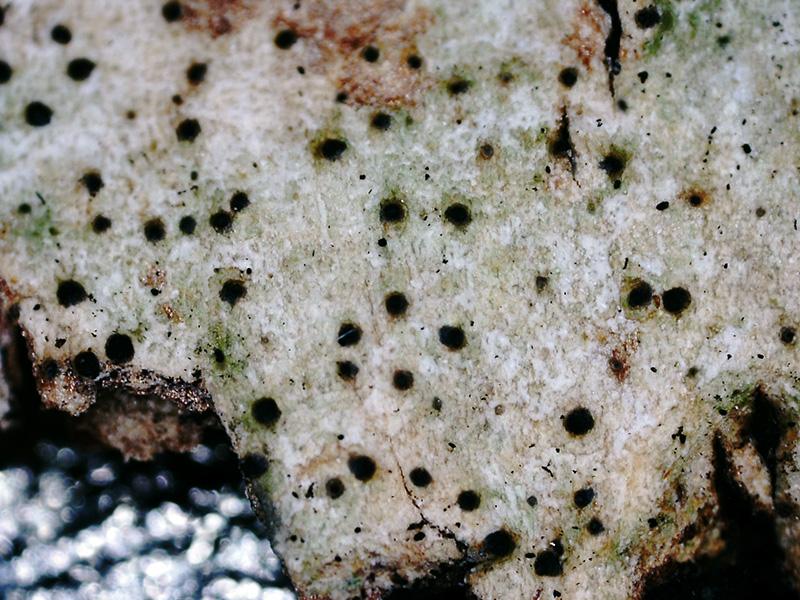
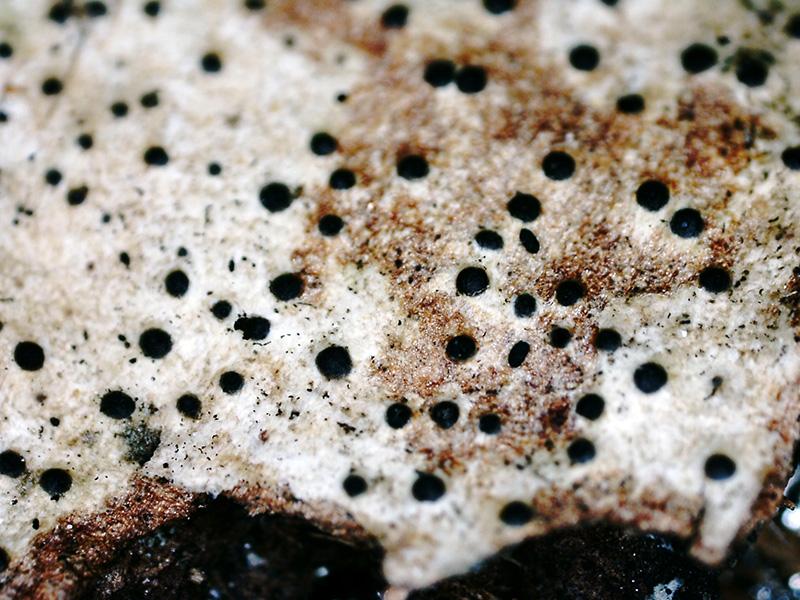
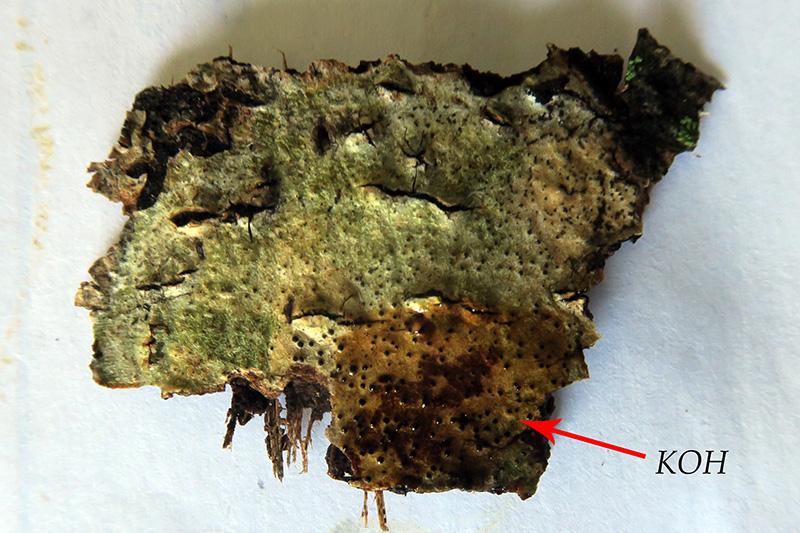
Hola.Un líquen localizado en la República Dominicana sobre una corteza de planifolio tropical indeterminado.
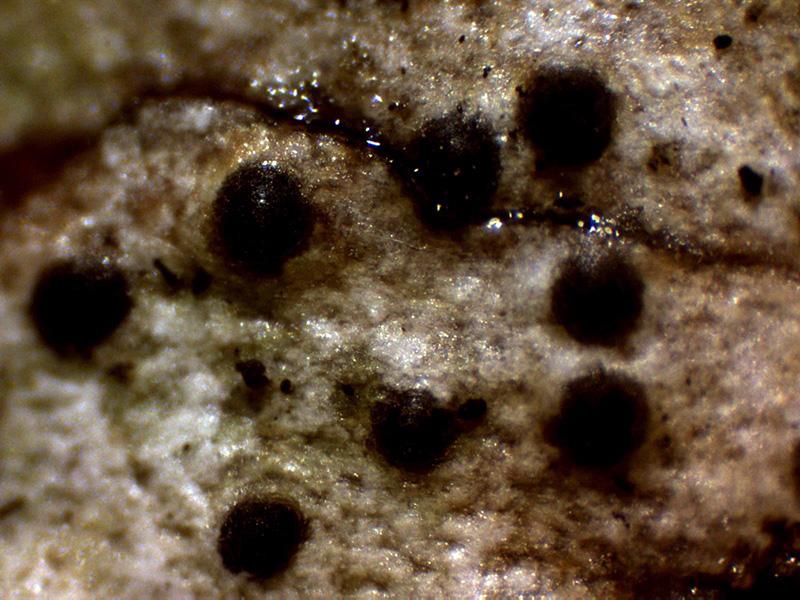
Apotecios de entre 0,25 a 0,39 mm., de clolor negro a modo de granos sobre un talo blanquecino que vira a marrón claro anaranjado con el KOH.
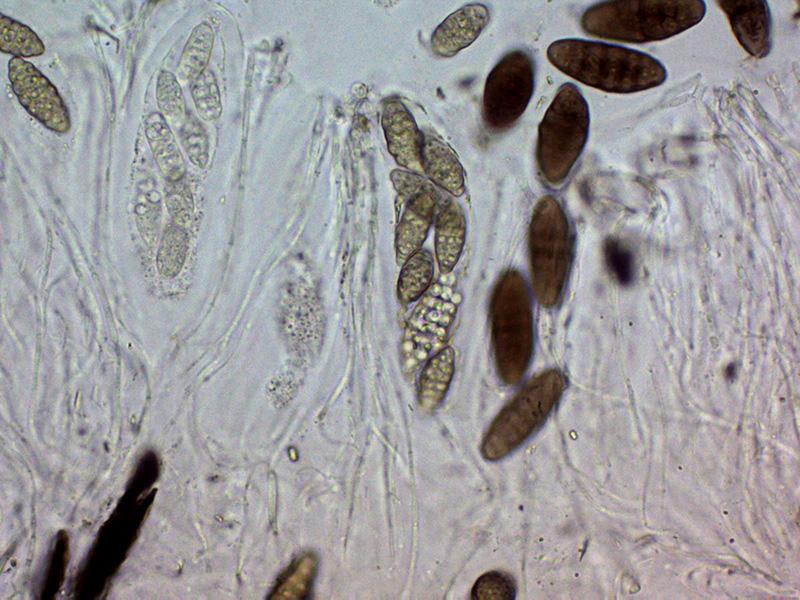
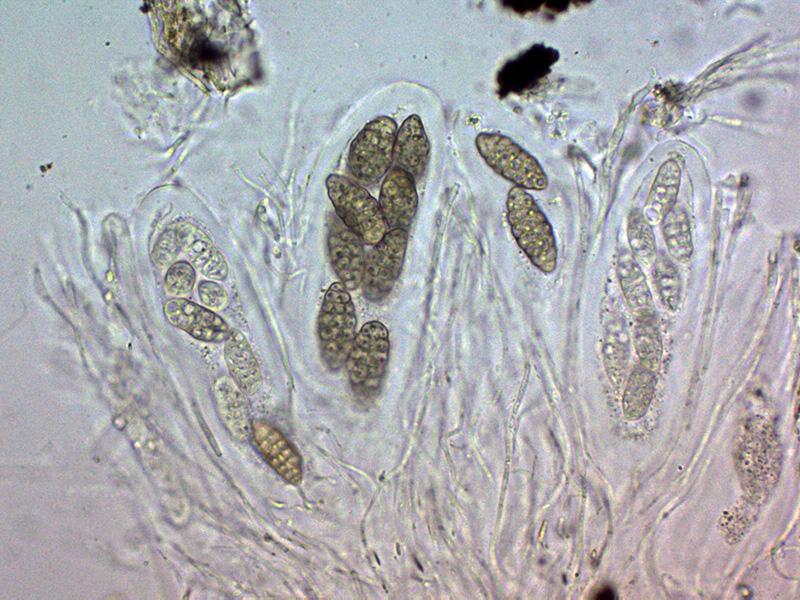
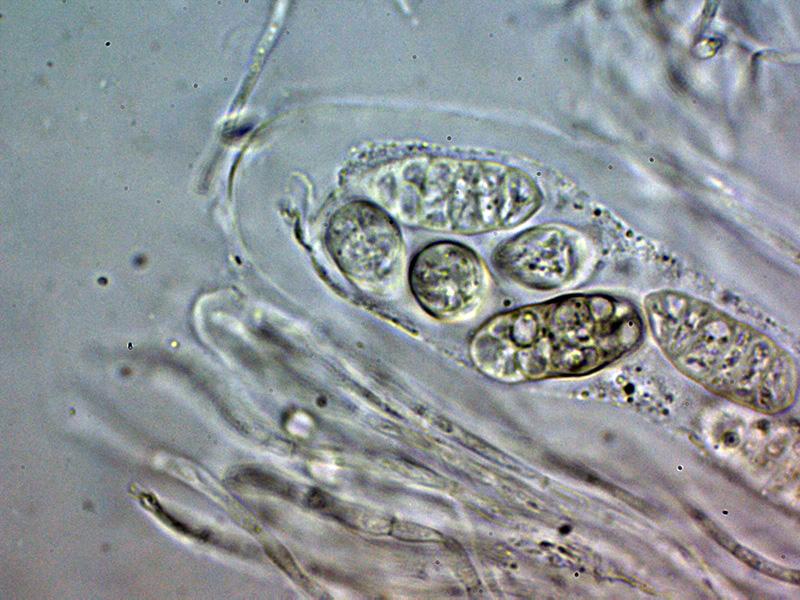
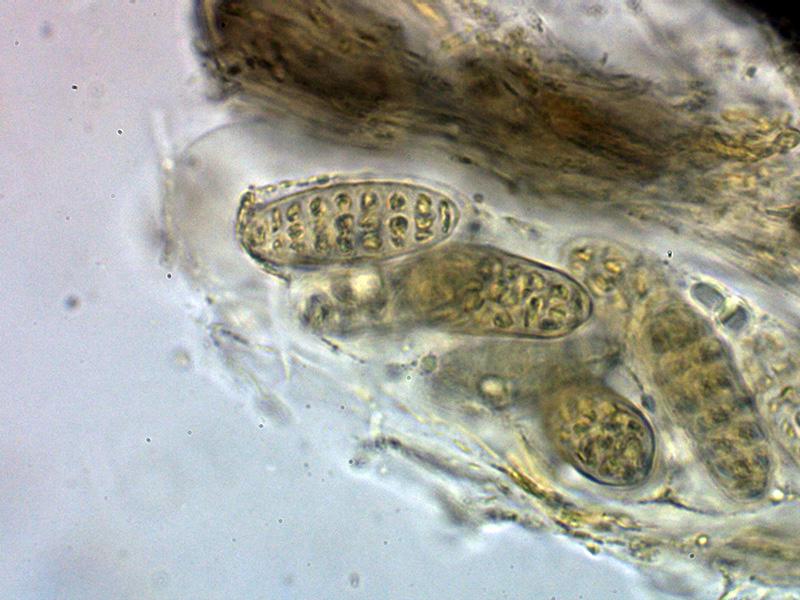
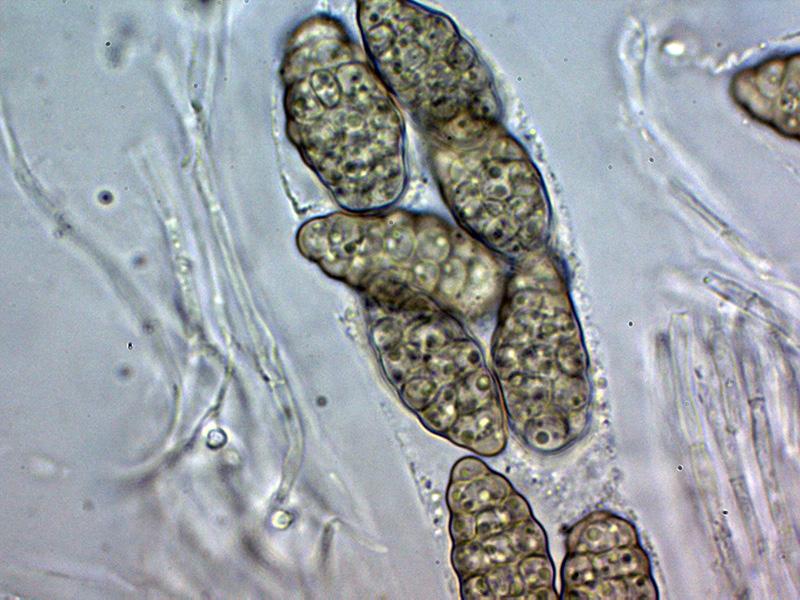
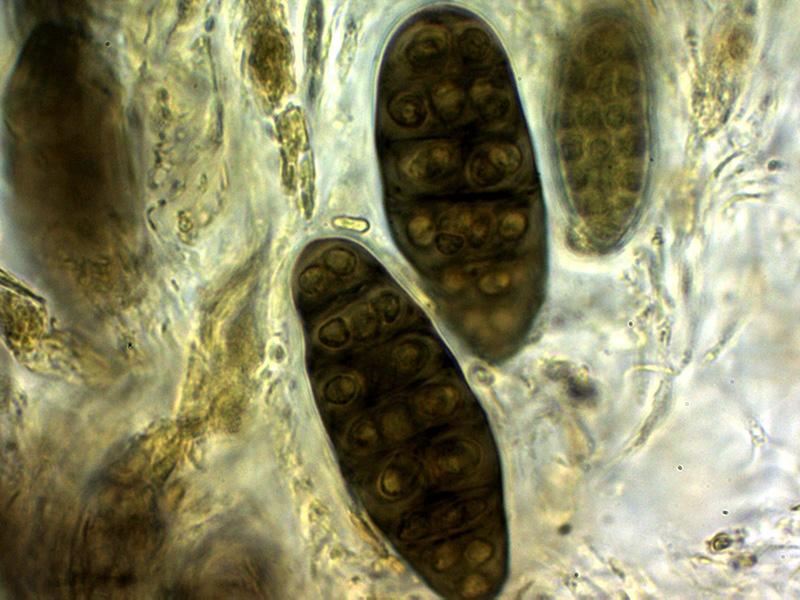
Ascos octospóricos con unas medidas de 116.4 - 147.7 × 33.6 - 45.7 µm., sin reacción aparente al Melzer.
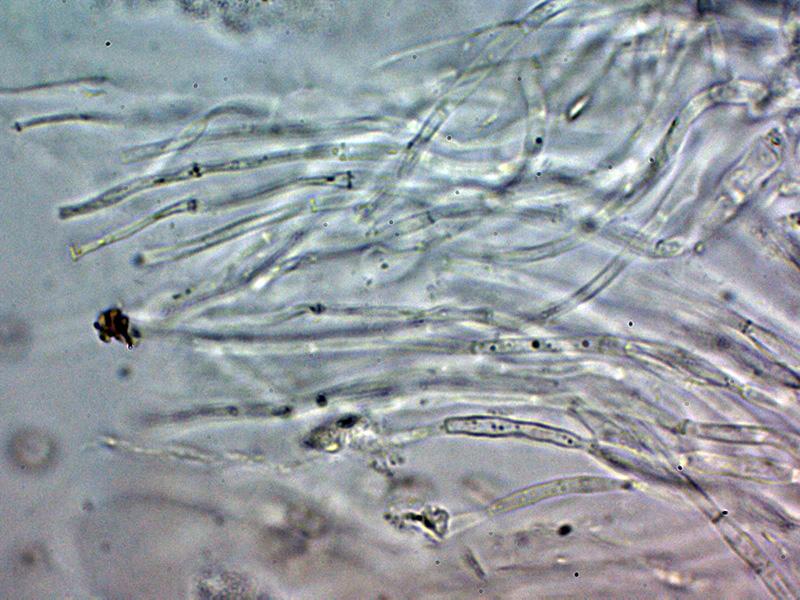
Paráfisis filiformes, ensanchadas en la base, hialinas, estrechas, septadas y con una altura parecida a los ascos.
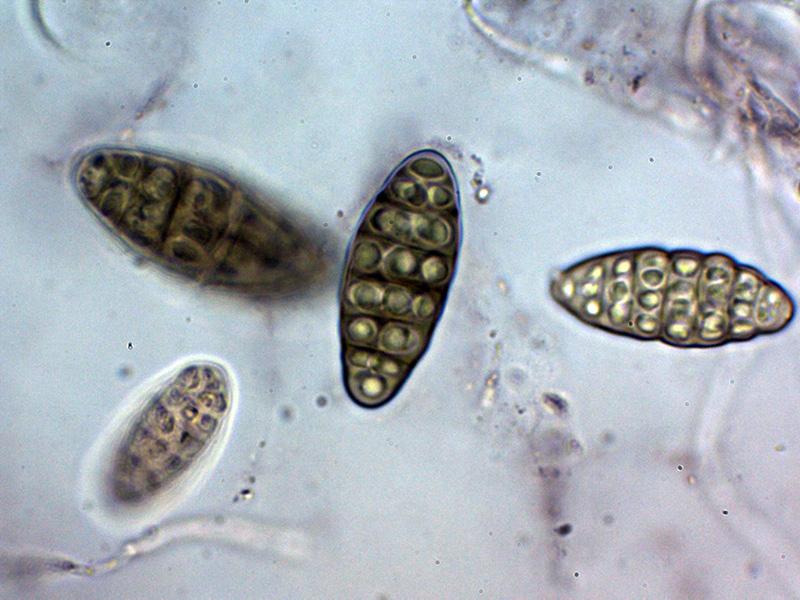
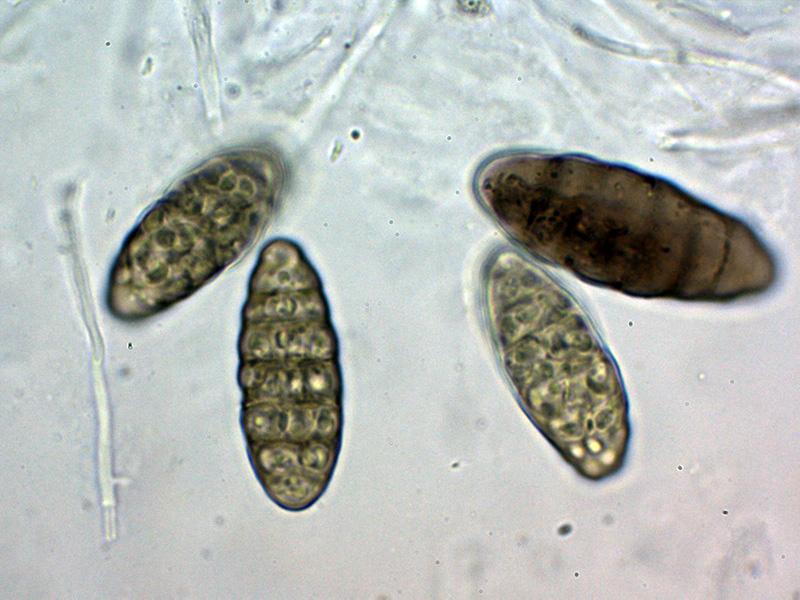
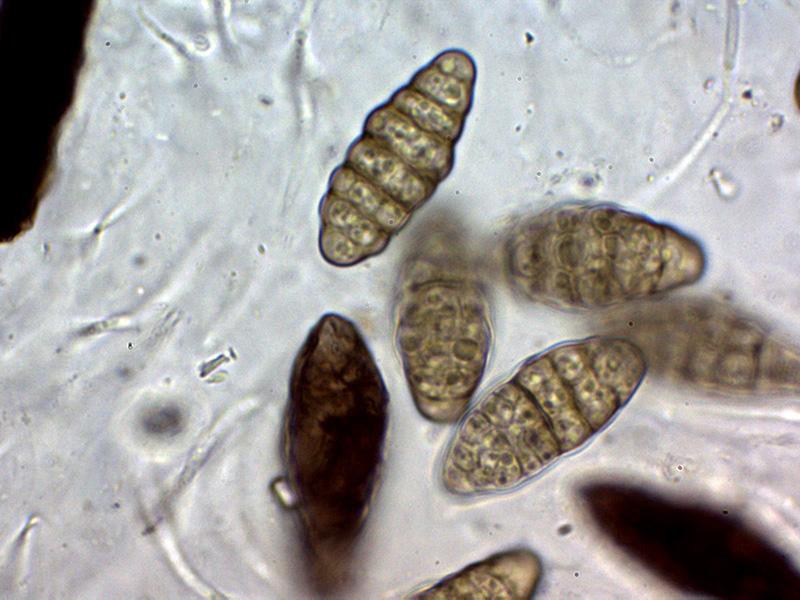
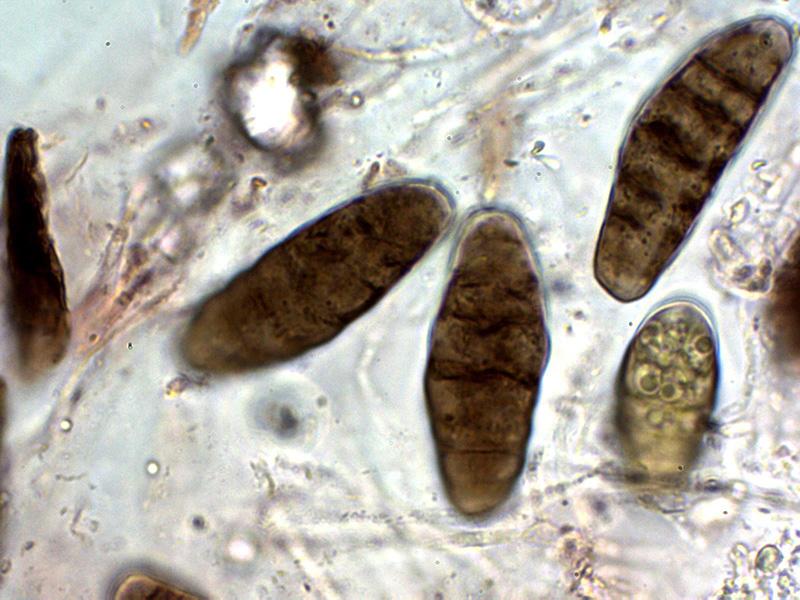
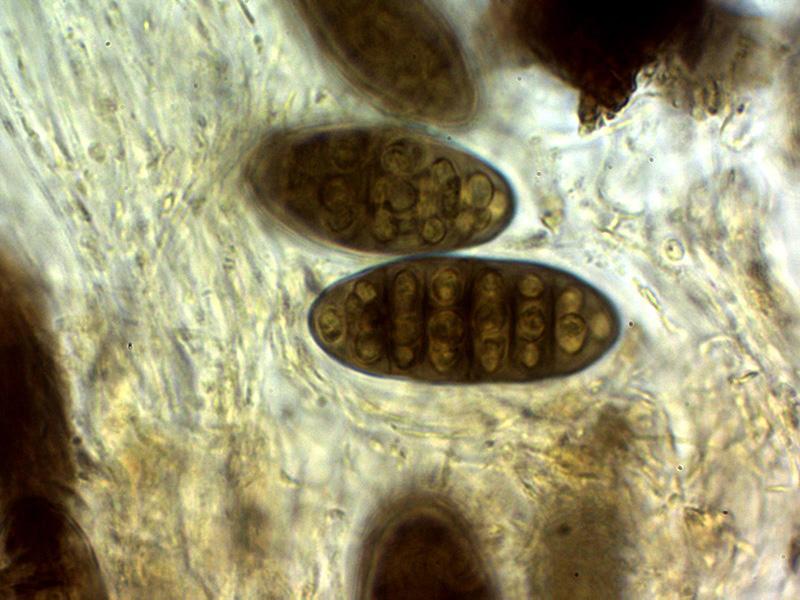
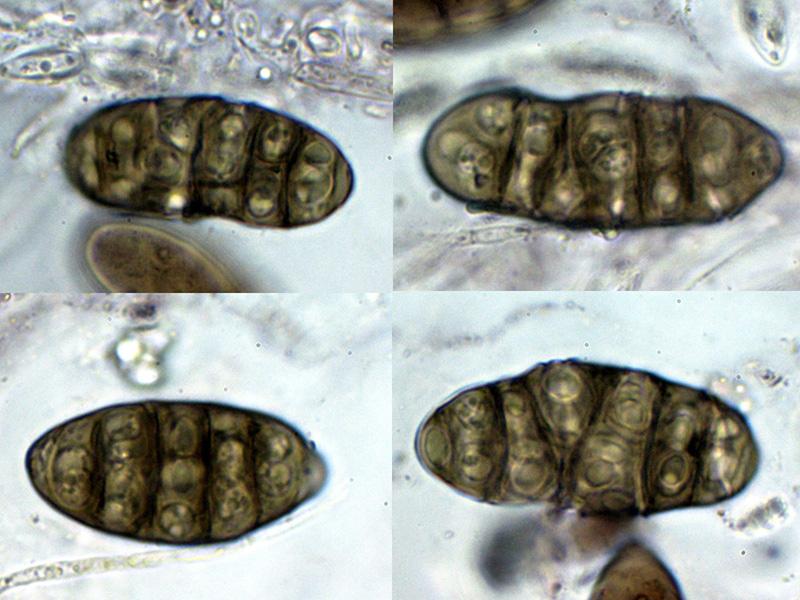
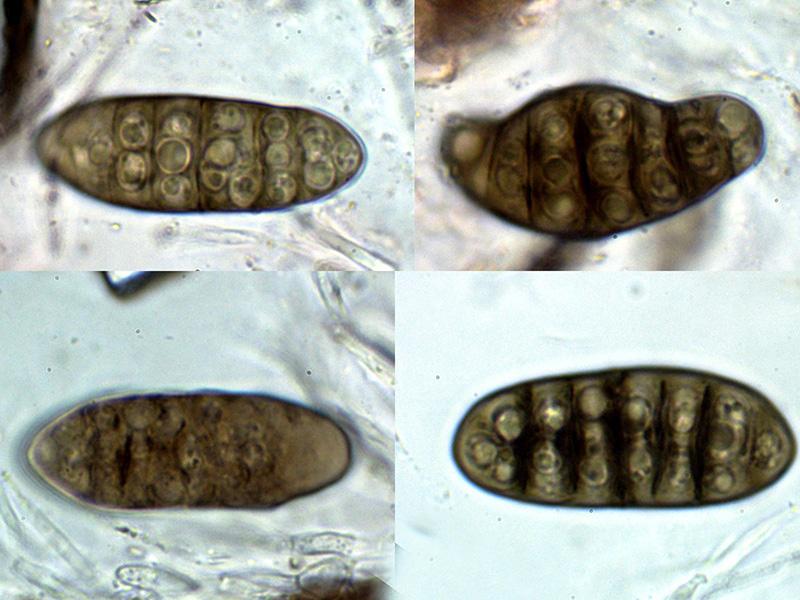
Ascosporas las inmaduras hialinas para ir coloreándose de marrón con el desarrollo, las inmaduras mayoritariamente con 7 septos y con constreñimiento en los mismos, estos septos se reducen a entre 4 y 6 en las ascosporas maduras en las que ya no se aprecian los constreñimientos.
Ascosporas con unas medidas de:
(33) 36 - 46.7 (49.1) × (12.7) 14 - 19.6 (20.1) µm
Q = (2.1) 2.2 - 2.8 (3) ; N = 21
Me = 41.7 × 16.6 µm ; Qe = 2.5
Atendiendo a su aspecto pienso en Pyrenula, aunque dentro del género no encuentro ninguna propuesta convincente, y no descarto cualquier otro género.
Cualquier propuesta por vuestra parte será bien recibida.
Muchas gracias de antemano.
Saludos cordiales.
Josep Torres,
17-02-2022 00:16
Re : ¿Pyrenula?
Más imágenes:
Franz Berger,
21-02-2022 08:39

Re : ¿Pyrenula?
Your Pyrenula is Pyrenula astroidea (Fée) R.C.Harris, a pantropical species,
Cordial
Franz
Cordial
Franz
Josep Torres,
21-02-2022 14:32
Re : ¿Pyrenula?
Gracias Franz, una especie que desconocia por completo, para la identificación utilicé el documento de 2013 "MORPHOLOGICAL CHARACTERIZATION OF CORTICOLOUS LICHEN ASCOSPORES IN THE COLOMBIAN CARIBBEAN" en el que ni tan siquiera aparece.
MUCHAS GRACIAS por tu ayuda.
Saludos cordiales
MUCHAS GRACIAS por tu ayuda.
Saludos cordiales