
14-06-2009 08:54
Perz PiotrHi everybody ;-) Can you please help me with id

13-06-2009 10:14
 Alain GARDIENNET
Bonjour, Existe-til une description de ce taxon
11-06-2009 22:33
 Hans-Otto Baral
Hello here is a Lophiostoma on Rhamnus alaterna

09-06-2009 22:14
 Luc Bailly
Trouvé aujourd'hui sur un talus thermophile à St
09-06-2009 20:37
Gernot FriebesHello, here is another (the last) Lachnum which
09-06-2009 17:28
Gernot FriebesHello, I found this single apothecium on bark b
09-06-2009 17:21
Roland LabbéBonjour ! Voici un discomycète que nous croyon
Tubeufia?
Jean Pierre Dechaume,
15-06-2009 09:21
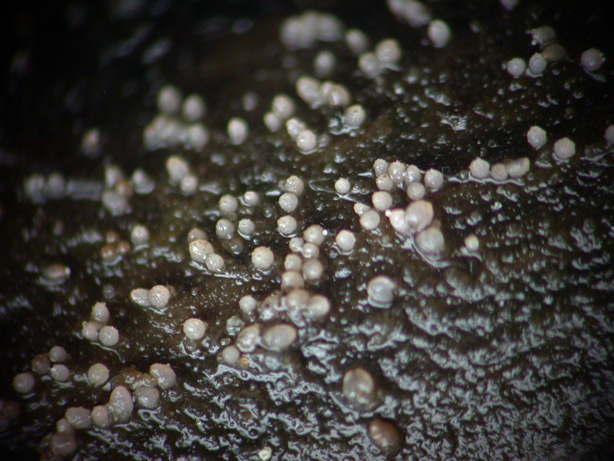
 Sur bois mort trempant dans un ruisseau, avec des Vibrissea,
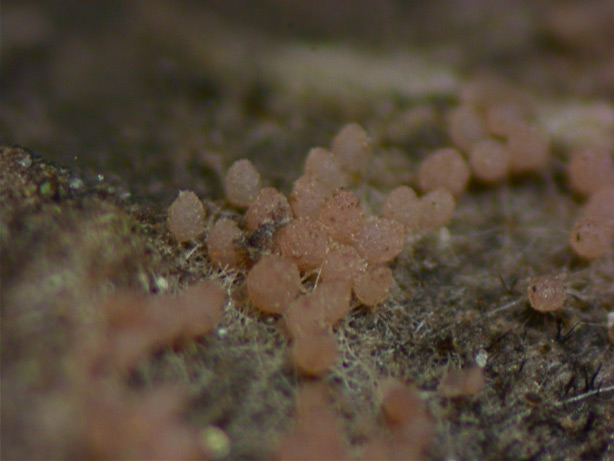
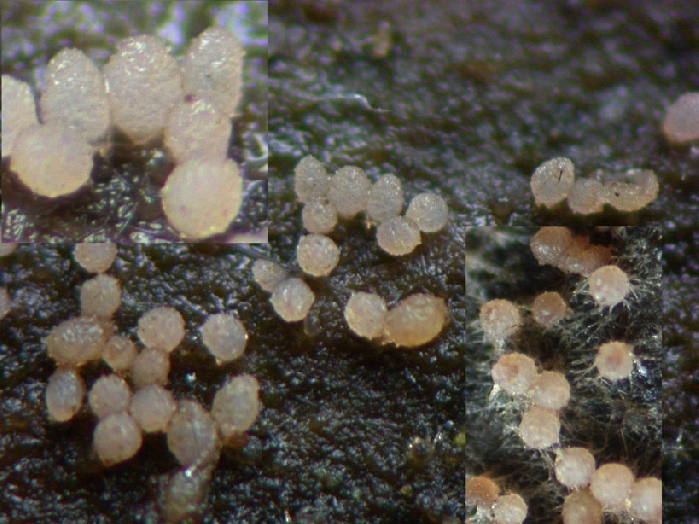
A la récolte, ils sont blancs, puis ils rosissent. On aperçoit un bec hyalin quelquefois.
Très petits, 0,2mm, en forme d'oeuf, ruguleux.
Fixés au support par un réseau arachnéen.
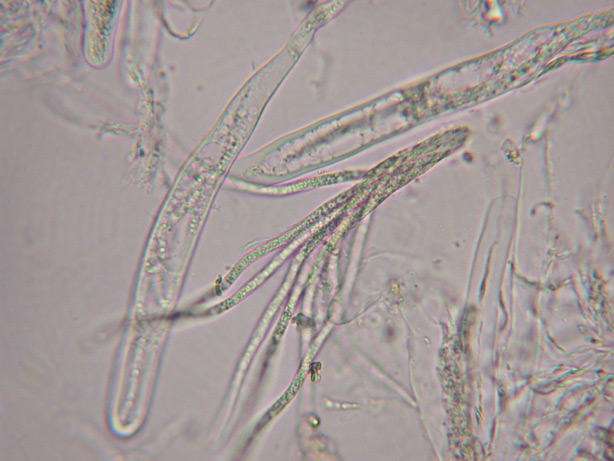
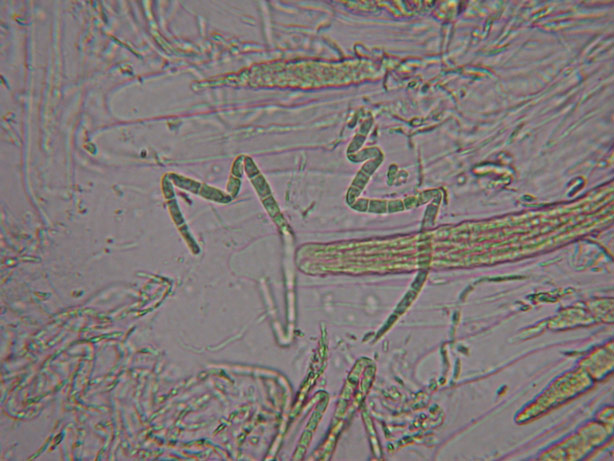
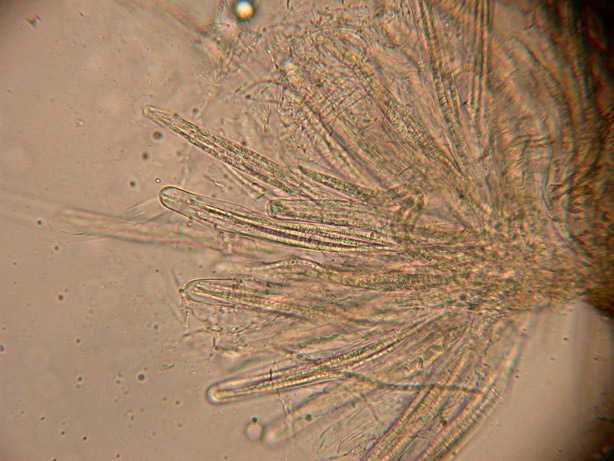
La micro montre des spores articulées, à 15-20 septats, hyalines, de 110-125 microns.
Pas de doc satisfaisante...
C'est encore un monde ces Tubeufia, et je ne sais pas si je dois y regarder de plus près.
Merci de vos avis, si vous en avez, et bonne journée.
Excusez les mauvaise images, je vais tenter d'en refaire si cela mérite.
jean pierre
Jean Pierre Dechaume,
15-06-2009 09:23
Re:Tubeufia?
suite
Jean Pierre Dechaume,
15-06-2009 09:23
Re:Tubeufia?
fin
Jean Pierre Dechaume,
15-06-2009 09:32
Re:Tubeufia?
suite, je n'arrive pas à passer certaines photos...
Jacques Fournier,
15-06-2009 13:28

Re:Tubeufia?
Bonjour Jean Pierre,
quelle belle récolte!
Tubeufia paraît une bonne piste mais il faudrait s'assurer que les asques sont bituniqués. Les spores paraissent torsadées dans les asques, peux tu le confirmer? Les ascomes ont l'air de porter de petites soies. Pour s'en assurer il faudrait voir un ascome entier écrasé sous une lamelle dans l'eau ou la potasse 3%, observé à faible grossissement.
Tubeufia est parfois associé à un anamorphe à conidies hyalines spiralées de grande taille, visibles sous la bino. Leur présence est à rechercher.
En attendant d'avoir de tes nouvelles je te copie une clé du genre.
Jacques
quelle belle récolte!
Tubeufia paraît une bonne piste mais il faudrait s'assurer que les asques sont bituniqués. Les spores paraissent torsadées dans les asques, peux tu le confirmer? Les ascomes ont l'air de porter de petites soies. Pour s'en assurer il faudrait voir un ascome entier écrasé sous une lamelle dans l'eau ou la potasse 3%, observé à faible grossissement.
Tubeufia est parfois associé à un anamorphe à conidies hyalines spiralées de grande taille, visibles sous la bino. Leur présence est à rechercher.
En attendant d'avoir de tes nouvelles je te copie une clé du genre.
Jacques
NC NC,
15-06-2009 13:38
Re:Tubeufia?
The whitish ascomata on wet wood and with bitunicate asci and very long ascospores definitely place this species in Tubeufia. According to Rossman (1987), this is T. paludosa (Crouan & H. Crouan) Rossman but more recent workers suggest that this species includes several different species. An asexual state in culture would help to determine what it is.
 8222.pdf
Jacques Fournier,
15-06-2009 14:22
Re:Tubeufia?
thanks to Amy for sharing her publication with the members of Ascofrance!
I agree ascospore size fits T. paludosa, which is known from aquatic habitats, but it is said to be whitish to gray or brown, a pink colour has not yet been reported.
I attach a key to Tubeufia species from Kodsueb et a. 2004, Mycologia 96 p 673 for jean Pierre
Jacques
I agree ascospore size fits T. paludosa, which is known from aquatic habitats, but it is said to be whitish to gray or brown, a pink colour has not yet been reported.
I attach a key to Tubeufia species from Kodsueb et a. 2004, Mycologia 96 p 673 for jean Pierre
Jacques
 8223.jpg
Jean Pierre Dechaume,
15-06-2009 16:53
Re:Tubeufia?
Merci pour la rapidité et la précision de vos interventions.
Dans vos clés, seul T paludosa a des spores qui vont bien.
Pour sa couleur, elle peut passer au brun en perdant de l'eau. Je suis bien incapable de dire ce qui est normal, étant donné qu'il devient très vite invisible hors de l'eau. Je dois le remettre sans cesse dans son bocal.
J'ajoute quelques photos.
Merci encore
jean pierre
Dans vos clés, seul T paludosa a des spores qui vont bien.
Pour sa couleur, elle peut passer au brun en perdant de l'eau. Je suis bien incapable de dire ce qui est normal, étant donné qu'il devient très vite invisible hors de l'eau. Je dois le remettre sans cesse dans son bocal.
J'ajoute quelques photos.
Merci encore
jean pierre
Jean Pierre Dechaume,
15-06-2009 16:54
Re:Tubeufia?
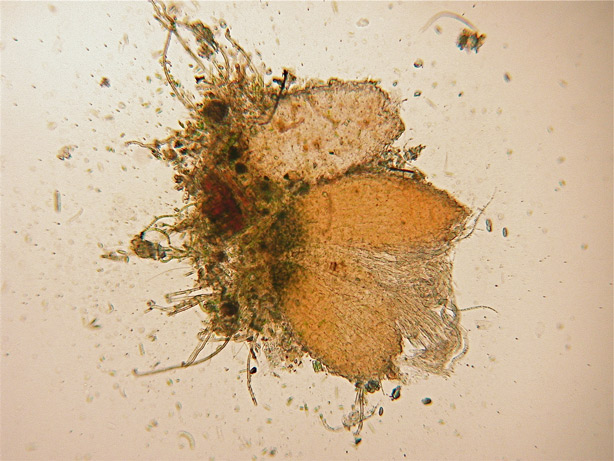
à plat
Jean Pierre Dechaume,
15-06-2009 16:54
Re:Tubeufia?
spores
Jacques Fournier,
15-06-2009 17:06
Re:Tubeufia?
merci pour les photos, elles confirment bien la détermination d'Amy.
On voit bien sur l'avant dernière photo que la base de l'ascome est noirâtre, ce qui est aussi un caractère des Tubeufia à paroi claire.
Je suis ravi d'avoir vu cette espèce que je ne connaissais pas.
Jacques
On voit bien sur l'avant dernière photo que la base de l'ascome est noirâtre, ce qui est aussi un caractère des Tubeufia à paroi claire.
Je suis ravi d'avoir vu cette espèce que je ne connaissais pas.
Jacques