
07-06-2026 15:10
 William Slosse
Hello everyone,On 05-06-26, I found following asco
07-06-2026 12:09
 François Freléchoux
Bonjour, Voici une brève description de ce qui m
05-06-2026 11:02
Thomas Læssøehttps://svampe.databasen.org/observations/10596691
07-06-2026 12:43
Steve ClementsBojour. This was a strange find on a stick on my
12-07-2015 00:05
 Nedim Jukic
This one from the same locality as the previous on
06-06-2026 17:44
Steve ClementsBonjour, This disco was on planed wood 3 x 1.5 cm
14-08-2016 23:15
 Alex Akulov
Dear friendsCan you help me to find the descriptio

04-06-2026 11:36
Gernot FriebesHi,found on Vaccinium myrtillus.Asci: IKI –, 8-s
 Hello everyone!
While working through the finds from last Sunday, I found groups of fruiting bodies of Lachnum virgineum whose hymenium was discolored purple.
Since I do not remember any "chemical abuse" of the find, I suspect a parasite as the cause of the coloration.
Does anyone know this discoloration and its cause?
Many thanks and best regards
Harald
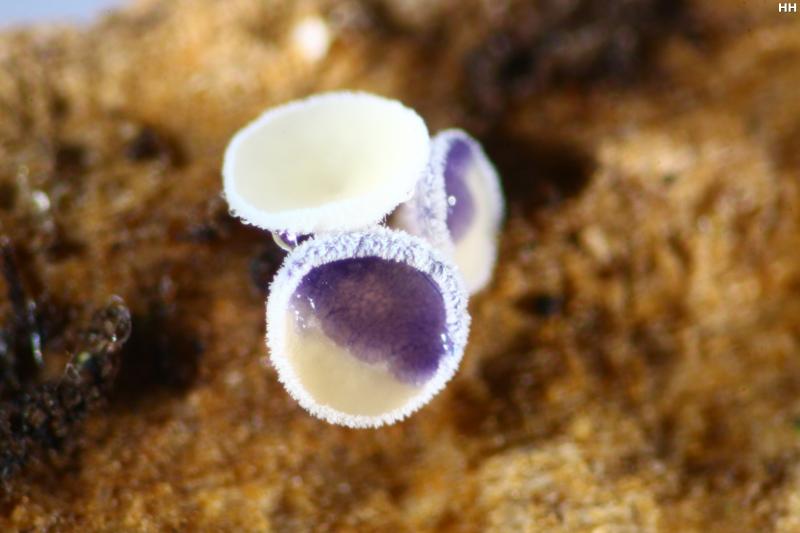
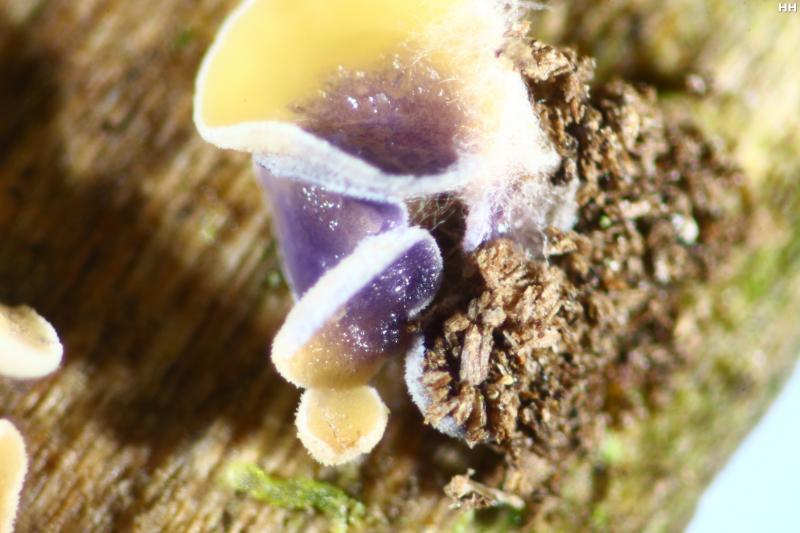
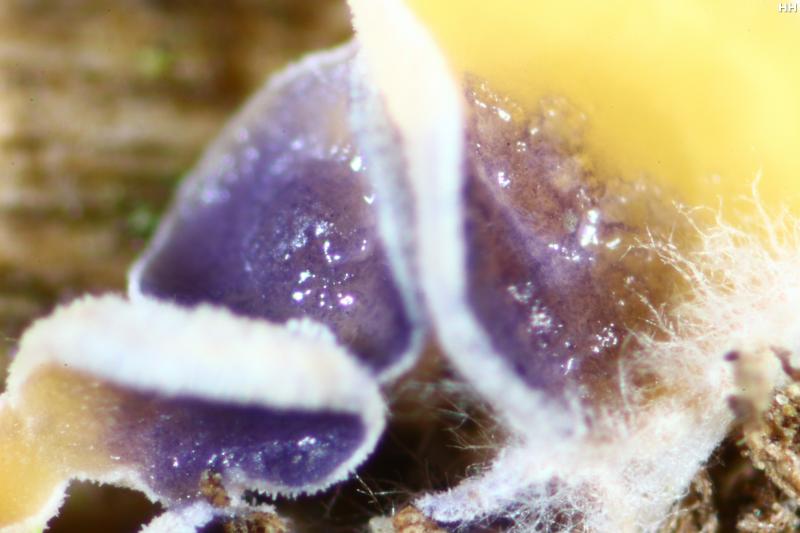

I think the coloration is due to growth of bacteria.
Yours, Lothar

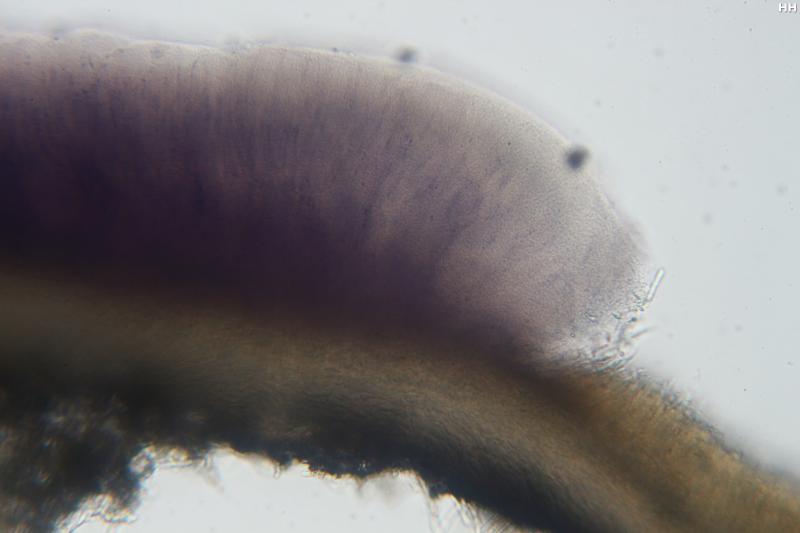
Following David's suggestion, I tried to make cross-sections of the infected fruiting bodies.
Here is the result with 16x and 100x objective.
It looks to me as if the hymenium is dissolved by the parasite and only the hairs, subhymenium and excipulum remain.
The obviously slimy layer of the parasite seems to have rod-like structures - bacterial parasite?
Best regards
Harald

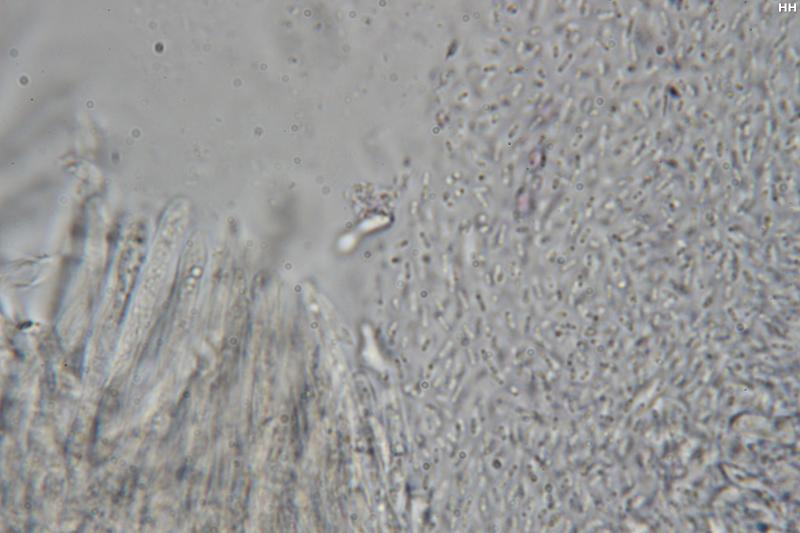
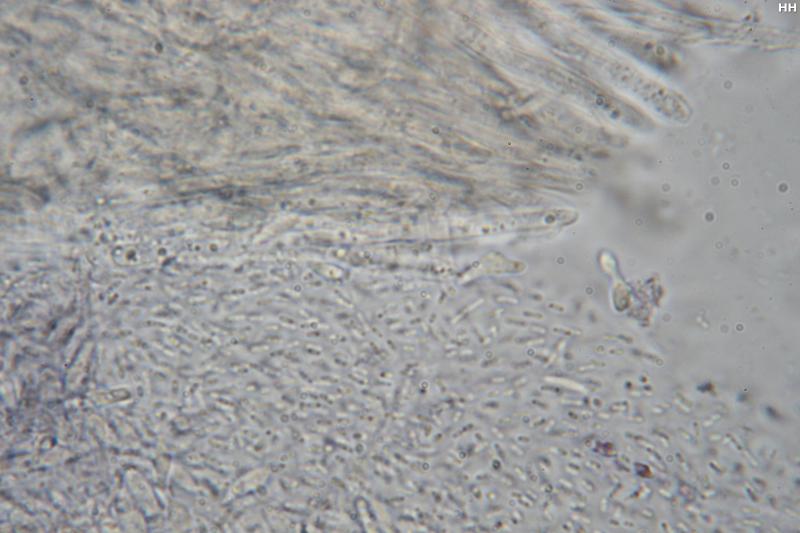
This parasite is very common on Lachnum and Phaeohelotium, but not known which bacterium it is.
Maybe it could grow also on other Ascomycota.
I find it very exciting that the color changes.
best regards,
Thorben
Regards, Pimpek