
28-04-2026 20:07
 Lothar Krieglsteiner
... on twig in the air at standing Ceratonia siliq
14-04-2026 05:32
Ethan CrensonHi all, A few weeks back a friend pointed out som
28-04-2026 20:33
Vitus SchäfftleinHello, I found Trochila ilicina on Ilex aquifoliu

30-04-2026 10:28
Rot BojanHello, by appearance I would say that I am dealing
27-04-2026 18:48
Tony MoverleyCollected 23rd April 2026, Norfolk, EnglandSwarms
27-04-2026 20:52
Lothar Krieglsteiner
Found on hanging tiwg of Olea europaea in dried-ou
28-04-2026 22:51
 Bernard CLESSE
Bonsoir à toutes et tous,Pourriez-vous m'aider à
29-04-2026 08:01
Lothar Krieglsteiner
... on twig attached to small tree of Citrus auran
29-04-2026 10:44
Lothar Krieglsteiner
growing at moist, drying-out soil at the side of a
Hyalopeziza on Rhododendron
Lothar Krieglsteiner,
02-08-2024 11:22
.. French Alps, 29.6.24. There is a H. rhododendricola, but I do not find much about it.The hairs are septate and longer at the flanks, shorter and partly not at the margo. There is no notable change with the hairs in KOH. The asci are without croziers and ioidine-negative. The spores are poor in oil (some small drops per pole, hardly to get into the pictures) and measure about 7-9/2,5-3,3.
Can somebody help?
Best, Lothar
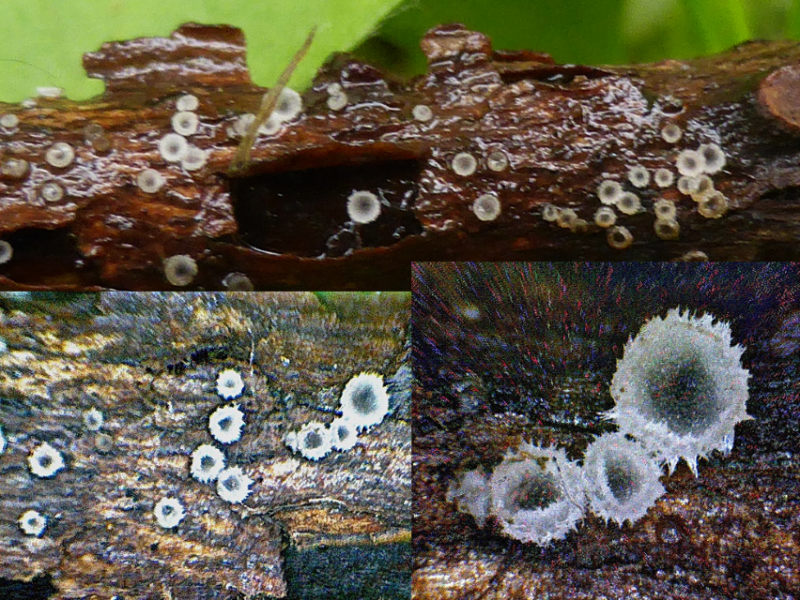
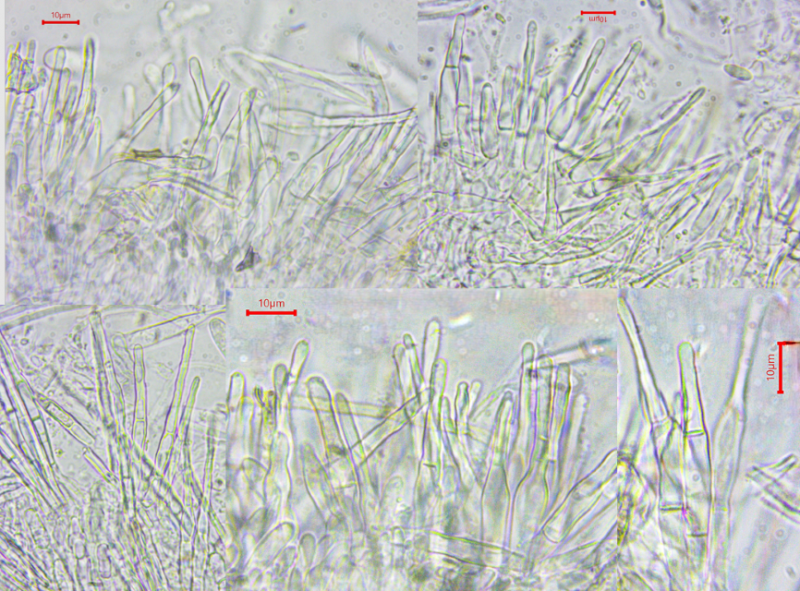
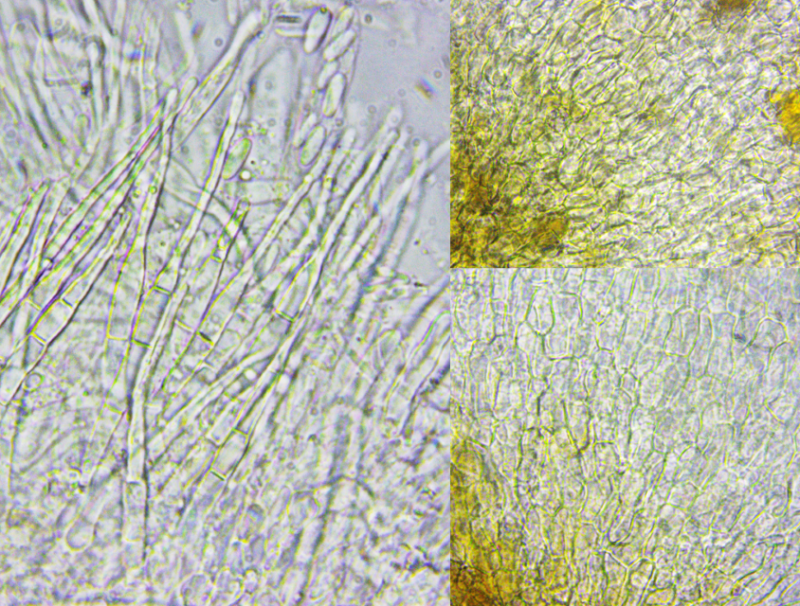
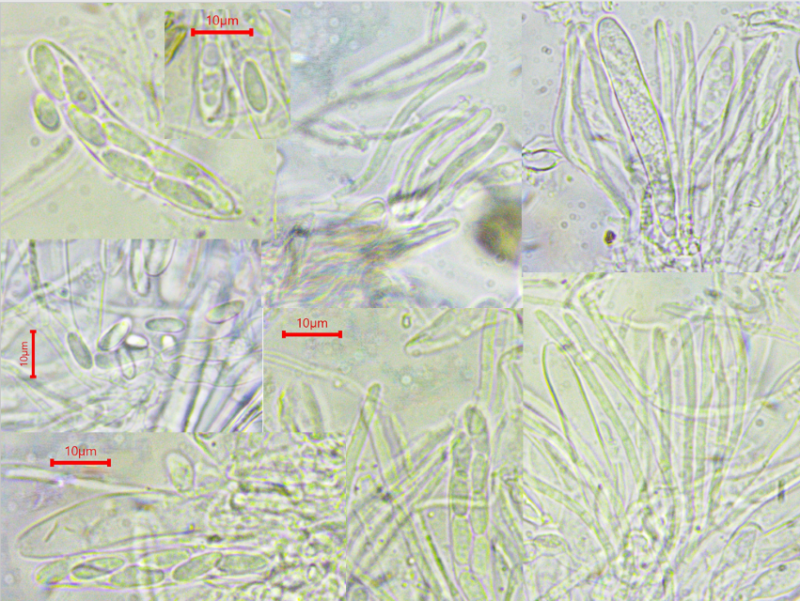
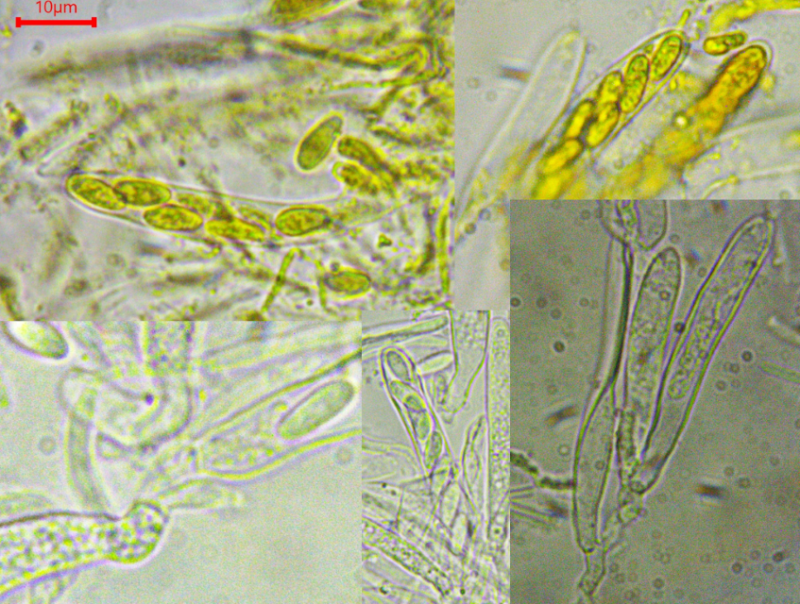
Hans-Otto Baral,
02-08-2024 11:33

Re : Hyalopeziza on Rhododendron
Hallo LotharI think H. nectrioidea is worth to compare.
Lothar Krieglsteiner,
02-08-2024 11:45
Re : Hyalopeziza on Rhododendron
Hello Zotto,
thank you!
I had looked at your folder and was not very happy because of the very brown appearance and incrustations, and the hairs not thick-walled
After reading here:
http://www.ascofrance.fr/search_forum/33444
I see this is more a special character of your find.
And - yes, the spore size and contents, the ascus bases and the iodine-negative apex are fitting.
Well, H. nectrioidea then sounds good.
Best regards, Lothar
thank you!
I had looked at your folder and was not very happy because of the very brown appearance and incrustations, and the hairs not thick-walled
After reading here:
http://www.ascofrance.fr/search_forum/33444
I see this is more a special character of your find.
And - yes, the spore size and contents, the ascus bases and the iodine-negative apex are fitting.
Well, H. nectrioidea then sounds good.
Best regards, Lothar
Hans-Otto Baral,
02-08-2024 11:54
Re : Hyalopeziza on Rhododendron
I was actually sceptical with this brown find but genetically it was identical with the typical hyaline ones.
Lothar Krieglsteiner,
02-08-2024 11:59
Re : Hyalopeziza on Rhododendron
thanks again, Zotto!
So I think I can name it H. nectrioidea (typical)
Yours, Lothar
So I think I can name it H. nectrioidea (typical)
Yours, Lothar