30-05-2026 21:12
Philippe PELLICIERSur branche de mélèze (Larix) près de la neige,
25-05-2026 16:35
 Bernard CLESSE
Bonjour à toutes et tous,J'ai trouvé récemment,
29-05-2026 15:35
daniel FERREBonjour à tous,Je voudrais votre aide pour cette
28-05-2026 16:15
James MitchellHello,Does anyone have the original publication of
28-05-2026 11:06
Thomas Læssøehttps://svampe.databasen.org/observations/10596750
23-05-2026 11:44
 Charles Grapinet
Hello, I am having trouble identifying this copro
25-05-2026 16:44
François BartholomeeusenHi forum members,During an excursion organised by
26-05-2026 21:25
Dirk GerstnerHello everyone, I'm completely stumped by this li
26-05-2026 22:44
Ethan CrensonHi all, I think I have Incrucipulum capitatum her
22-05-2026 14:44
 Lothar Krieglsteiner
in unripe condition citrine yellow, then soon fadi
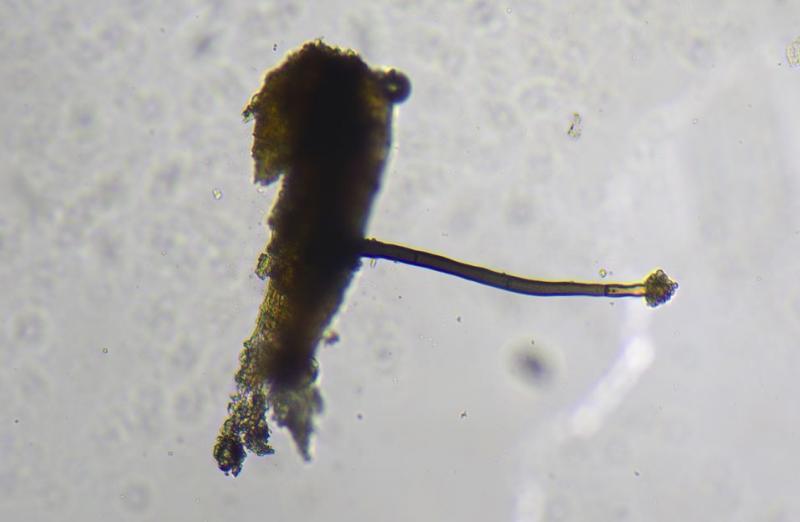
Hello,Yesterday I found a Periconia on a dead Aesculus leaf, near Belfort (north east of France, altitude of 400m). I need help with identification.
Description :
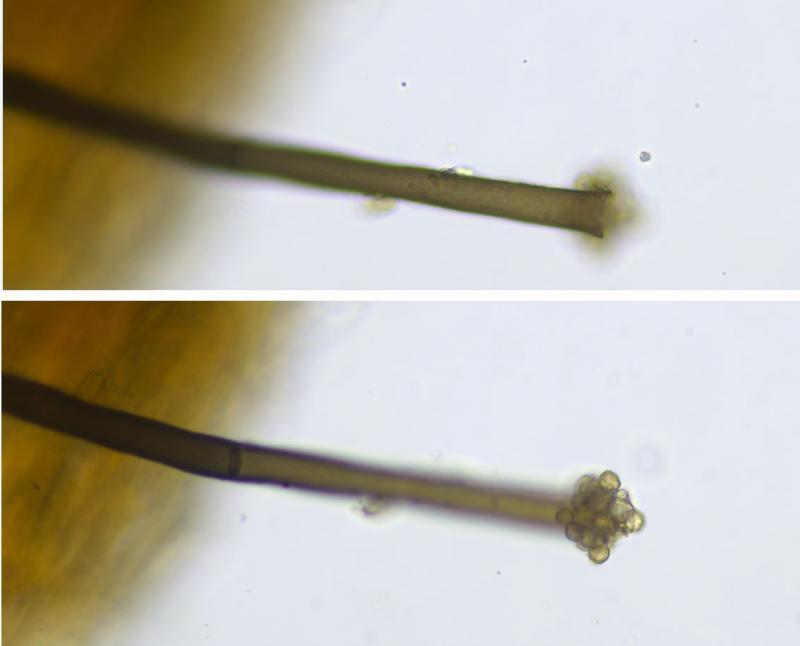
- solitary conidiophores, with only 3 examples scattered on a dead leaf of Aesculus.
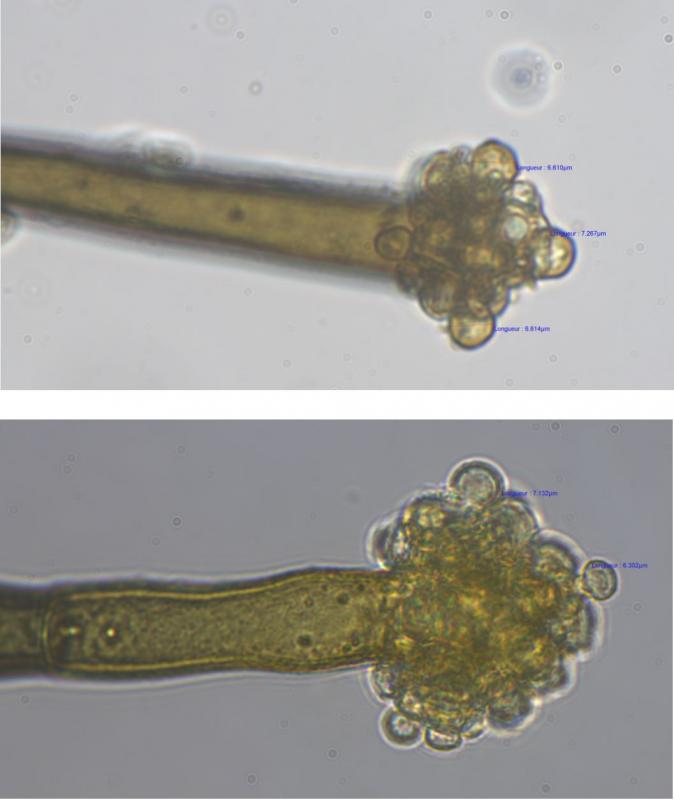
- Foot approximately 400 µm long, with three septa. Foot width of 10 to 15µm depending on location. Slight enlargement of the foot at the apex, at the level of the cluster of conidia.
- the cluster of conidia has a diameter of 30 to 45 µm. It is fixed unilaterally. I noticed this element when varying the focus of the microscope. See on photo number two.
- the conidia are slightly warty (hardly visible in my photos), yellow-brown and measure 6 to 7µm in diameter.
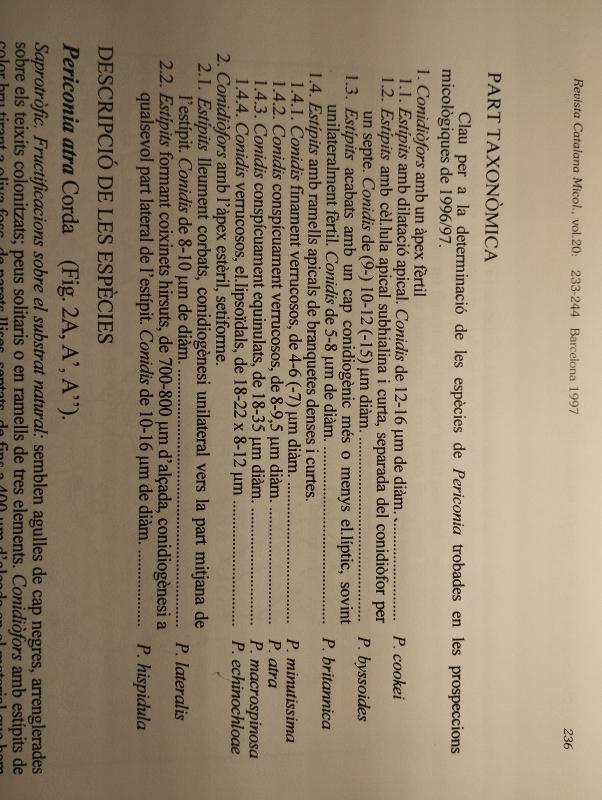
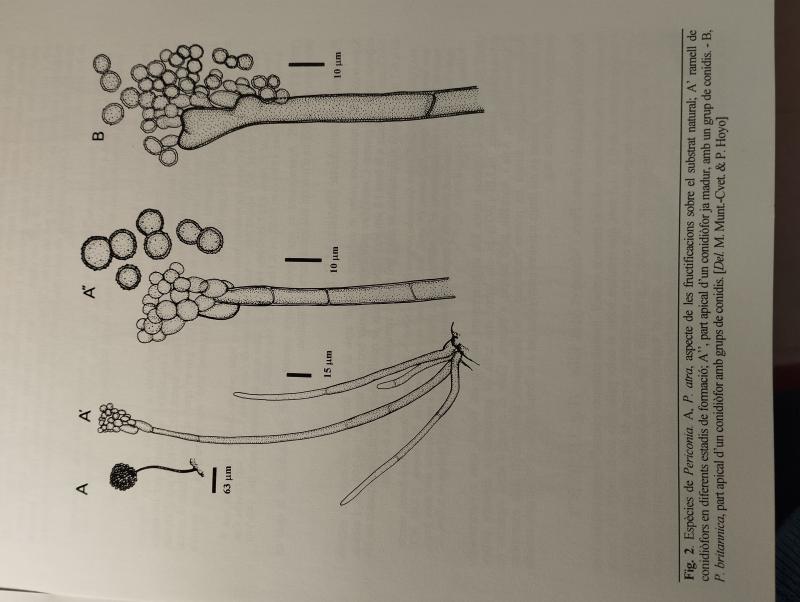
These elements remind me of Periconia britannica described by Ellis (1976), because the cluster of conidia is fixed laterally and the conidia are small in diameter.
What do you think ?
Furthermore, does anyone have a key to Periconia to recommend to me?
Charles
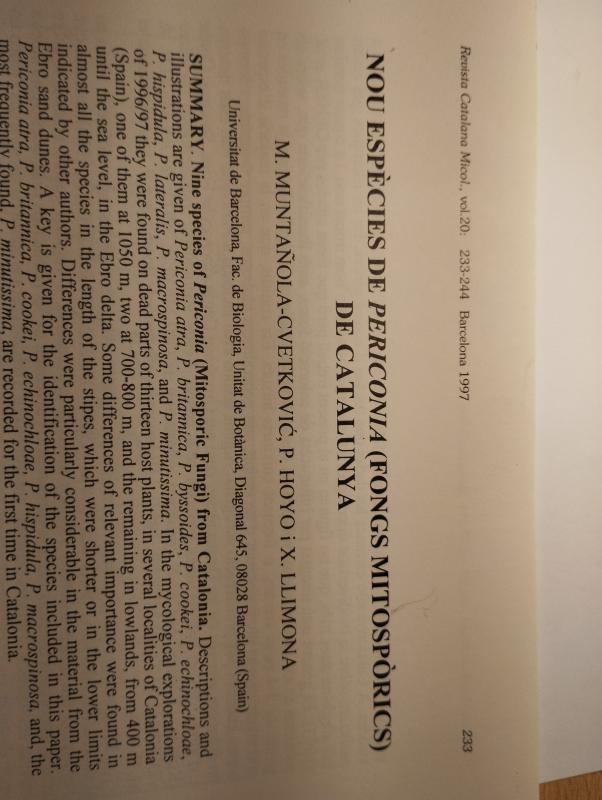
Espero que sea útil.
Saludos
Pilar Hoyo