
12-06-2026 14:50
 François Freléchoux
Bonjour, Voici la brève description d'une Mollis
10-06-2026 21:16
François Freléchoux
Bonsoir,Le dernier du jour, en attendant votre avi
11-06-2026 19:01
 William Slosse
Hello all,In an attempt to make a culture of a sus
11-06-2026 19:03
 Nicolas VAN VOOREN
Chers membres d'Ascofrance,Le site sera placé en

09-06-2026 18:32
Camille MertensSur morceau de roseau immergé 0,5 - 0,7 mm de dia
10-06-2026 12:54
Steve ClementsBonjour encore, Pouvez-vous m'aider, s'il vous pl
10-06-2026 21:07
François Freléchoux
Toutes les tiges de gentianes jaunes de l'an passÃ
10-06-2026 13:41
François Freléchoux
Bonjour à nouveau, Voici une trouvaille d'hier.
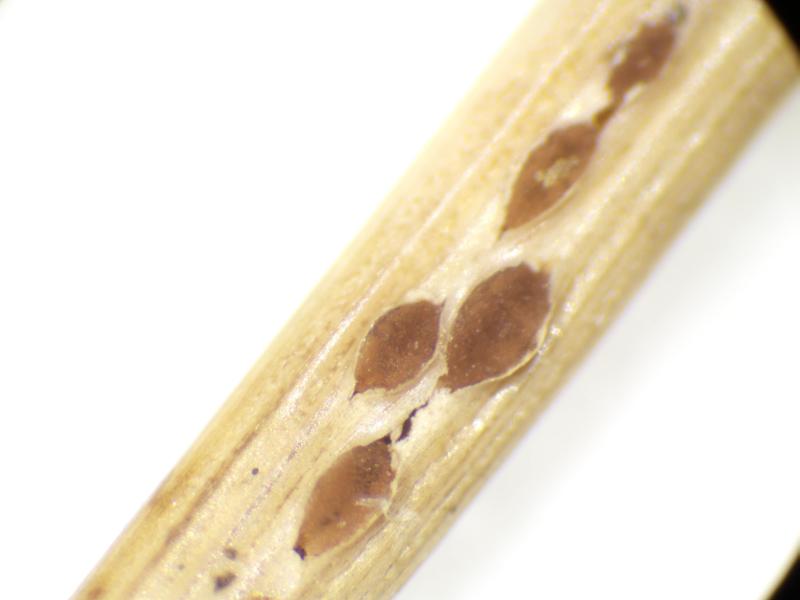
Discomycete on leaves of Eriophorum vaginatum
Marcus Yeo,
06-08-2022 22:20
Apothecia are erumpent; elongated; with an orange-brown hymenium.
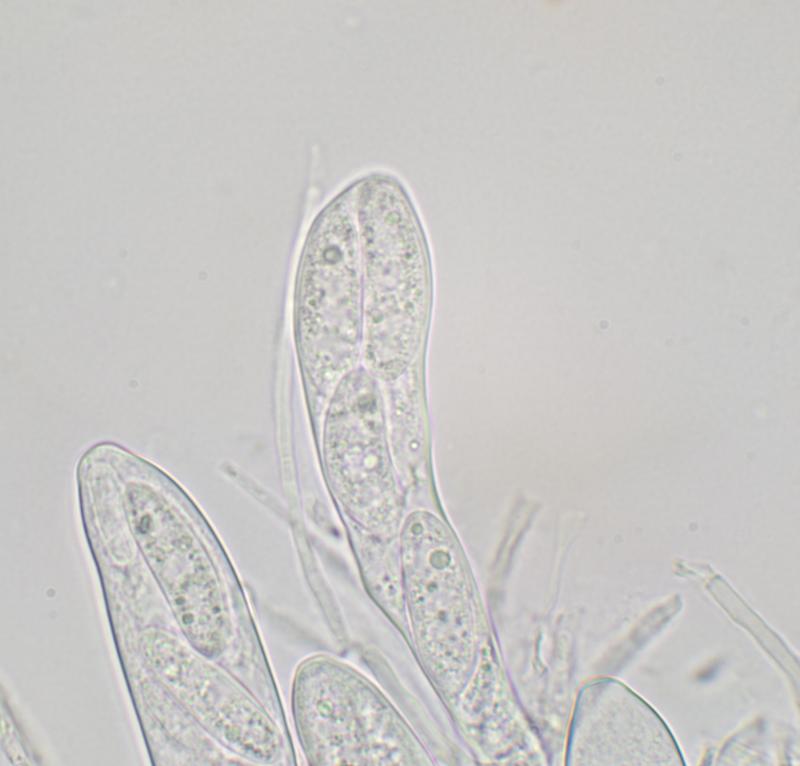
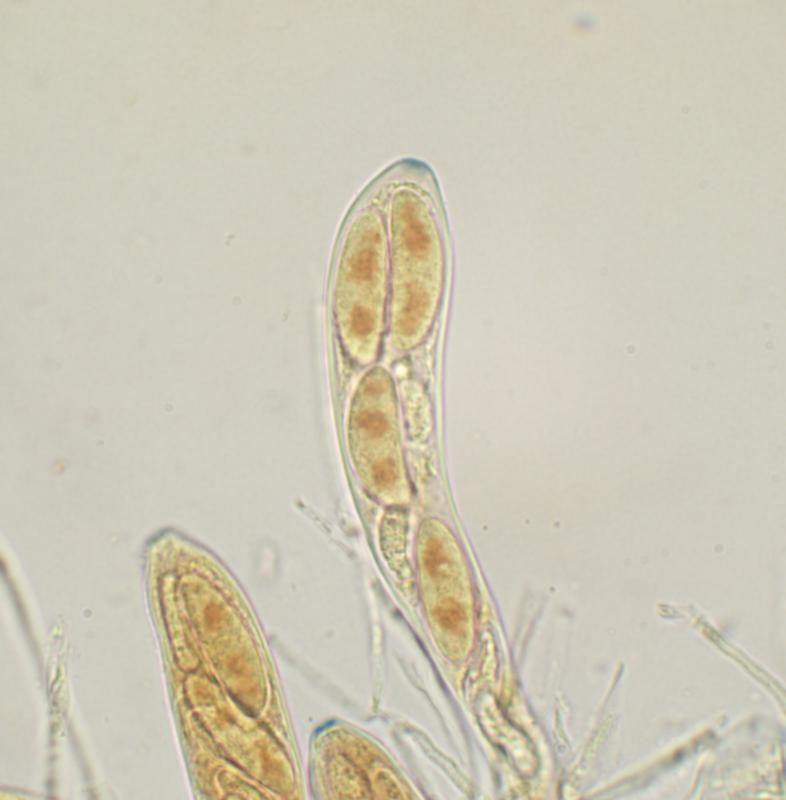
Asci are clavate; ca 120-160 x 13-18 µm; 8-spored (though in some asci not all spores have developed fully); IKI+ blue.
Ascospores are all in asci; hyaline; ellipsoid; 0-septate; 21-27 x 8-9 µm; with scattered small OBs & a couple of medium-sized OBs.
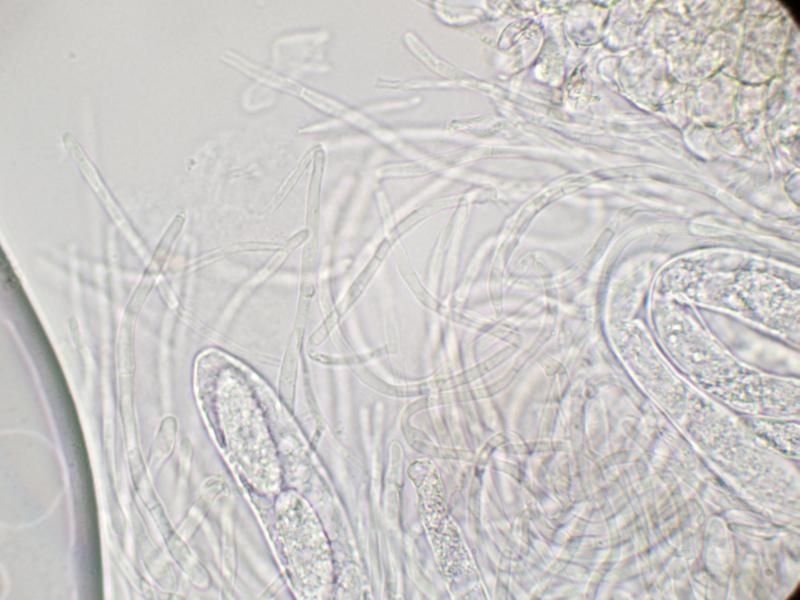
Paraphyses are filiform; 2 µm wide; sparsely branched.
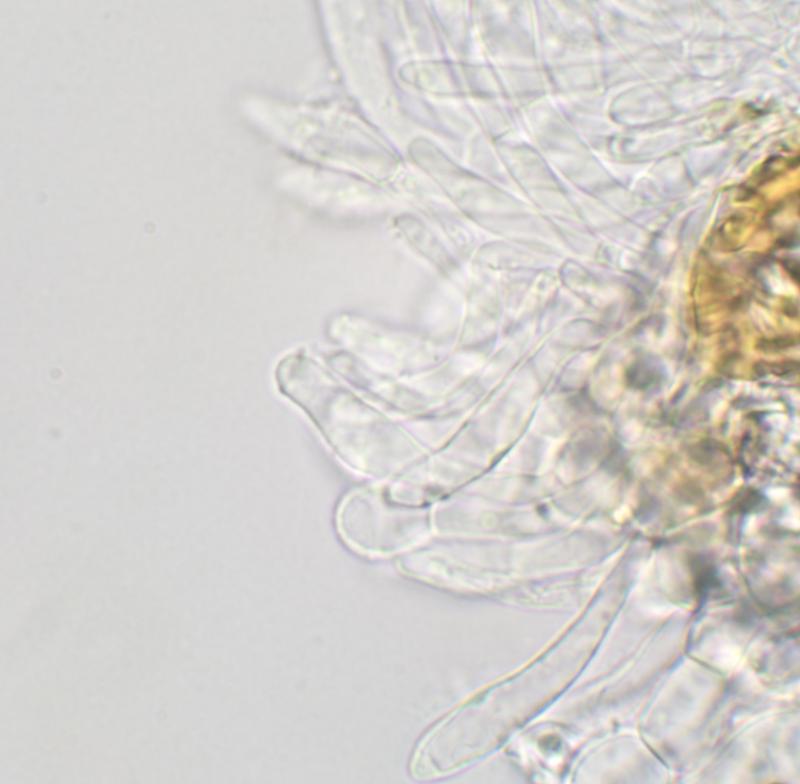
Marginal cells are cylindrical to clavate; ca 25-35 x 5-7 µm.
Thanks
Marcus
Brian Douglas,
09-08-2022 02:27

Re : Discomycete on leaves of Eriophorum vaginatum
Hysteronaevia kobayasii seems rather similar (host, spore dimensions and and usually only four ascospores reaching maturity). Though yours has a blue apical ascus pore in Lugol's.
Has anyone else seen this in recent decades?
Has anyone else seen this in recent decades?