
14-08-2016 23:15
 Alex Akulov
Dear friendsCan you help me to find the descriptio

05-06-2026 11:02
Thomas Læssøehttps://svampe.databasen.org/observations/10596691
04-06-2026 11:36
Gernot FriebesHi,found on Vaccinium myrtillus.Asci: IKI –, 8-s
05-06-2026 12:10
 François Freléchoux
Capitotricha sp. sur Lonicea caerulea Caractères
19-05-2026 10:27
Patrice TANCHAUDBonjour, récolte récente sur terre retournée i
04-06-2026 18:39
Gernot FriebesHi,I collected this species in two different locat
22-05-2026 13:29
Gernot FriebesHi,I am curious to hear your opinion on this mater
Orbilia pilifera?
Edvin Johannesen,
20-05-2021 17:27

Hi!
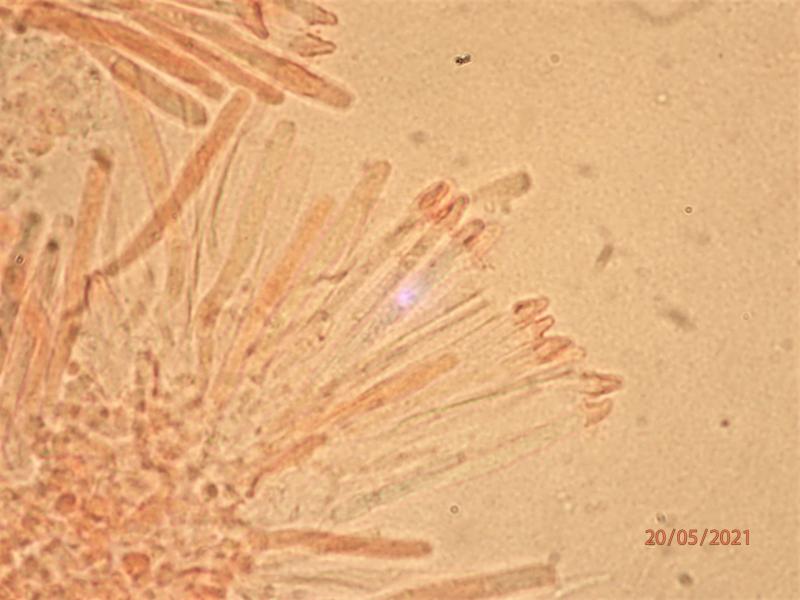
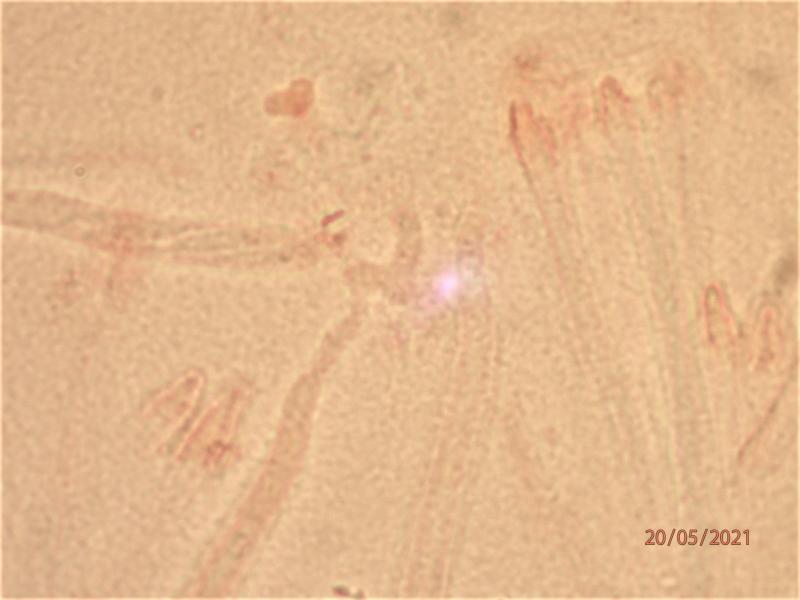
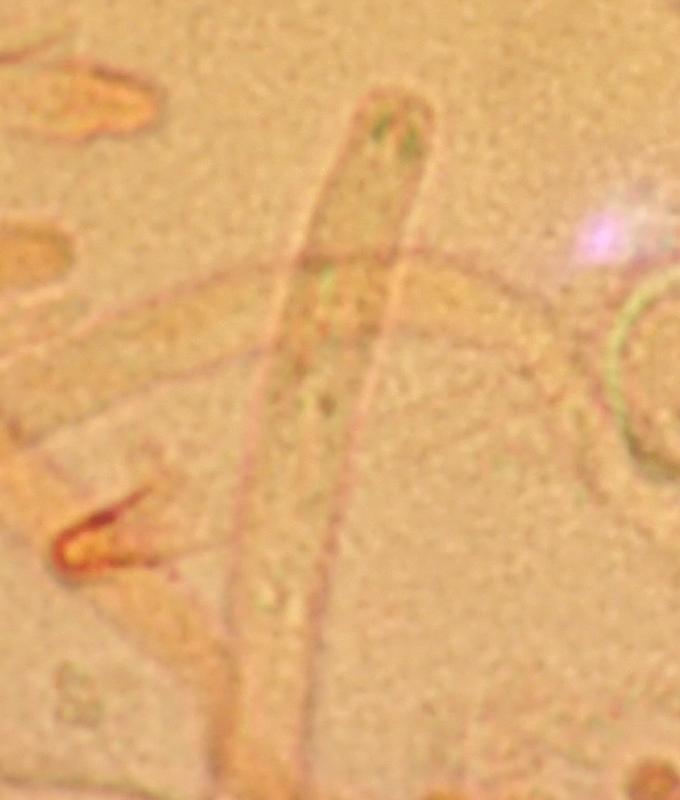
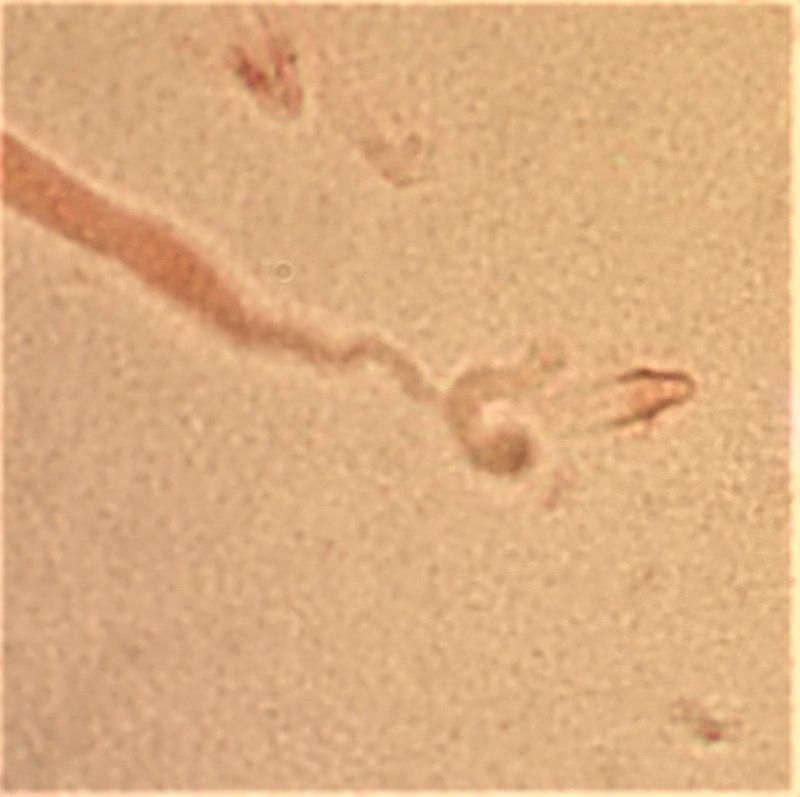
This beautiful pink Orbilia was growing on a thin Ulmus twig near Oslo, Norway. Apothecia 0.5-0.7 mm. Margin almost dentate from bundles of glassy (?) hairs. I am struggling to see the spores clearly inside the asci, and even more difficulties photographing them with my simple setup, but they appear clavate-fusiform (rounded apically) with one apical SB occupying only a small area of the spore. It's difficult to see the shape of the SB, but definitely somewhat longer than wide. The paraphyses are septate, cylindrical and with a triangular exudate cap (stained in CR). Dead (?) asci are apically truncate. There are large, globose cells n the ectal excipulum. I am quite sure there are croziers. And finally, there are bundles of glassy (?), elongate cells, presumably forming the dentate margin.
Are we in Section Piliferae and could it be O. pilifera? I don't find the capped paraphyses mentioned for that species. But the substrate host fits.
All micro images in CR in a drop of water, from fresh apothecium.
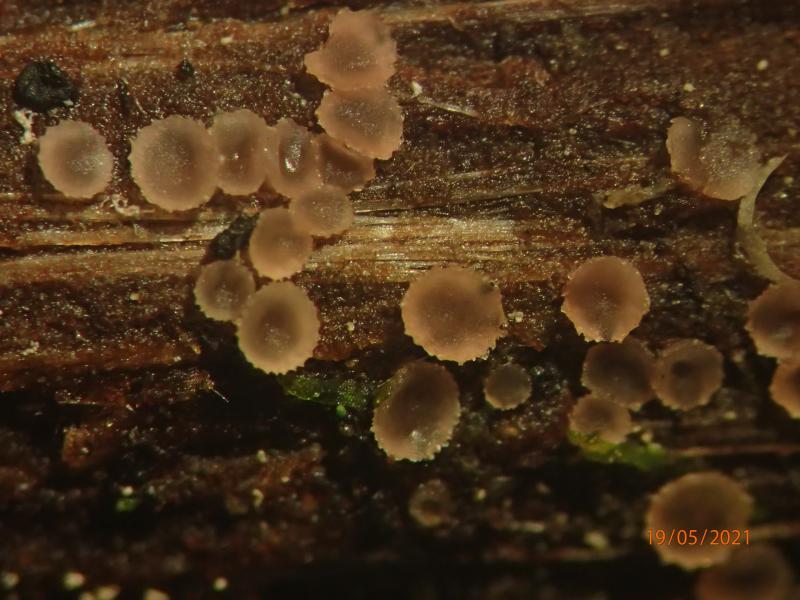
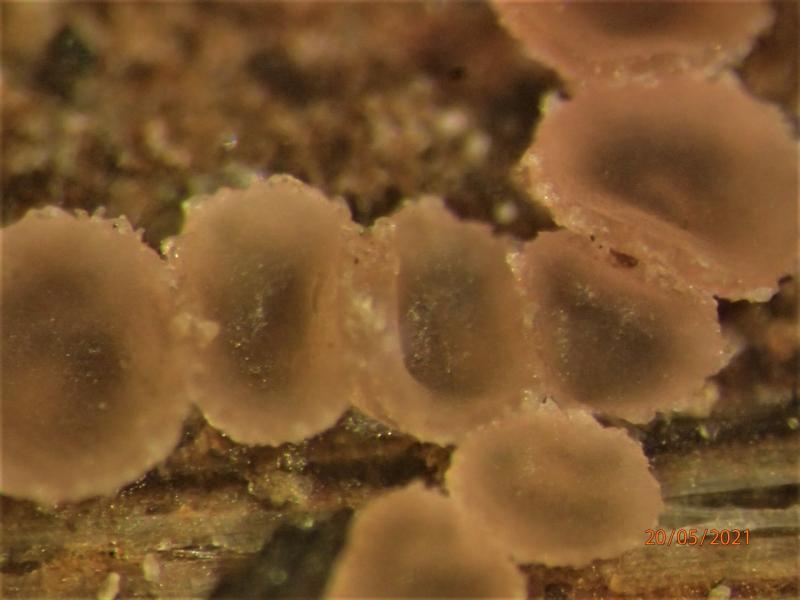
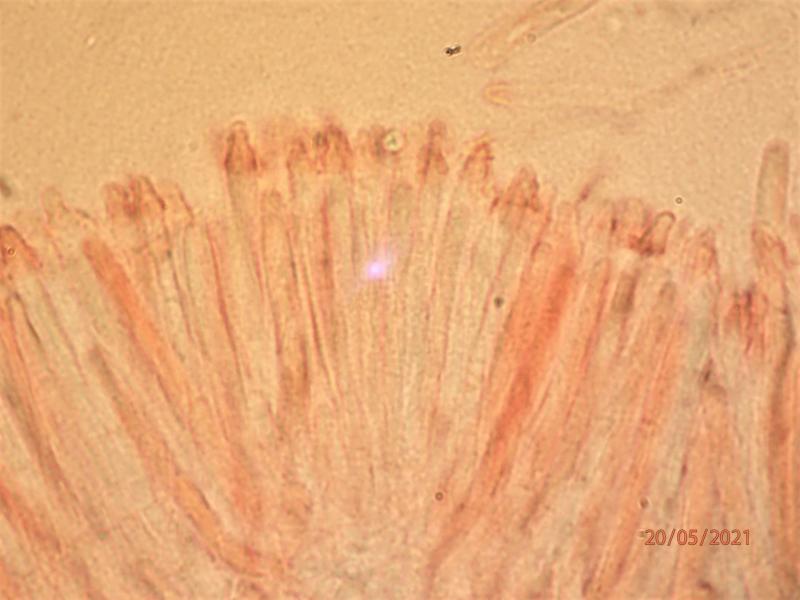
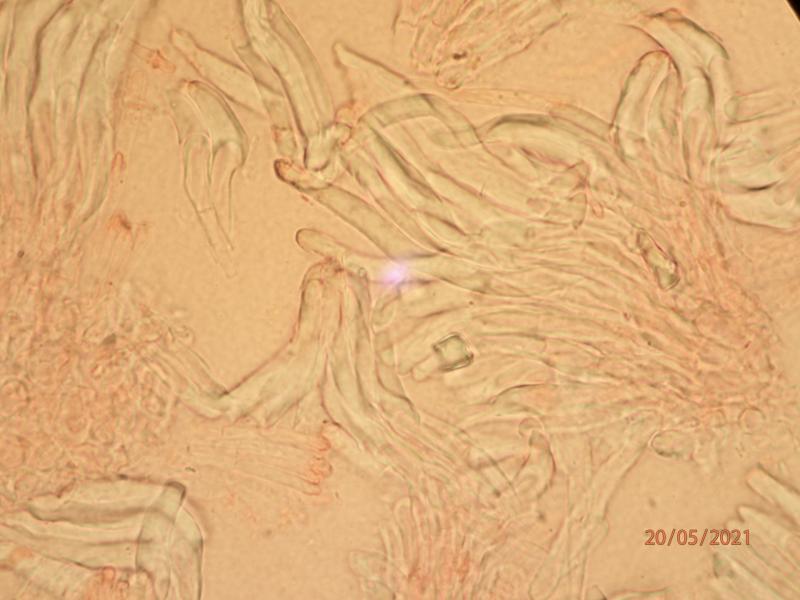
Edvin Johannesen,
20-05-2021 17:28
Re : Orbilia pilifera?
Some more photos.
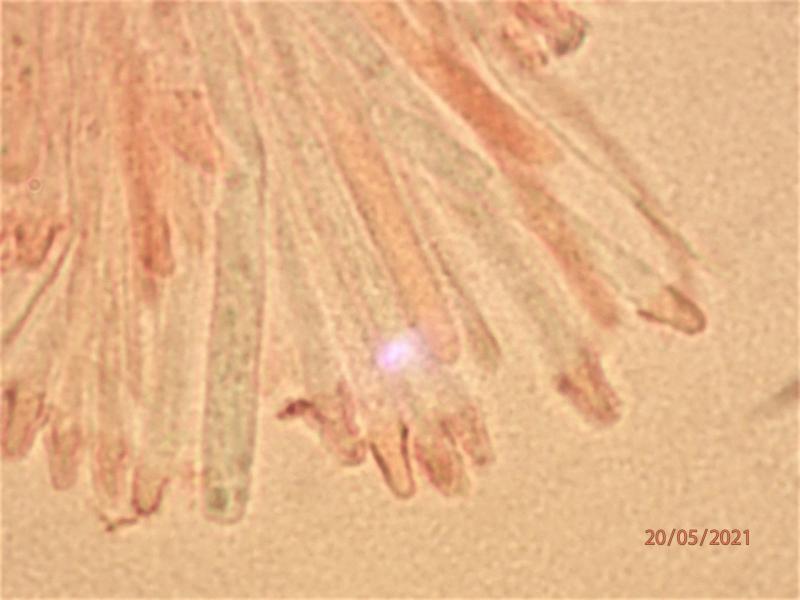
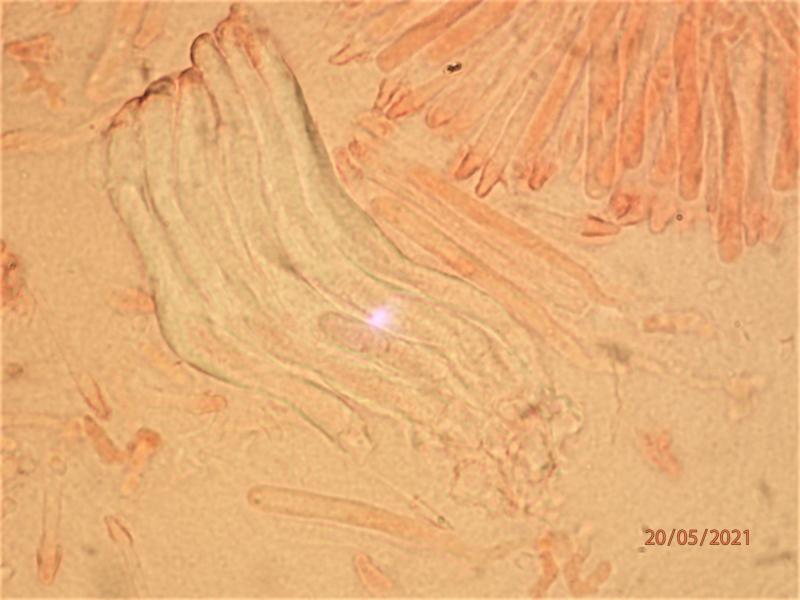
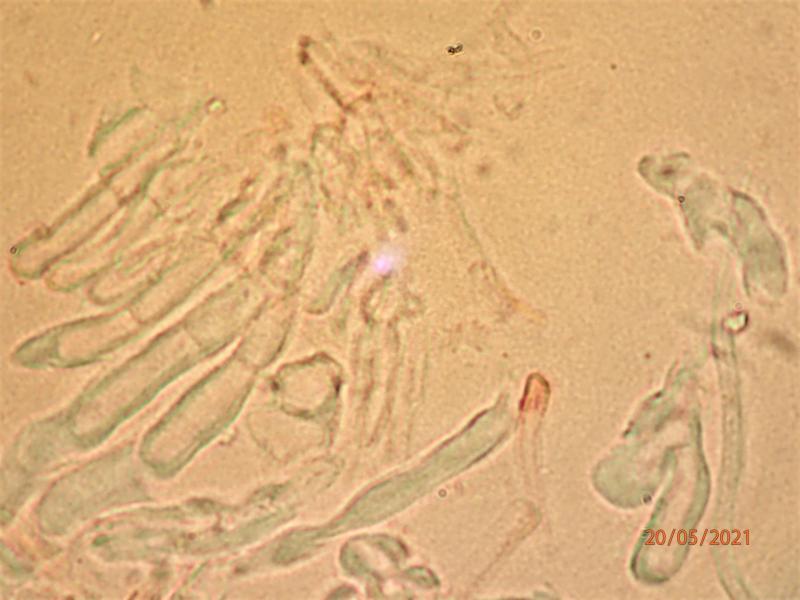
Edvin Johannesen,
20-05-2021 17:31
Re : Orbilia pilifera?
Note: The first photo in the second part shows spore bodies in two spores and not an amyloid ascus apex!
Hans-Otto Baral,
20-05-2021 17:52

Re : Orbilia pilifera?
These are typical glassy processes at the margin, and the ascus base is bifurcate but most probably never with croziers (the branches must be both attached to the same basal cell, then it would be a crozier).
I guess the spores were rather narrow, maybe 1,5 µm. Glassy processes exclude O. pilifera. I suggest this is Orbilia rubella.
Regrettably, everything is dead, except for the spores with SBs that you mention. Did you try a water mount?
Zotto
Edvin Johannesen,
20-05-2021 18:00
Re : Orbilia pilifera?
Thanks Zotto. The material is fresh. I thought a drop of CR in water would't kill the asci etc. But I will try plain water. I have a problem with digital noise on the camera at high magnification, but will do my best.
Edvin Johannesen,
20-05-2021 18:36
Re : Orbilia pilifera?
I have studied the material in water and compared closely with O. rubella in you great epos, and it fits prefectly. The spores are indeed 1-1.5 microns broad and the small, apical SBs are distinct, as well as the capped parafyses, glassy cells etc. Thanks a lot!