
23-05-2026 18:57
Sylvie Le GoffBonjour à tousRécolté sur une branchette de Sal
22-05-2026 14:44
 Lothar Krieglsteiner
in unripe condition citrine yellow, then soon fadi
23-05-2026 11:44
 Charles Grapinet
Hello, I am having trouble identifying this copro
22-05-2026 21:35
Steve ClementsBonjour, I expected this find on old wood on our
22-05-2026 18:12
Lothar Krieglsteiner
... in moist chamber from Portugal.As the fungus s
22-05-2026 20:08
Ethan CrensonHello all, Yesterday in NYC I was visiting an e
11-01-2022 16:36
 Jason Karakehian
Hi does anyone have a digital copy of Raitviir A (
20-05-2026 17:47
Margot en Geert VullingsWe found this Mollisia on dead Juncus stems mown l
22-05-2026 14:47
Gernot FriebesHi,superficial ascomata collected on bark of a liv
Peziza
Castillo Joseba,
25-02-2021 11:37
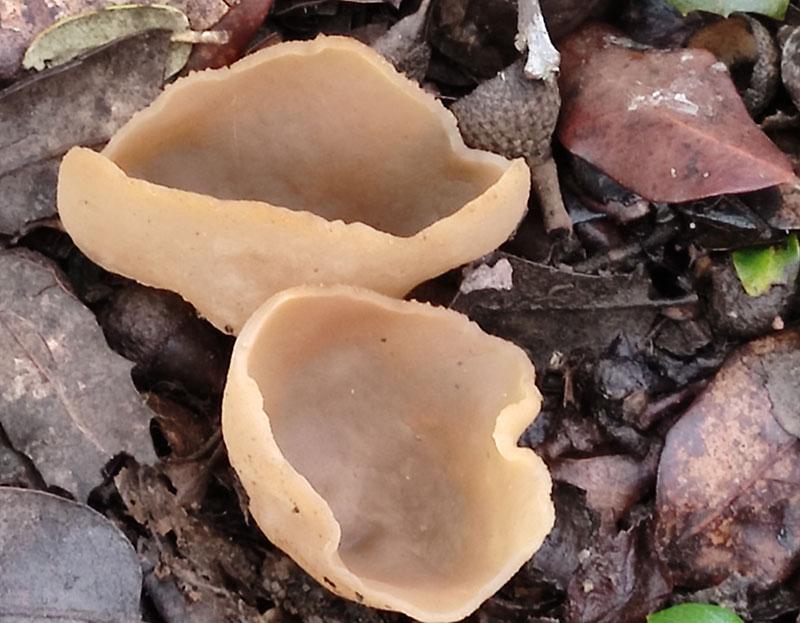
 De ayer en bosque de encinas (quercus), ejemplares de 3-5 cm. de diamertro
No tienen latex
Pienso en Peziza vadia ?
A ver que os parece
Saludos
Joseba

Castillo Joseba,
28-02-2021 08:46
Re : Peziza
No hay ninguna sugerencia?
Mirek Gryc,
28-02-2021 09:07
Re : Peziza
Hi Joseba
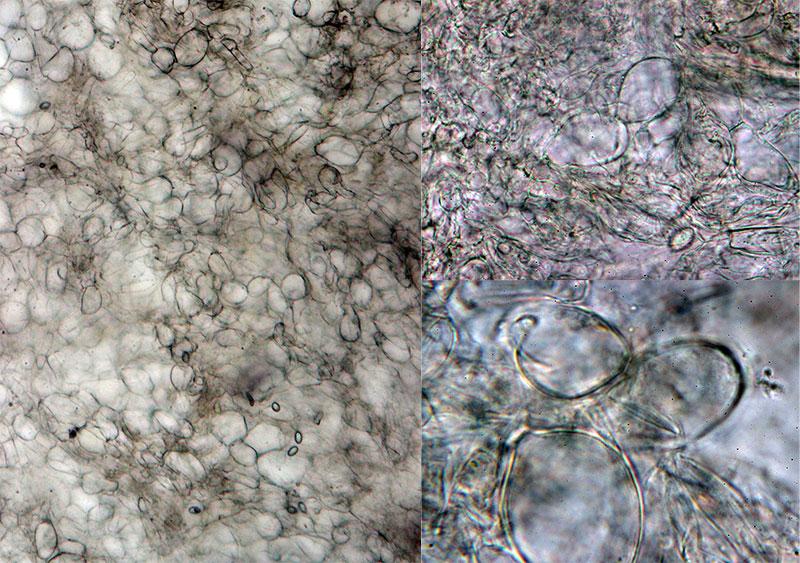
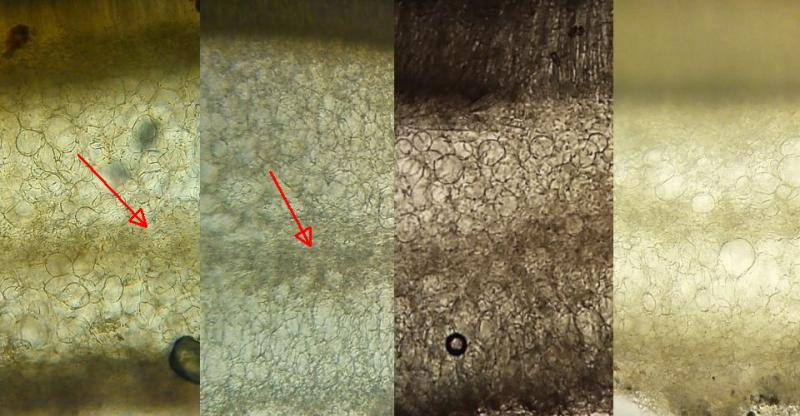
In this group of Peziza it is very important to define the textures and especially whether there is a middle layer (see photo). It is not visible in your photos, so the selection is too large to even approximate the genre.
greetings
In this group of Peziza it is very important to define the textures and especially whether there is a middle layer (see photo). It is not visible in your photos, so the selection is too large to even approximate the genre.
greetings
Mirek
Lothar Krieglsteiner,
28-02-2021 09:07
Re : Peziza
You made your suggestion yourself. P. varia should be correct, at least today, as names like repanda and micropus habe become synonyms.
Best regards, Lothar
Best regards, Lothar
Mirek Gryc,
28-02-2021 09:53
Re : Peziza
Hi Lothar
I also think P. varia is very likely, but more data is needed to be sure.
I have P. arvernensis quite often this time of year which is very similar to P. varia. Based on Joseb's data, this species cannot be ruled out as well.
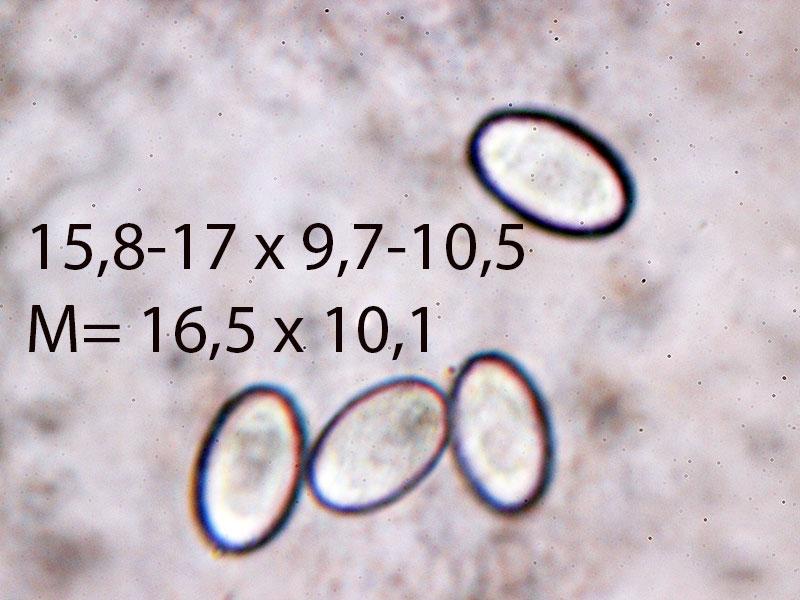
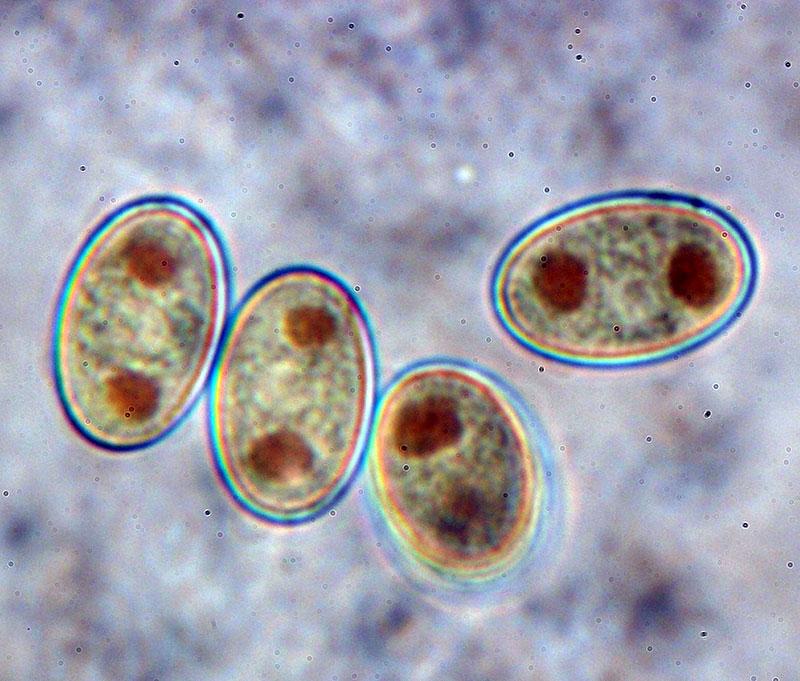
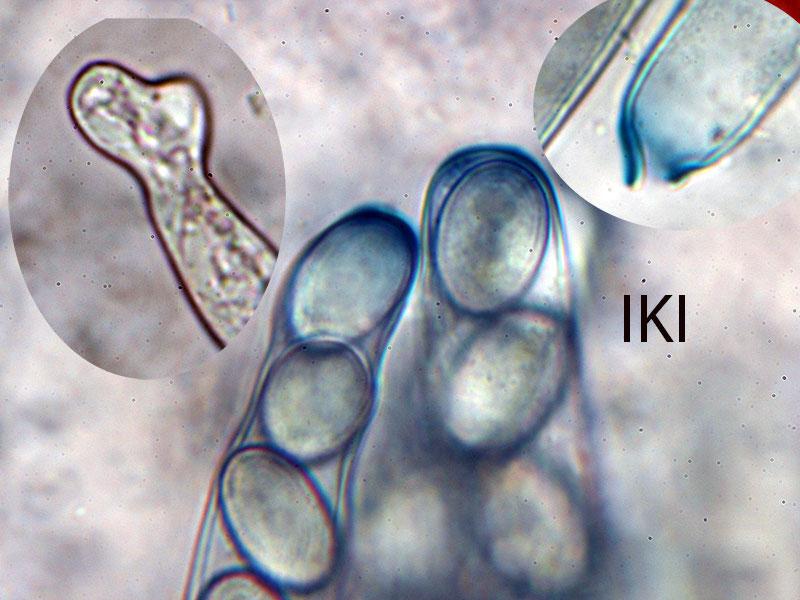
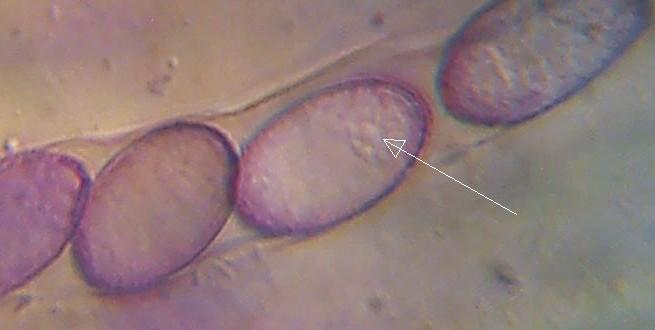
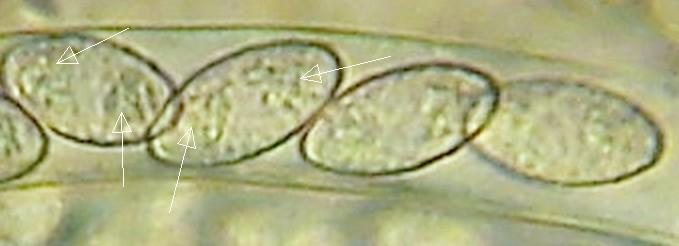
In addition to the textures, careful observation of the spores in the water could help. P. arvernensis spores contain polarized tiny multigutates. They are sometimes very hard to notice, but this feature allows me to distinguish young P. arvernensis (spores without ornamentation yet) from P. varia.
greetings
Mirek
I also think P. varia is very likely, but more data is needed to be sure.
I have P. arvernensis quite often this time of year which is very similar to P. varia. Based on Joseb's data, this species cannot be ruled out as well.
In addition to the textures, careful observation of the spores in the water could help. P. arvernensis spores contain polarized tiny multigutates. They are sometimes very hard to notice, but this feature allows me to distinguish young P. arvernensis (spores without ornamentation yet) from P. varia.
greetings
Mirek
Castillo Joseba,
28-02-2021 09:56
Re : Peziza
Muchas gracias Lothar y Mirek, me habeis ayudado mucho, hare un pocomas de micro
Saludos
Joseba
Saludos
Joseba
Lothar Krieglsteiner,
28-02-2021 09:57
Re : Peziza
Hi Mirek,
thanks fo the hint concerning the spores of varia and arvernensis. I will try to look at this feature in future.
Josebas fungus looks quite ripe in my opinion. So if it is arvernensis, the ornamented spores should already be observable (?). But you are right with your doubt.
Best regards, Lothar
thanks fo the hint concerning the spores of varia and arvernensis. I will try to look at this feature in future.
Josebas fungus looks quite ripe in my opinion. So if it is arvernensis, the ornamented spores should already be observable (?). But you are right with your doubt.
Best regards, Lothar
Mirek Gryc,
28-02-2021 11:02
Re : Peziza
I do not know about Spain, but in my case five-centimeter Peziza varia and arvernensis are very often immature. We have a completely different atmosphere. This year, in my forests, there is still almost half a meter of snow. Such a thick layer of snow also has its advantages. Under such a thick layer, spring asco, which grows on the litter, develops very well.
Spring, however, is already beginning to reach me, maybe soon I will go out into the field
Mirek
Spring, however, is already beginning to reach me, maybe soon I will go out into the field
Mirek