
22-04-2026 20:54
 Enrique Rubio
Hi to everybody.This Pyrenopeziza grew in moist le
24-04-2026 03:16
 David Chapados
Found while looking at something else from wood in
22-04-2026 01:06
 Richard VALERI
Bonjour à tous.Je vous présente cette Nectria s.
22-04-2026 20:17
 Marian Jagers
Is anyone familiar with the Hyphomycetes genus Pse

21-04-2026 13:36
Gernot FriebesHi,I am out of ideas for this one. I collected Sal
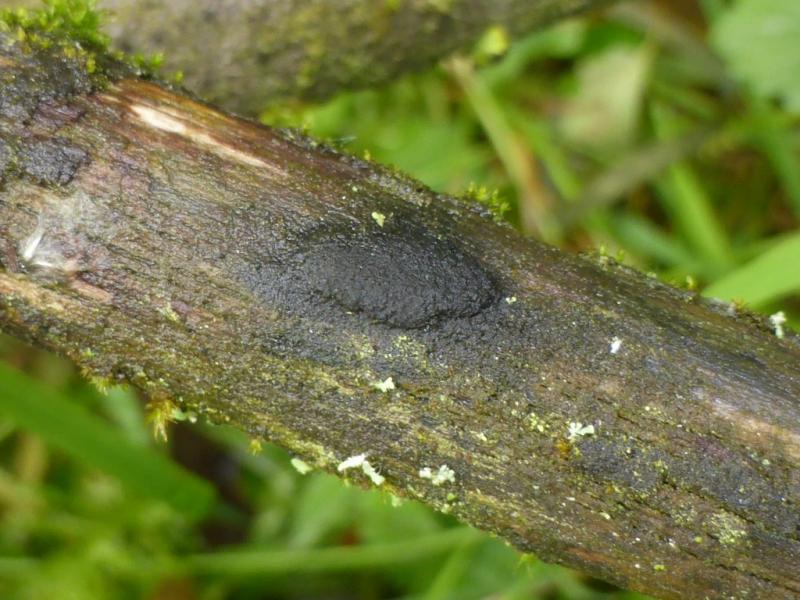
Boliniaceae (?) on twig of decideous tree/bush
Lothar Krieglsteiner,
11-06-2020 12:30
 ... maybe Crataegus, but I am not sure (different hosts in the vicinity).
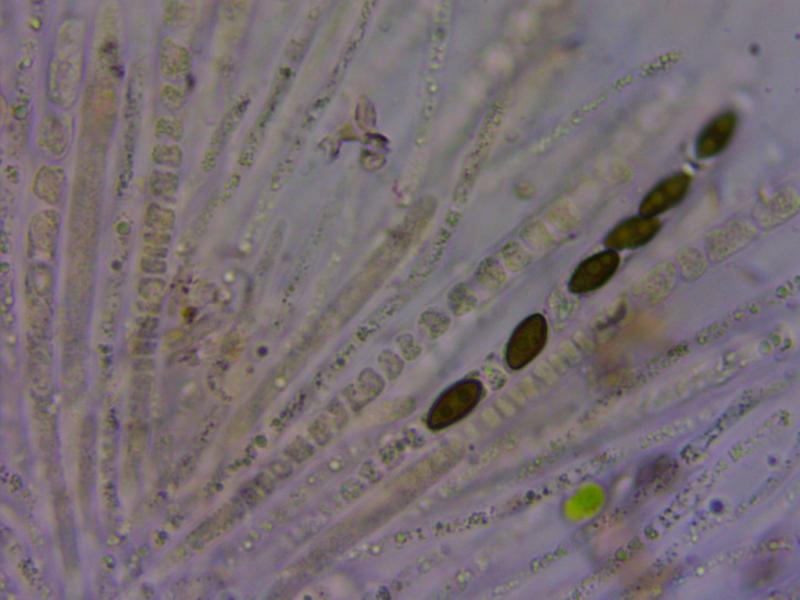
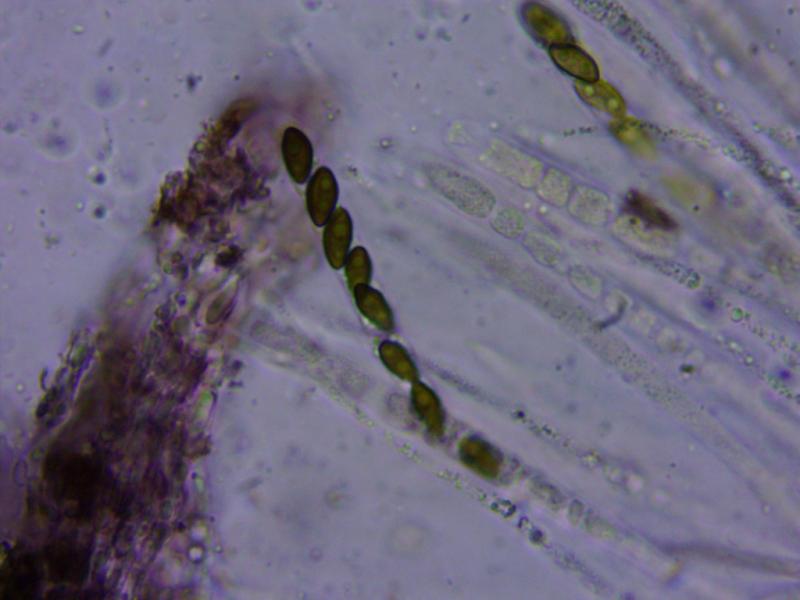
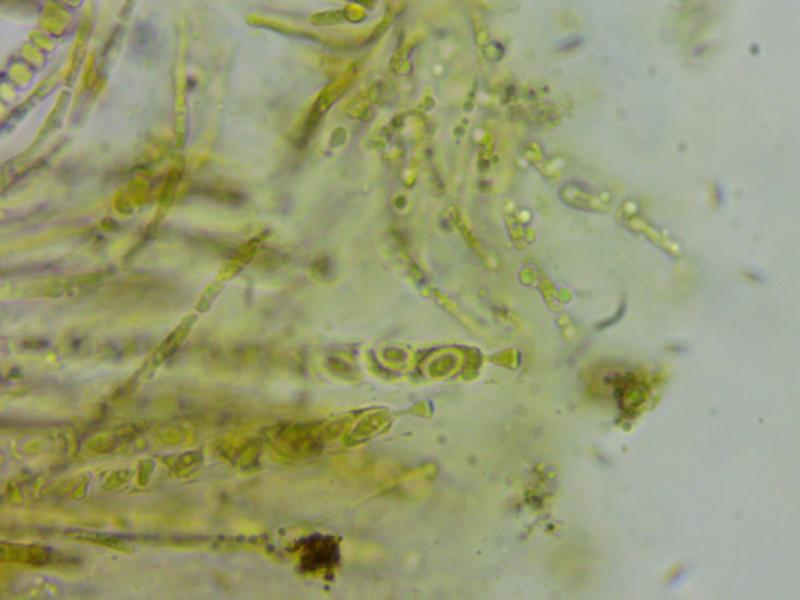
As I collected, I thought of a Hypoxylon or similar, but the spores are quite small (about 7,5-9(9,5)/3,5-4,5) µm, and the ascus porus does not react in IKI. Maybe Camarops petersii could be an option?
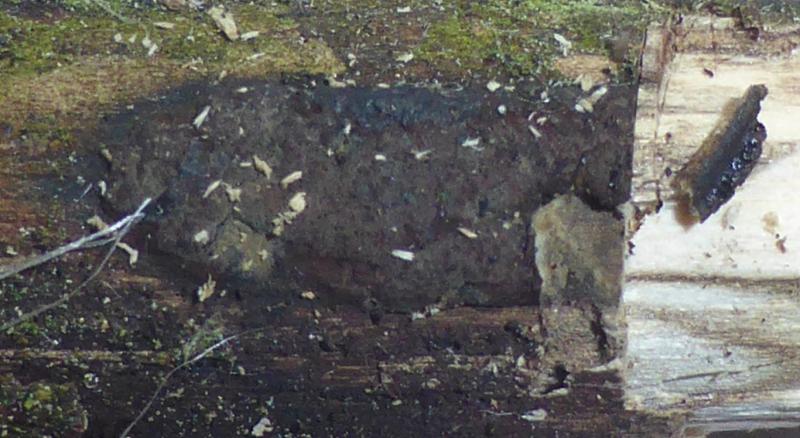
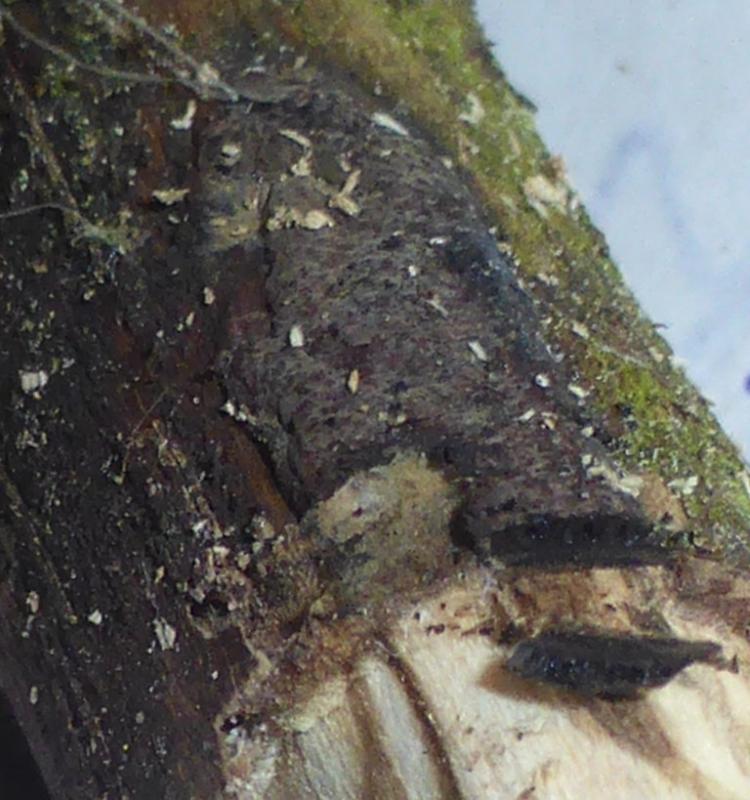
First, I only discovered the old specimens (foto in the field) that did not any more contain a lot. But at home, I saw there was a good stroma also (studio foto) with many unripe, but also some ripe asci with spores.
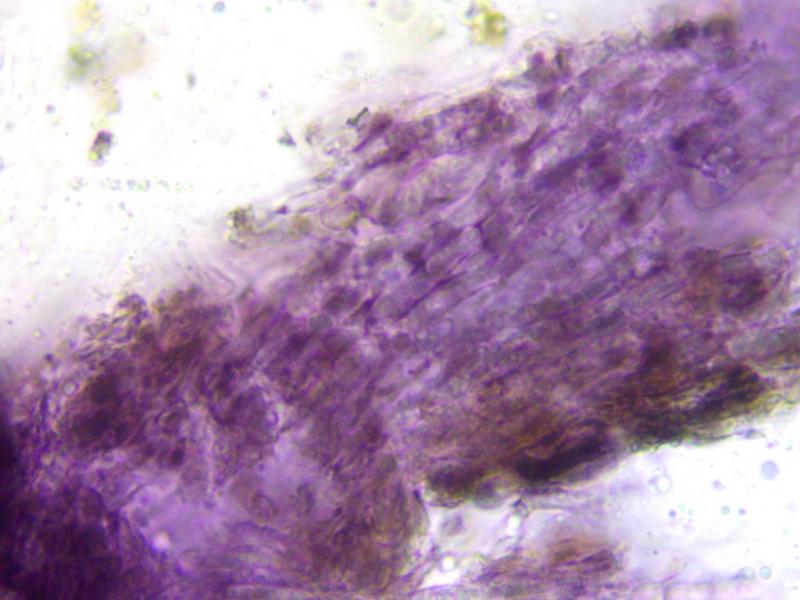
With KOH, an olive-brown pigment is extruding, but in the slide (with water first) I saw a violet pigment in the sterile tissue - not as strong as the picture is indicating, but nevertheless present.
Best, Lothar
Thomas Læssøe,
11-06-2020 13:21
Re : Boliniaceae (?) on twig of decideous tree/bush
I believe that I see a germ slit and an amyloid apical apparatus which also tallies with the macroscopical appearance and the pigments : a Hypoxylon (spores not particurly small for this genus)
cheers
Thomas
cheers
Thomas
Lothar Krieglsteiner,
11-06-2020 13:28
Re : Boliniaceae (?) on twig of decideous tree/bush
Hello Thomas,
thanks for your opinion. I did not see a germ slit, but I will re-examine the specimen. And I did not notice a blue or red discolouring of the stongly visible apical apparatus. But as you suggest, I will re-examine. There is always few time after an excursion for each sample (and there are always dozens of spedimens).
Later then more,
best regards,
Lothar
thanks for your opinion. I did not see a germ slit, but I will re-examine the specimen. And I did not notice a blue or red discolouring of the stongly visible apical apparatus. But as you suggest, I will re-examine. There is always few time after an excursion for each sample (and there are always dozens of spedimens).
Later then more,
best regards,
Lothar