
12-06-2026 14:50
 François Freléchoux
Bonjour, Voici la brève description d'une Mollis
10-06-2026 21:16
François Freléchoux
Bonsoir,Le dernier du jour, en attendant votre avi
11-06-2026 19:01
 William Slosse
Hello all,In an attempt to make a culture of a sus
11-06-2026 19:03
 Nicolas VAN VOOREN
Chers membres d'Ascofrance,Le site sera placé en

09-06-2026 18:32
Camille MertensSur morceau de roseau immergé 0,5 - 0,7 mm de dia
10-06-2026 12:54
Steve ClementsBonjour encore, Pouvez-vous m'aider, s'il vous pl
10-06-2026 21:07
François Freléchoux
Toutes les tiges de gentianes jaunes de l'an passÃ
10-06-2026 13:41
François Freléchoux
Bonjour à nouveau, Voici une trouvaille d'hier.
Nectria or Nectrina sp?
William Slosse,
15-01-2020 00:11
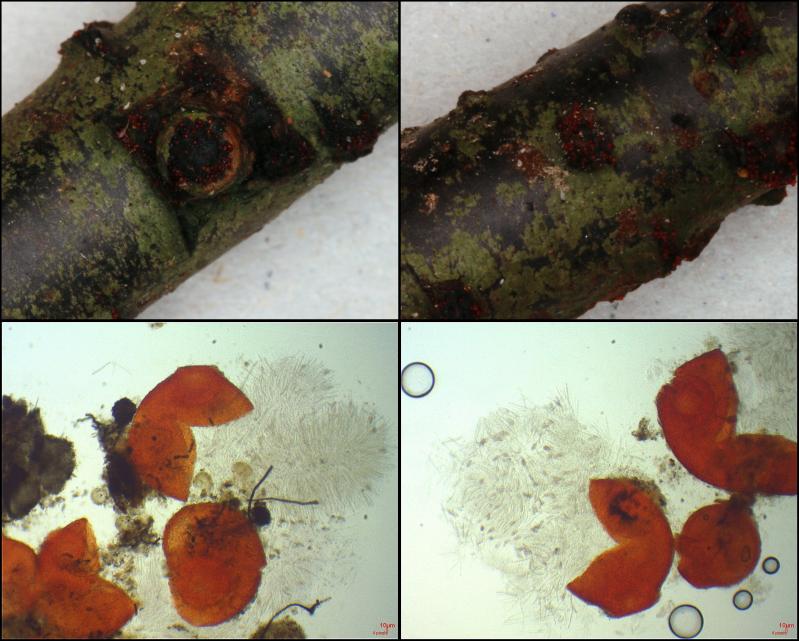
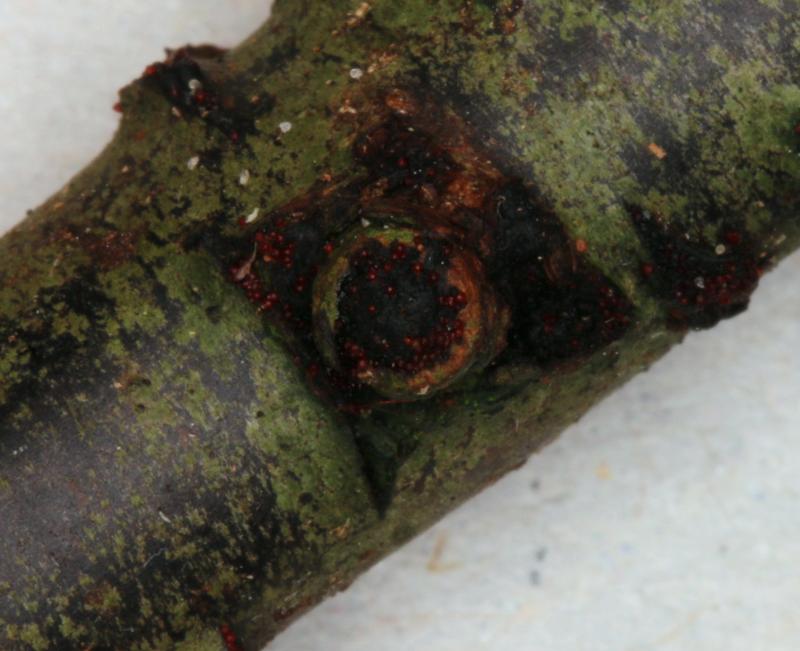
Hallo Forum,I recently found a curious ascomycetes fungus in the garden.
It grew on old bodies of Diaporthe strumella on dead branches of Ribes uva-crispa.
I think it could be an Nectria episphaeria or an Nectrina purtonii.
Can anyone give me a clue on this species?
Thx,
William

Josep Torres,
15-01-2020 07:44

Re : Nectria or Nectrina sp?
Hola William, es posible que se trate de Nectria episphaeria, actualmente Dialonectria episphaeria, sería importante conocer el dato del comportamiento de la pared del peritecio en KOH, que en este caso debería adquirir un color violeta muy intenso característico, te dejo el enlace de un trabajo mío de la especie. Por la anchura esporal que nos indicas tampoco descartaría la Nectria purtonii, actualmente Stylonectria purtonii, esta es una de las que aún no he estudiado.
https://www.fungipedia.org/setas-informacion-y-consultas/19-microscopia/71330-dialonectria-episphaeria-tode-cooke-1884-una-muy-diminuta-belleza.html
Saludos cordiales.
https://www.fungipedia.org/setas-informacion-y-consultas/19-microscopia/71330-dialonectria-episphaeria-tode-cooke-1884-una-muy-diminuta-belleza.html
Saludos cordiales.
Eduard Osieck,
15-01-2020 09:54
Re : Nectria or Nectrina sp?
Hi Josep
Isn’t Dialonectria episphaeria considered to be confined to Diatrype stigma?
Eduard
Isn’t Dialonectria episphaeria considered to be confined to Diatrype stigma?
Eduard
Josep Torres,
15-01-2020 14:00
Re : Nectria or Nectrina sp?
Hola Eduard.
Ya indico en mi tema que en mi caso es muy probable que se trate de un Diatrype, aunque no se considera exclusiva de este, también hay autores al igual que "Les Champignons de Suisse" que lo sitúan sobe Melanomma, Chaetosphaerella y otros ascomicetos estromáticos. Tampoco afirmo en ningun momento que la que nos muestra William se trae de esta.
Dejo unos enlaces.
http://www.outerhebridesfungi.co.uk/species.php?id=156
https://www.mycodb.fr/photo.php?file=Dialonectria_episphaeria_2018_df_5.jpg&filter=
https://www.mycoquebec.org/bas.php?trie=D&l=l&nom=Dialonectria%20episphaeria%20/%20Nectrie%20des%20Sphaeria&tag=Dialonectria%20episphaeria&gro=90
Saludos.
Ya indico en mi tema que en mi caso es muy probable que se trate de un Diatrype, aunque no se considera exclusiva de este, también hay autores al igual que "Les Champignons de Suisse" que lo sitúan sobe Melanomma, Chaetosphaerella y otros ascomicetos estromáticos. Tampoco afirmo en ningun momento que la que nos muestra William se trae de esta.
Dejo unos enlaces.
http://www.outerhebridesfungi.co.uk/species.php?id=156
https://www.mycodb.fr/photo.php?file=Dialonectria_episphaeria_2018_df_5.jpg&filter=
https://www.mycoquebec.org/bas.php?trie=D&l=l&nom=Dialonectria%20episphaeria%20/%20Nectrie%20des%20Sphaeria&tag=Dialonectria%20episphaeria&gro=90
Saludos.
William Slosse,
15-01-2020 20:46
Re : Nectria or Nectrina sp?
Hola josep
Muchas gracias por su muy interesante respuesta y archivos adjuntos.
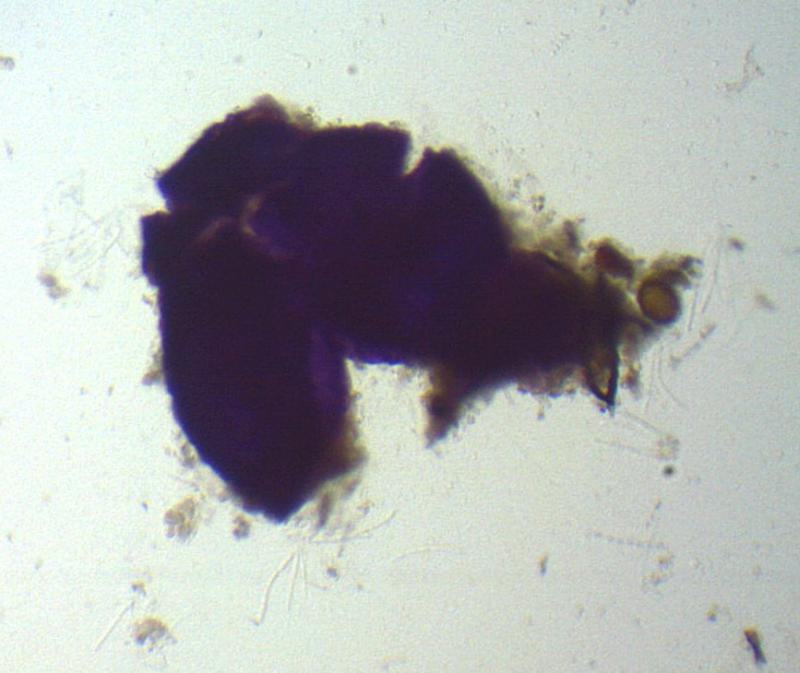
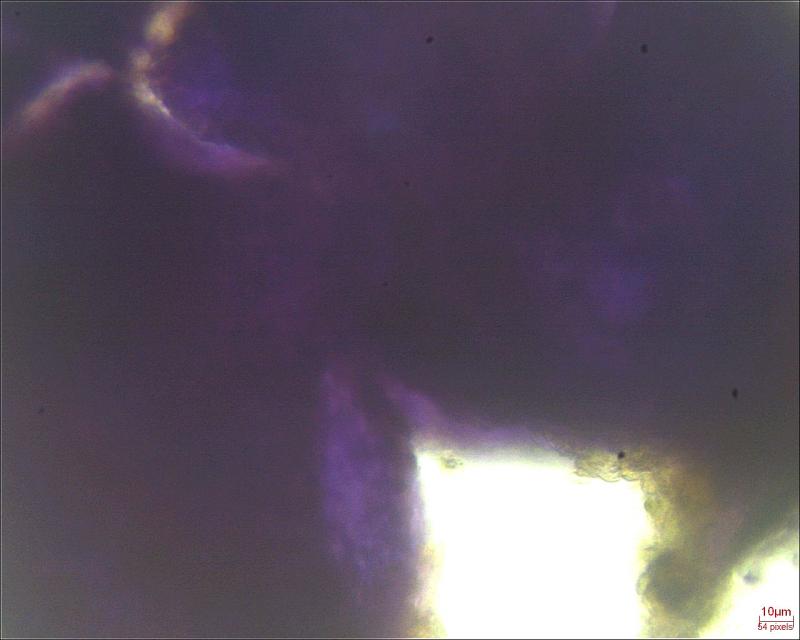
He observado la peritecia en KOH, como usted sugirió, y de hecho decoloran el violeta profundo.
¿Se puede decidir sobre la base de esta decoloración que esto concierne a la episfaeria de Dialonectria?
Saludos cordiales,
William
Muchas gracias por su muy interesante respuesta y archivos adjuntos.
He observado la peritecia en KOH, como usted sugirió, y de hecho decoloran el violeta profundo.
¿Se puede decidir sobre la base de esta decoloración que esto concierne a la episfaeria de Dialonectria?
Saludos cordiales,
William
Josep Torres,
16-01-2020 08:48
Re : Nectria or Nectrina sp?
Hola William, no sabría decirte se esta reacción es determinante para poder asegurar la Nectria episphaeria ya que no he estudiado la Nectria purtonii para poder comparar los resultados, si que esta reaccion se cita para la Nectria episphaeria en el trabajo de Asco-sonneberg, dejo el enlace.
http://asco-sonneberg.de/pages/gallery/nectria-episphaeria-100324-mcol-0123441.php?group_id=7051&position=14
Las dos Nectrias son difíciles de separar con solo unas muy pequeñas diferencias muy sutiles entte ambas, como las esporas un poco mas pigmentadas en la purtonii y pequeñas diferencias en sus medidas.
Saludos.
http://asco-sonneberg.de/pages/gallery/nectria-episphaeria-100324-mcol-0123441.php?group_id=7051&position=14
Las dos Nectrias son difíciles de separar con solo unas muy pequeñas diferencias muy sutiles entte ambas, como las esporas un poco mas pigmentadas en la purtonii y pequeñas diferencias en sus medidas.
Saludos.
Christian Lechat,
16-01-2020 11:20

Re : Nectria or Nectrina sp?
Dear friends,
the change of color of ascomata in KOH does not allow to separate the genera, it is imperative to know the asexual morph of the specimen to identify a genus.
Fungicolous species whose ascomes turn purple in KOH or yellow in lactic acid and have an acremonium-like asexual morph belong to Cosmospora. Species with a fusarium-like asexual morph are distributed in many genera such as Dialonectria, Geejayessia, Macroconia and Stylonectria.
the change of color of ascomata in KOH does not allow to separate the genera, it is imperative to know the asexual morph of the specimen to identify a genus.
Fungicolous species whose ascomes turn purple in KOH or yellow in lactic acid and have an acremonium-like asexual morph belong to Cosmospora. Species with a fusarium-like asexual morph are distributed in many genera such as Dialonectria, Geejayessia, Macroconia and Stylonectria.
All the best,
Christian
William Slosse,
18-01-2020 22:58
Re : Nectria or Nectrina sp?
Hello Christian,
according to Ellis & Ellis purtonii would have smooth spores and episphaeria fine warty spores. Can this also be accepted as a determinative characteristic?
Sincerely,
William
Christian Lechat,
19-01-2020 07:34
Re : Nectria or Nectrina sp?
Hi William,
no, because both species have verrucose ascospores. Morphologically, Stylonectria purtonii is characterizsed by a discoidal apex and ascomatal wall up to 55 µm thick, while Dialonectria episphaeria is ampuliform with an accute papilla and a semitranslucent ascomatal wall up to 25 µm thick.
Have a nice day,
Christian
William Slosse,
19-01-2020 19:49
Re : Nectria or Nectrina sp?
Hello Christian,
the ascospores are indeed warty.
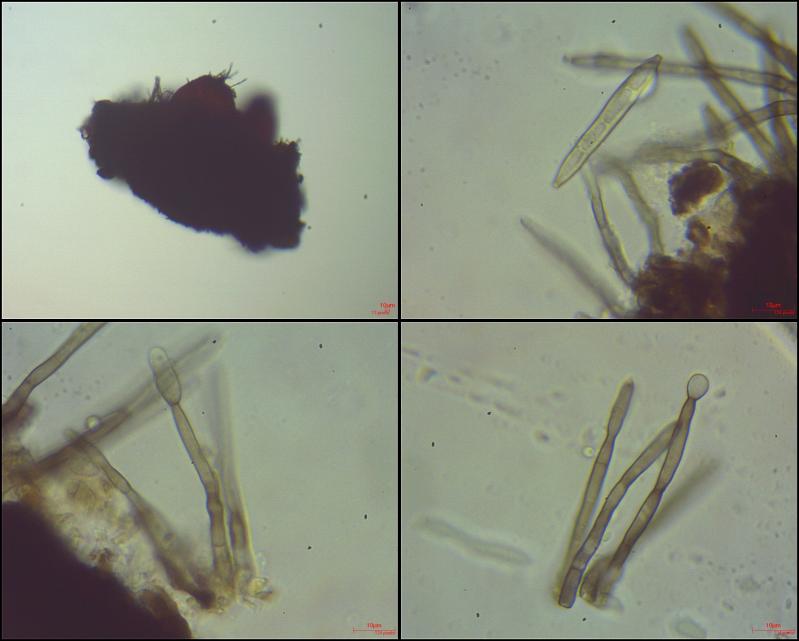
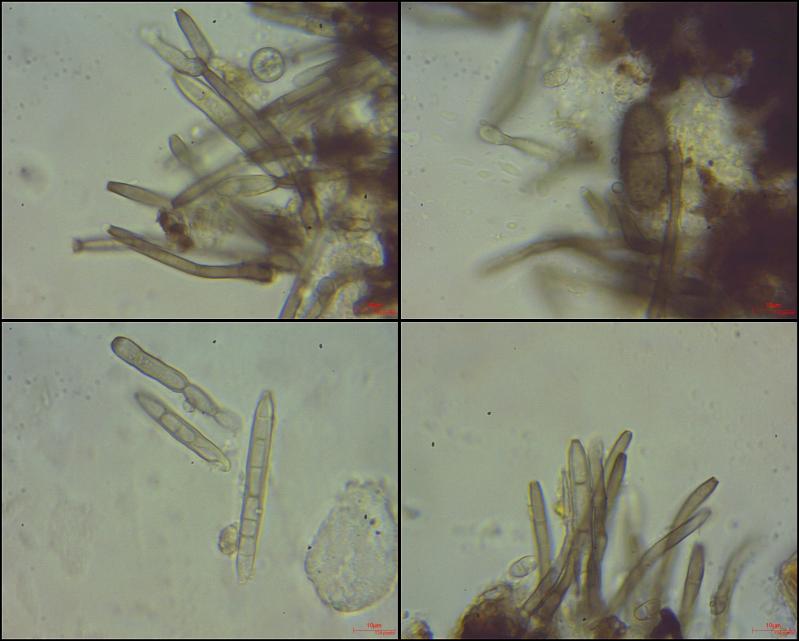
As I examined the fruiting bodies again, I noticed that numerous fruiting bodies of a different kind grew around them. Could this be the anamorphic form (Fusarium sp.)?
I am currently keeping it at D.episphaeria.
Sincerely,
William
the ascospores are indeed warty.
As I examined the fruiting bodies again, I noticed that numerous fruiting bodies of a different kind grew around them. Could this be the anamorphic form (Fusarium sp.)?
I am currently keeping it at D.episphaeria.
Sincerely,
William
Nick Aplin,
19-01-2020 23:19
Re : Nectria or Nectrina sp?
Dear William,
This isn't the anamorph of the nectriaceous fungus - Perhaps it's Lylea tetracoila, an anamophic fungus usually found around Eutypa-like fungi.
Cheers,
Nick
This isn't the anamorph of the nectriaceous fungus - Perhaps it's Lylea tetracoila, an anamophic fungus usually found around Eutypa-like fungi.
Cheers,
Nick