

22-04-2026 20:54
 Enrique Rubio
Hi to everybody.This Pyrenopeziza grew in moist le
24-04-2026 03:16
 David Chapados
Found while looking at something else from wood in
22-04-2026 01:06
 Richard VALERI
Bonjour à tous.Je vous présente cette Nectria s.
22-04-2026 20:17
 Marian Jagers
Is anyone familiar with the Hyphomycetes genus Pse

pustules gélatineuses
PASCAL DUBOC,
20-10-2019 00:11
Bonsoir
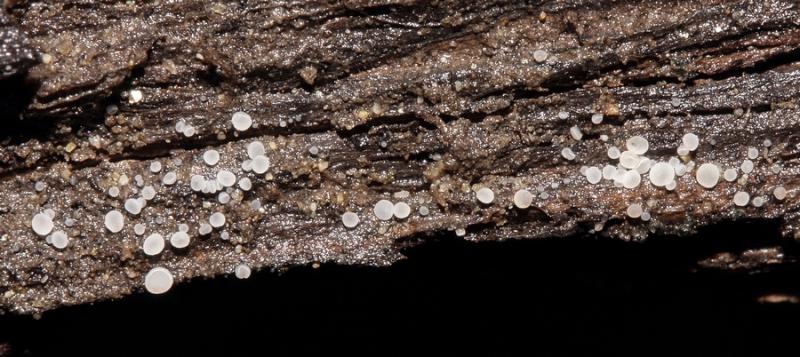
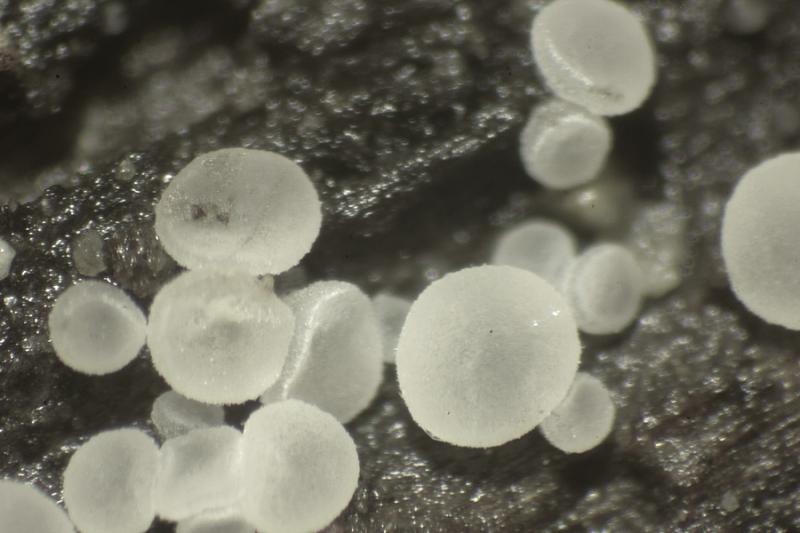
sur bois pourrissant de feuillus en ripisylve, maxi 2mm de diamètre, gélatineuses sans pied à face externe furfuracée
spores elliptiques d'environ 11microns de moyenne, asque "trapue" de maxi 60 microns, les paraphyses sont à contenu guttuleux, la face externe des cupules présentent des poils il me semble (image faite dans le rouge congo)


Michel Hairaud,
20-10-2019 08:43

Re : pustules gélatineuses
SAlut Pascal
As tu une image de la réaction de l'apex des asques dans le lugol ? Cela permettrait de vérifier l'appartenance à un genre selon le type de réaction . Vérifier aussi la présence ou non de crochets
La chair est vraiment gélatineuse ?
Michel
PASCAL DUBOC,
20-10-2019 08:56
Re : pustules gélatineuses
Bjr Michel
je dis gélatineuse car elle est très tendre, facile à détacher..
pour les fameux crochets, j'ai toujours de la peine, j'ai pas l'impression, mais je vais vérifier encore puisque j'ai du matériau
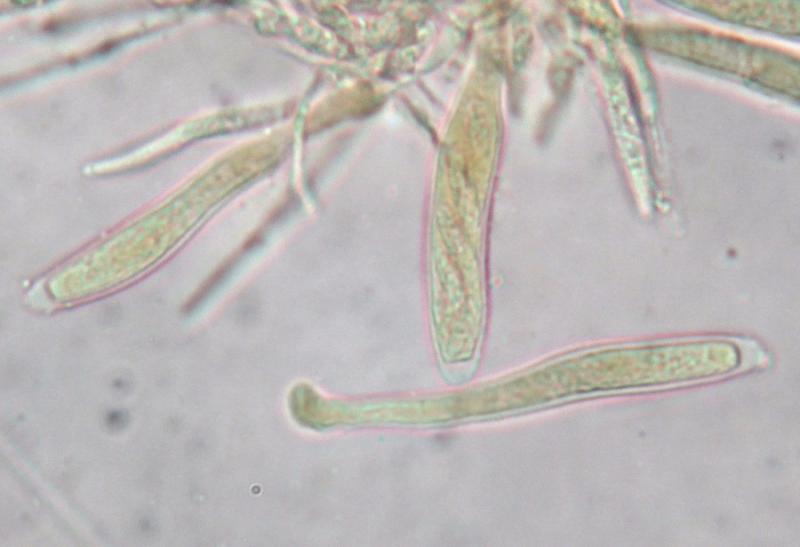
je n'ai pas mis dans le lugol mais dans le melzer, ça donne ça.. je vais revoir dans le lugol
Nicolas VAN VOOREN,
20-10-2019 09:18

Re : pustules gélatineuses
On est sans doute du côté des Calycina, mais le test au Lugol est indispensable.
Si tu as du bleu de crésyl aqueux, tu peux aussi vérifier la coloration des guttules présentes dans les paraphyses.
Si tu as du bleu de crésyl aqueux, tu peux aussi vérifier la coloration des guttules présentes dans les paraphyses.
Hans-Otto Baral,
20-10-2019 10:08

Re : pustules gélatineuses
Well, surely a Helotiales :-)
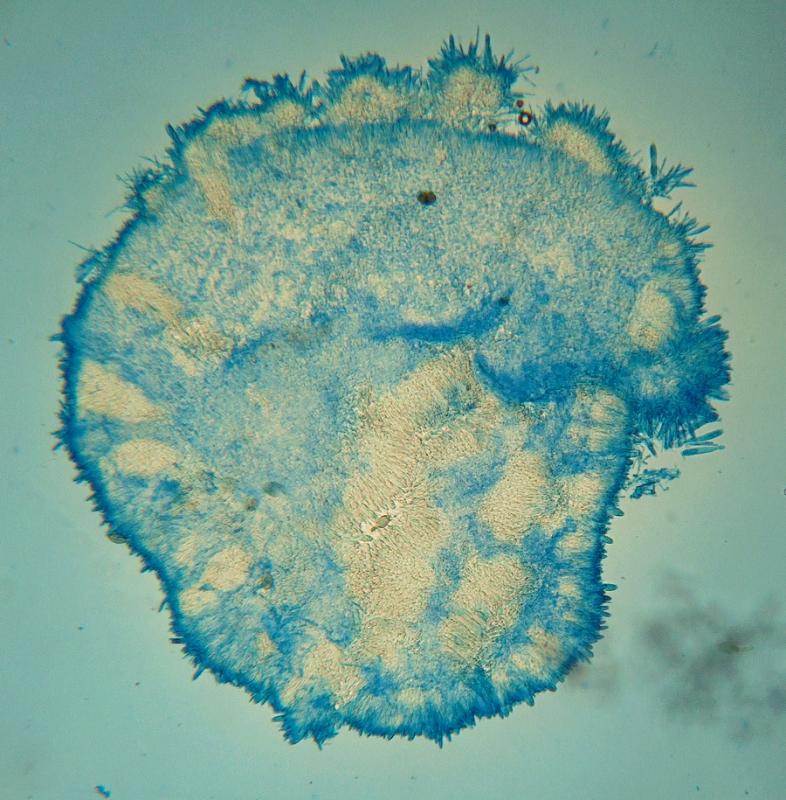
The paraphysis content exclude any Hyaloscypha (incl. Parorbiliopsis). What would help is a median section showing the excipulum and marginal hair-like structures.
2 mm is very large for such a fungus, I would estimate the maximum to 0.5 mm.
Zotto
The paraphysis content exclude any Hyaloscypha (incl. Parorbiliopsis). What would help is a median section showing the excipulum and marginal hair-like structures.
2 mm is very large for such a fungus, I would estimate the maximum to 0.5 mm.
Zotto
PASCAL DUBOC,
20-10-2019 16:07
Re : pustules gélatineuses
Oui, même erreur que pour les pustules noires, maxi 1mm à peine pardon
quelque simages complémentaires, je n'ai aucune réaction dans le lugol, mais je ne sais pas si mon lugol est encore actif ??
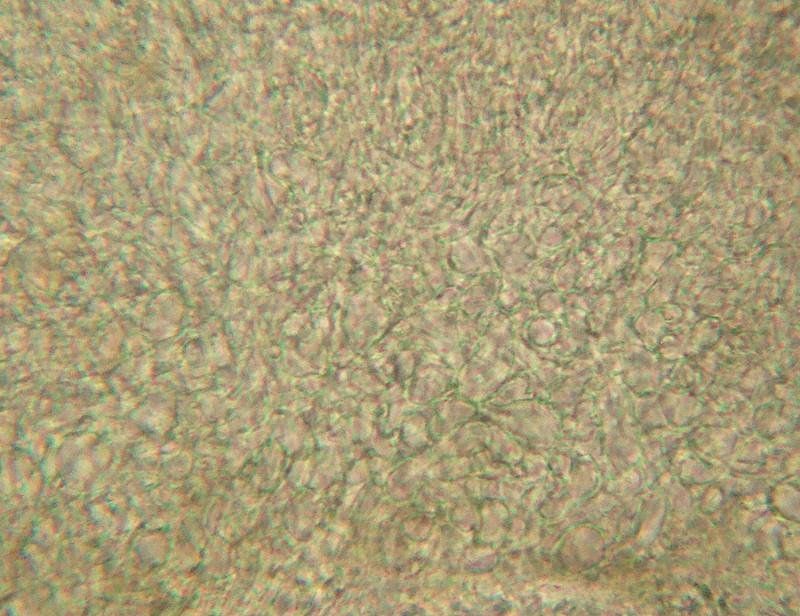
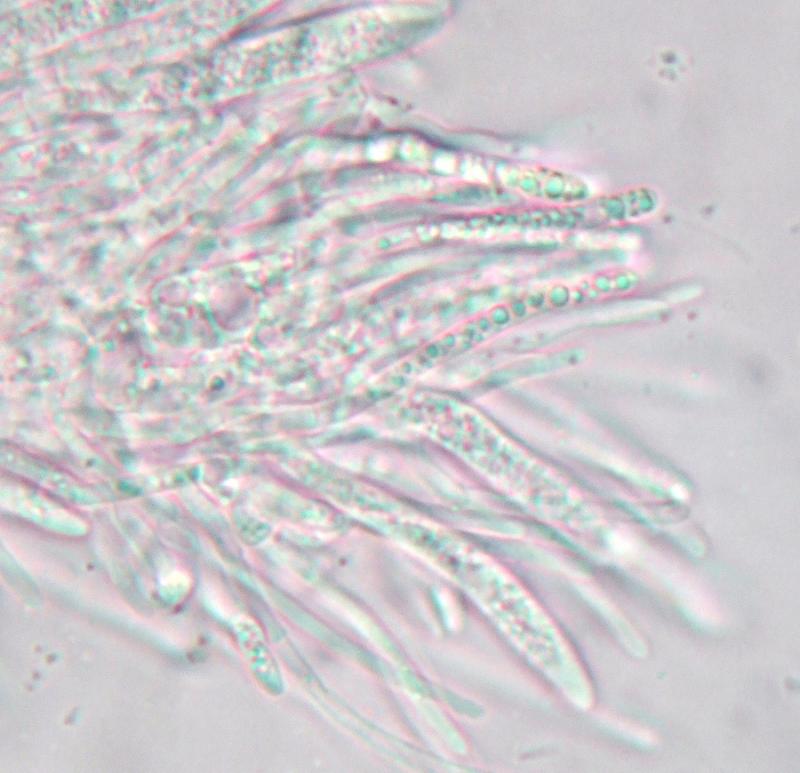
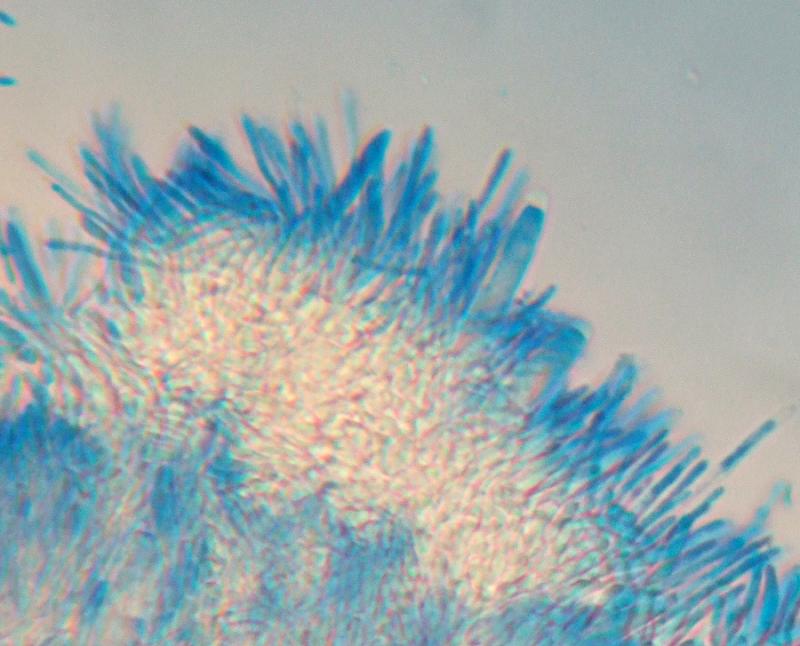
Hans-Otto Baral,
20-10-2019 17:03
Re : pustules gélatineuses
An active Lugol is recognizable when the cell contents (plasma) get stained yellow.
The CRB test requires oil immersion, but it is clear to me that these drops in the paraphyses are vacuoles, not oil drops.
One idea I got i the group of Phaeohelotium imberbe, which usually has amyloid ascus apical rings. But the macro does not look like, and the spores are perhaps too narrow (we even do not know their width).
The CRB test requires oil immersion, but it is clear to me that these drops in the paraphyses are vacuoles, not oil drops.
One idea I got i the group of Phaeohelotium imberbe, which usually has amyloid ascus apical rings. But the macro does not look like, and the spores are perhaps too narrow (we even do not know their width).
PASCAL DUBOC,
20-10-2019 18:32
Re : pustules gélatineuses
Re
je pense aussi qu'il ne s'agit pas de gouttellettes mais de vacuoles
pour al taille sporales elle est en moyenne de (10.4) 11.1 (11.7) x (4.2) 4.4 (4.6)
pour le reste je n'ai pas mieux.. dans le melzer il me semble distinguer un vague aspect bleuté en bout des asques
Hans-Otto Baral,
20-10-2019 20:31
Re : pustules gélatineuses
So from spore size we cannot exclude P. imberbe.
PASCAL DUBOC,
20-10-2019 21:26
Re : pustules gélatineuses
merci... il me reste du matériau j'essairai encore un peu de micro.. les cupules sont vraiment très petites.. peut-être pas totalement matures ? Il y a peu d'asques avec spores