Accès membres

Mot de passe perdu? S'inscrire

23-05-2026 11:44

Charles Grapinet Charles Grapinet

Hello, I am having trouble identifying this copro

22-05-2026 21:35

Steve Clements

Bonjour, I expected this find on old wood on our

22-05-2026 18:12

Lothar Krieglsteiner Lothar Krieglsteiner

... in moist chamber from Portugal.As the fungus s

22-05-2026 20:08

Ethan Crenson

Hello all,  Yesterday in NYC I was visiting an e

11-01-2022 16:36

Jason Karakehian Jason Karakehian

Hi does anyone have a digital copy of Raitviir A (

20-05-2026 17:47

Margot en Geert Vullings

We found this Mollisia on dead Juncus stems mown l

22-05-2026 14:47

Gernot Friebes

Hi,superficial ascomata collected on bark of a liv

22-05-2026 14:44

Lothar Krieglsteiner Lothar Krieglsteiner

in unripe condition citrine yellow, then soon fadi

22-05-2026 13:29

Gernot Friebes

Hi,I am curious to hear your opinion on this mater

22-05-2026 10:59

Nicolas VAN VOOREN Nicolas VAN VOOREN

Trouvé sur Phragmites, ce que je pense être un L

« < 1 2 3 4 5 > »
Ascobolus michaudii?
Chris Yeates, 19-06-2019 19:07
Chris Yeates
Bonsoir tous

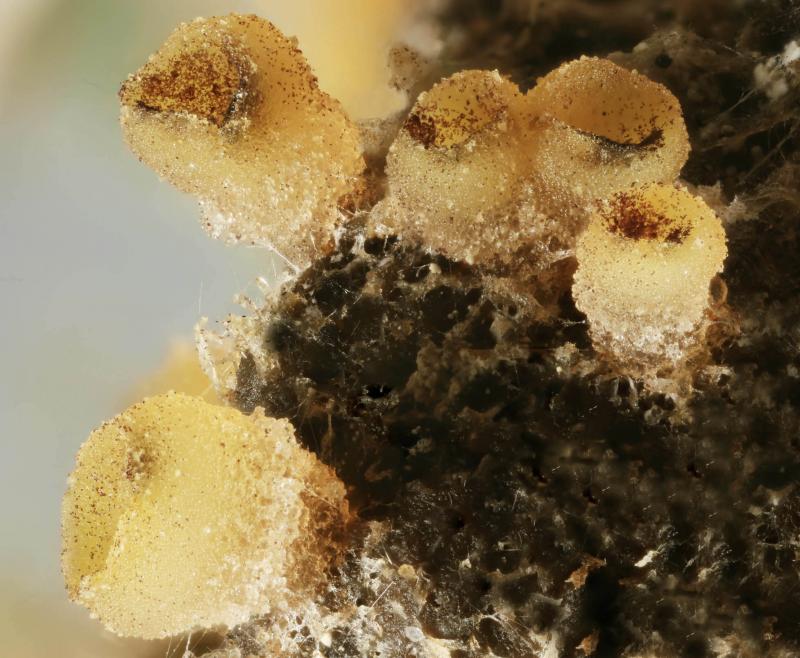
this fungus developed on incubated sheep (Ovis aries) dung after 2-3 weeks. It grew on both the dung and the paper on which the dung was placed.

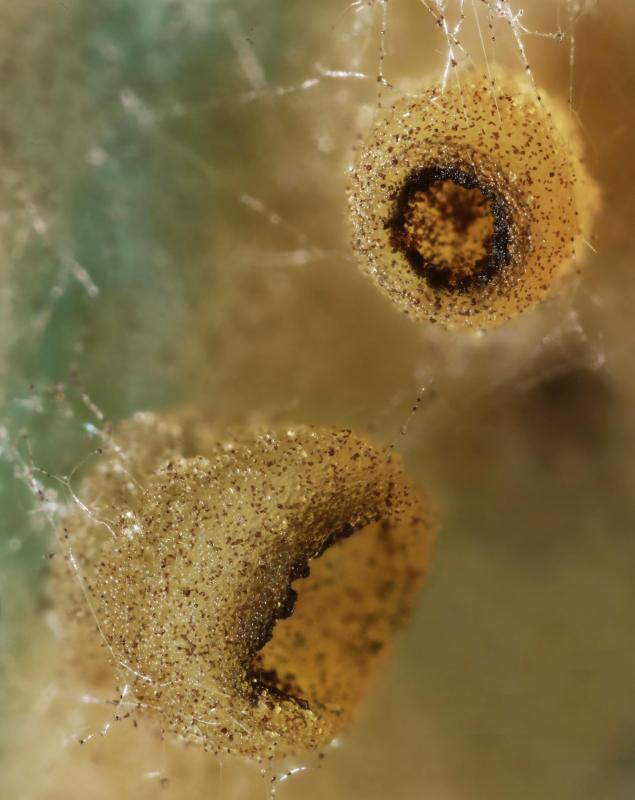
During development the ascomata were a bright lemon-yellow, this has faded somewhat as they matured. They started out globose, then barrel-shaped, finally to the shape which can be seen in the accompanying photographs. A noticeable feature is that they are now ± stoutly stipitate. This shape is very like that ilustrated in Doveri (central image) and also by Ann Bell in her "An illustrated guide to the coprophilous Ascomycetes of Australia"

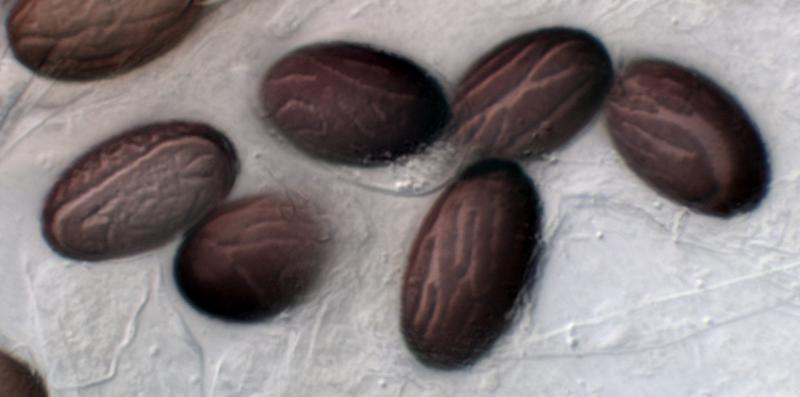
The ascopores are marked with irregular cracks, without any longitudinal / parallel / anastomosing ones. Spore measurements are 19.1-20.6 x 9.7-11.2µm, which correspond perfectly with those given by van Brummelen, and lie between those given by Doveri and Bell.

In the light of all the above I am fairly confident that this is Ascobolus michaudii; as this would be new for me (and there are few UK records) I would be grateful for any comments from those with experience of the species.

Amitiés

Chris
  • message #58174
  • message #58174
  • message #58174
  • message #58174
  • message #58174
Michel Delpont, 19-06-2019 20:12
Michel Delpont
Re : Ascobolus michaudii?
Good evening, Chris!

Very nice pictures! Your description seems to correspond well to A. michaudii as well as the ornamentation and shape of the spores. Indeed, some apothecies can develop a kind of foot, sometimes with age. It is not a very frequent species (at least for my harvests), but despite everything it appears regularly in small numbers.


Amicalement.


Michel.

Chris Yeates, 20-06-2019 02:31
Chris Yeates
Re : Ascobolus michaudii?
Je toi remercié comme toujours Michel!

Amitiés

Chris
Jacky Launoy, 20-06-2019 09:51
Re : Ascobolus michaudii?
Good morning Chris,

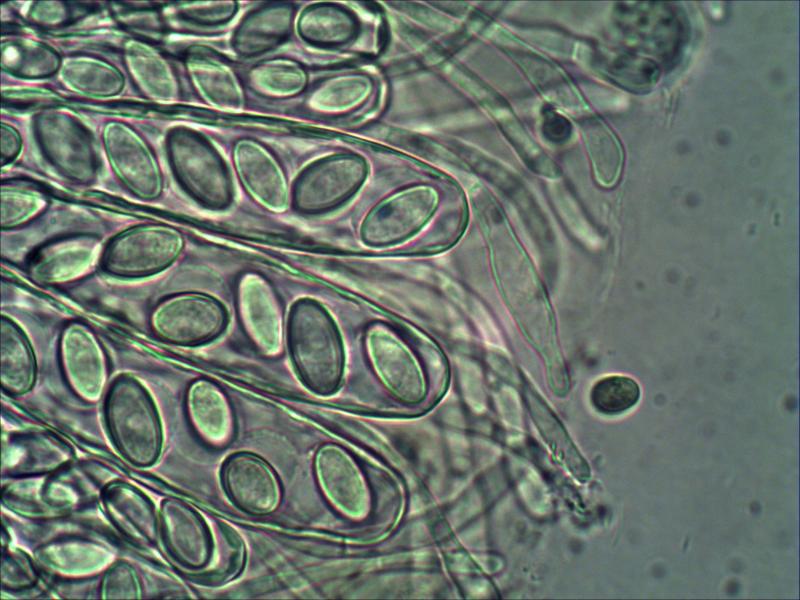
I found this species several times and I think you are right with A. michaudii. Compare also the paraphyses wirth the fig f, g in the monograph off Van Brummelen (page 114). See my pictures below.

Greats

Jacky
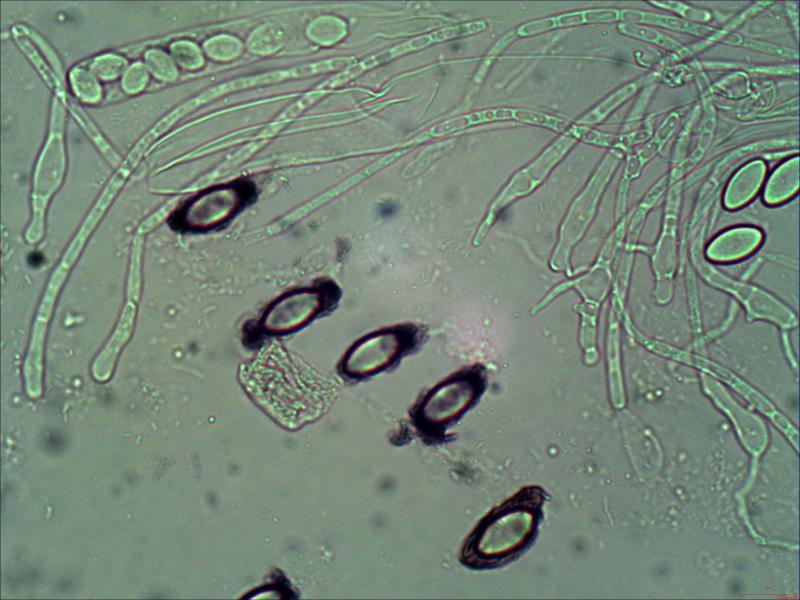
  • message #58185
  • message #58185