
27-04-2026 20:52
 Lothar Krieglsteiner
Found on hanging tiwg of Olea europaea in dried-ou
27-04-2026 18:48
Tony MoverleyCollected 23rd April 2026, Norfolk, EnglandSwarms
27-04-2026 17:41
Lothar Krieglsteiner
.. Algarve, same leaf than the last post. The con
27-04-2026 18:05
Lothar Krieglsteiner
... still attached at standing tree. The green con
27-04-2026 17:16
Lothar Krieglsteiner
.. Algarve, moist lying.The conidiomata look like
27-04-2026 12:54
Steve ClementsBonjour. Ce petit champignon blanc résupiné et
27-04-2026 09:59
Pauline. PennaBonjour Can anyone advise me on these pycnidia fo

22-04-2026 20:54
 Enrique Rubio
Hi to everybody.This Pyrenopeziza grew in moist le
hymenoschyphus ?
michel hurtu,
24-11-2008 09:19
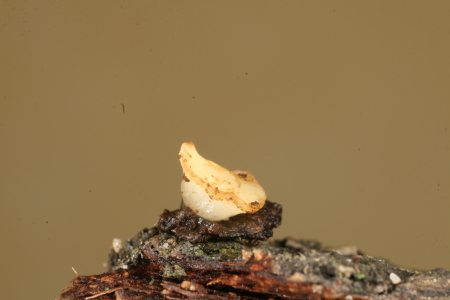
Je n'arrive à rien avec ce petit asco trouvé dans la boue d'une zone marecageuse, sur petit débrit vegetaux.
2 à 5mm de diamètre, chair molle.
merci de votre aide
le reste suit
amitiés
michel hurtu,
24-11-2008 09:21
Re:hymenoschyphus ?
une autre photo où l'on distingue comme des rhizoïdes.

michel hurtu,
24-11-2008 09:22
Re:hymenoschyphus ?
les spores : 18-21x5-6 mu

michel hurtu,
24-11-2008 09:24
Re:hymenoschyphus ?
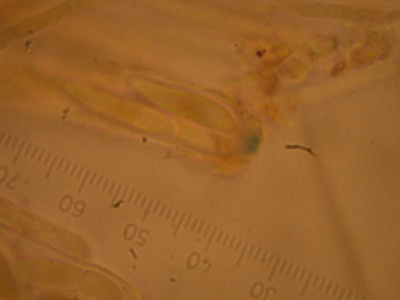
les asques: 120-130x10 mu
michel hurtu,
24-11-2008 09:25
Re:hymenoschyphus ?
une coupe

michel hurtu,
24-11-2008 09:28
Re:hymenoschyphus ?
une paraphyse,

michel hurtu,
24-11-2008 09:34
Re:hymenoschyphus ?
voilà, je reste à votre disposition pour tout autre renseignement....(si je peux!)
merci beaucoup
amitiés
michel hurtu
merci beaucoup
amitiés
michel hurtu
Hans-Otto Baral,
24-11-2008 13:58

Re:hymenoschyphus ?
On your last photo the two ascus bases look as being without croziers. That and the strong amyloidity excludes H. monticola. The apical ring looks actually like Pachydisca fulvidula, and I suppose you have this species which is typical of acid bogs and rivulets and quite variable in colour. The VBs in the living paraphyses would be a further criterion.
The species has not been combined in Hymenoscyphus, was far as I remember, and isn't even a typical one.
Zotto
The species has not been combined in Hymenoscyphus, was far as I remember, and isn't even a typical one.
Zotto
michel hurtu,
24-11-2008 17:07
Re:hymenoschyphus ?
Dear Zotto,
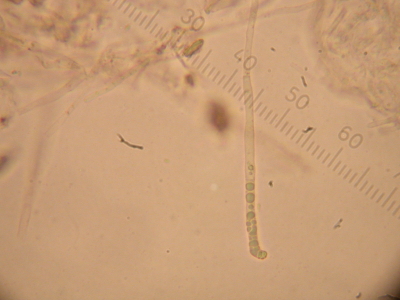
Ithank you very much for your last answer. IWould you please find herewith a picture of a paraphyse .
Kind regards
Michel Hurtu
Ithank you very much for your last answer. IWould you please find herewith a picture of a paraphyse .
Kind regards
Michel Hurtu
Hans-Otto Baral,
24-11-2008 17:55
Re:hymenoschyphus ?
yeah, that's good. Exactly. So I am sure about fulvidula. In contrast, H. epiphyllus would be multiguttulate to the very base of paraphysis, but H. monticola has guttules similar as fulvidula.
Zotto
Zotto
michel hurtu,
24-11-2008 19:03
Re:hymenoschyphus ?
Ok, thank you very much !
michel hurtu
michel hurtu