

10-06-2026 12:54
Steve ClementsBonjour encore, Pouvez-vous m'aider, s'il vous pl
09-06-2026 18:32
Camille MertensSur morceau de roseau immergé 0,5 - 0,7 mm de dia
10-06-2026 21:16
 François Freléchoux
Bonsoir,Le dernier du jour, en attendant votre avi
10-06-2026 21:07
François Freléchoux
Toutes les tiges de gentianes jaunes de l'an passÃ
10-06-2026 13:41
François Freléchoux
Bonjour à nouveau, Voici une trouvaille d'hier.
10-06-2026 11:53
Steve ClementsBonjour, This disco is abundant on dead stems of
10-06-2026 10:45
François Freléchoux
Bonjour à nouveau, Encore une détermination qui
08-06-2026 10:16
 Spooren Marco
I don`t have a clou about this fungus,it is not in
10-06-2026 09:24
François Freléchoux
Bonjour, J'imagine que cette détermination ne do

Good evening everybody,
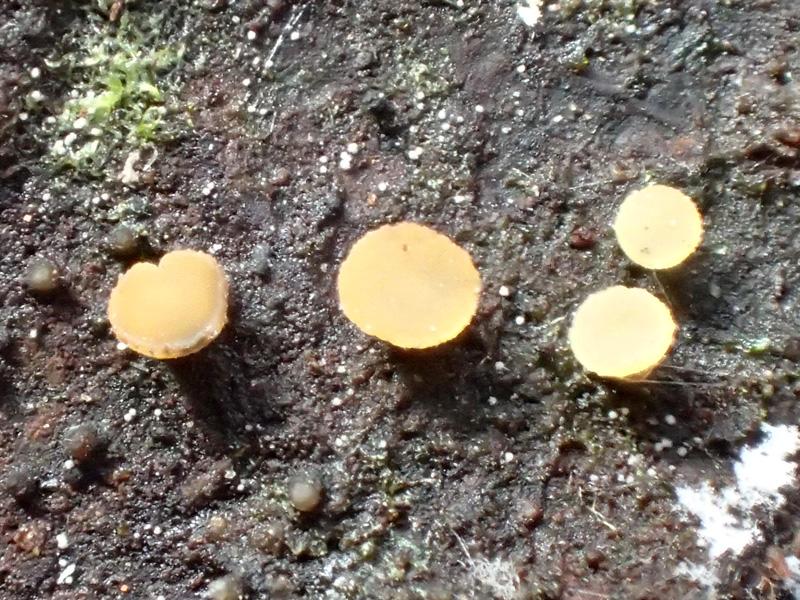
This afternoon we found some small yellow discs with dentate margin on leaves of Quercus.
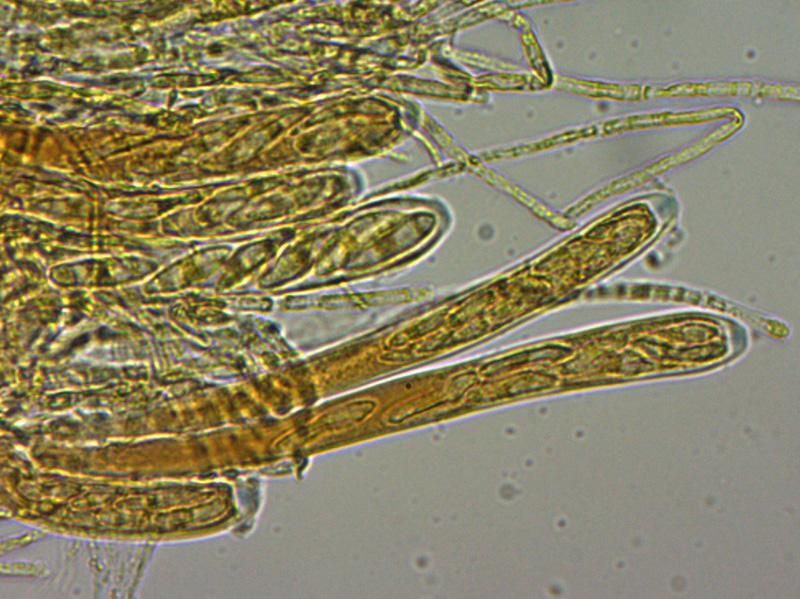
The asci were cylindrical, thick walled, 120x14µ, 8-spored and IKI pos. Paraphyses were filiform and contained long refractive vacuoles. Spores measured 20-22x6-7µ and had 2 large guttules.The outer excipulum consisted of textura angularis.
I think it is something of the subfamily Dermateoideae.
Someone could help me further?


Zotto;
You are right I have been misleaded by the general key in Nordic Macromycetes where the slightly brown excipulum and the angular cells brought me to the Dermateaceae.
But all the typical features of P epiphyllum were present including the reddening after damaging
Thanks
Marc