
01-05-2026 22:45
 Thierry Blondelle
Bonjour à tous, Une récolte sur bouse séchée d
28-04-2026 20:07
 Lothar Krieglsteiner
... on twig in the air at standing Ceratonia siliq
14-04-2026 05:32
Ethan CrensonHi all, A few weeks back a friend pointed out som
28-04-2026 20:33
Vitus SchäfftleinHello, I found Trochila ilicina on Ilex aquifoliu

30-04-2026 10:28
Rot BojanHello, by appearance I would say that I am dealing
27-04-2026 18:48
Tony MoverleyCollected 23rd April 2026, Norfolk, EnglandSwarms
27-04-2026 20:52
Lothar Krieglsteiner
Found on hanging tiwg of Olea europaea in dried-ou
28-04-2026 22:51
 Bernard CLESSE
Bonsoir à toutes et tous,Pourriez-vous m'aider à
29-04-2026 08:01
Lothar Krieglsteiner
... on twig attached to small tree of Citrus auran
I am new to the site, based in South England at the moment. My main interests in ascomycota are bryoparasitic and lichenicolous fungi, the former of which do not seem to be well recorded here in the UK.
I found apothecia on Frullania dilatata two days ago and I think they are Pithyella frullaniae (ID from this site). Does anybody else have experience with this species? I am happy to send material away for confirmation.
Apothecia approaching 0.5mm wide, creamy white to flesh coloured, with some (younger) having tiny cilia extending from the disc margins. Asci approx 25 x 6 with 8 rounded but irregular spores of 3.0 - 3.5. Paraphyses simple, unbranched, 2 wide.
Thanks
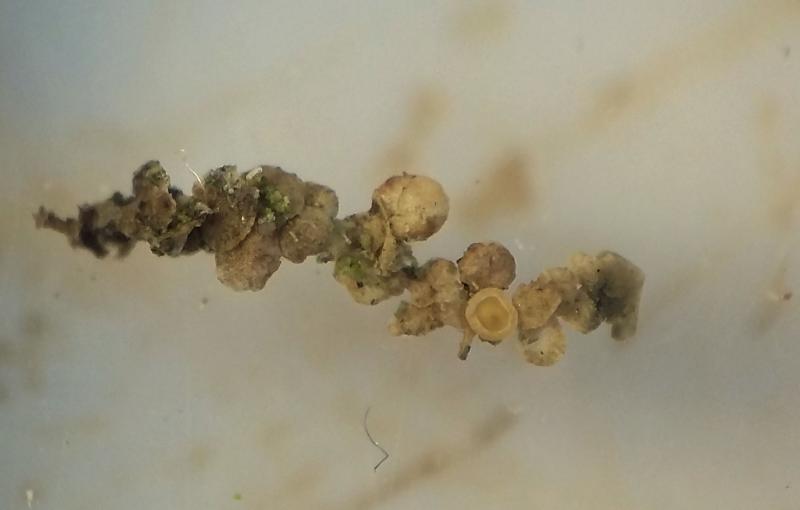
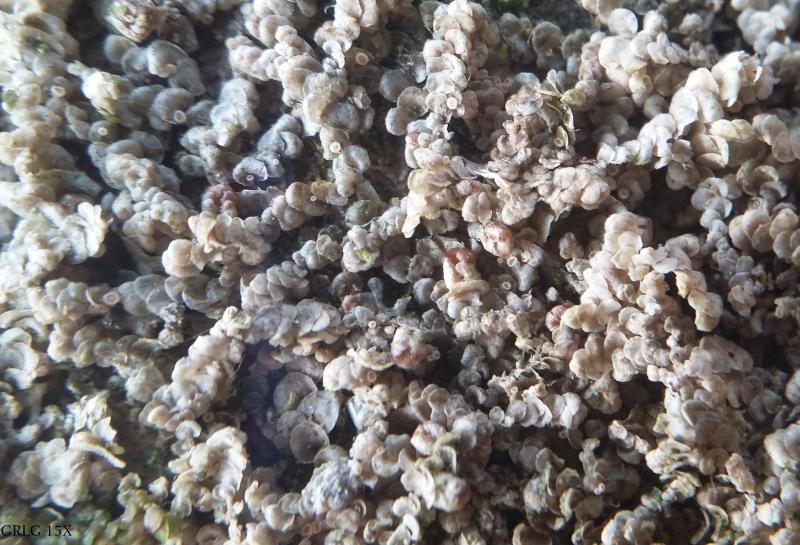
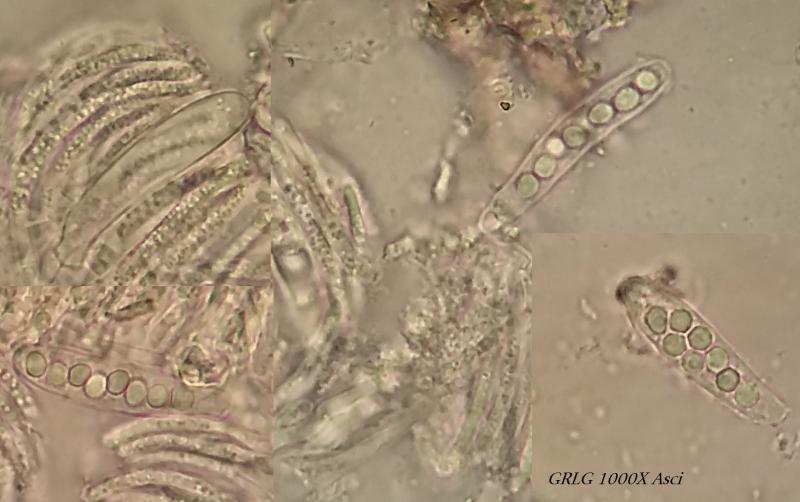
I think there can be no doubt about the correct determination.
I found the species for the first time last week, when I collected in Italy (Liguria), growing together with Bryocentria brongniartii (what I already collected in Germany).
Very nice species!
Best regards, Lothar

yes, indeed, you are right. And it is clearly visible on your photo that the spores ar warted.
Typical are also the many refractive guttules in the paraphyses which disappear in herbarium material.
You can have a look on my homepage where I collect images.
https://invivoveritas.de/ascomycetes-illustrations/
go to 7f Helotiales, 5a Helotiaceae, Calyptellopsis-Pithyella.
Also in this forum the species can be found when searching for its name.
Zotto
Hello Zotto,
I also noted the warted spores and especially the guttulate paraphyses. What do you think are the next relatives of Pithyella - perhaps Bryoscyphus? Are there already molecular results?
Best regards, Lothar
P.S. There is a Pithyella hypnina (e.g. in Boudier) growing on musci. Is there anybody who has found this species?
I am unaware of any Pithyella sequence. Yes, it may be that this genus is related to Bryoscyphus and Calyptellopsis, but usually things are rather complex with the molecular methods, and I am not sure what to trust more.
P. hypnina resembles much P. frullaniae. Boudier perhaps overlooked the warts on the spores, but the substrate tells for a different species, especially since he did not observe VBs in the living paraphyses!
Zotto