
14-08-2016 23:15
 Alex Akulov
Dear friendsCan you help me to find the descriptio

05-06-2026 11:02
Thomas Læssøehttps://svampe.databasen.org/observations/10596691
04-06-2026 11:36
Gernot FriebesHi,found on Vaccinium myrtillus.Asci: IKI –, 8-s
05-06-2026 12:10
 François Freléchoux
Capitotricha sp. sur Lonicea caerulea Caractères
19-05-2026 10:27
Patrice TANCHAUDBonjour, récolte récente sur terre retournée i
04-06-2026 18:39
Gernot FriebesHi,I collected this species in two different locat
22-05-2026 13:29
Gernot FriebesHi,I am curious to hear your opinion on this mater

Un salugo a todos:
No consigo encajar bien con las claves esta Scutellinia.
Ascomas pequeños de 4-8 mm de diámetro. En zona húmeda, directamente sobre la tierra.
Ascas 210-260 x 15-30 micras
Paráfisis: 8-12 micras de anchura
Esporas con verrugas gruesas de 18-200 x 16-20 micras. Q=1,08. Verrugas de 1-2,5 micras
Pelos cortos, con base simple, en ocasiones bifurcada de 150-300 micras.
Gracias.
Carlos M. Pérez
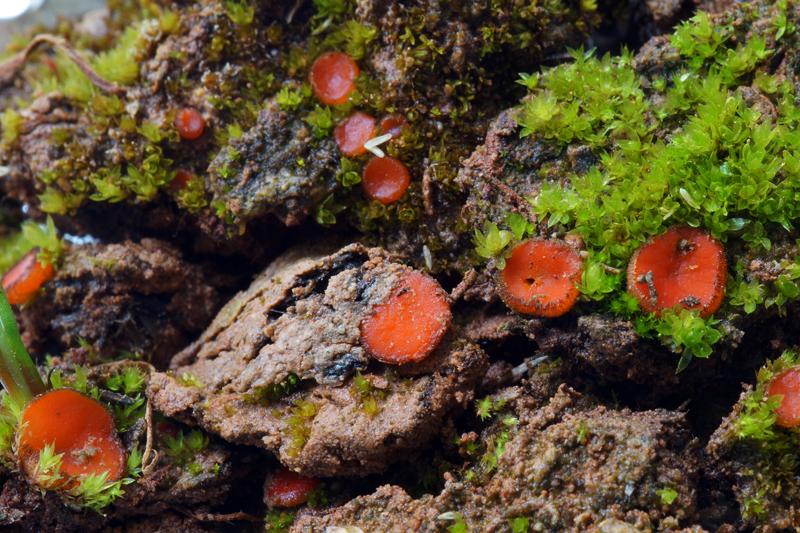
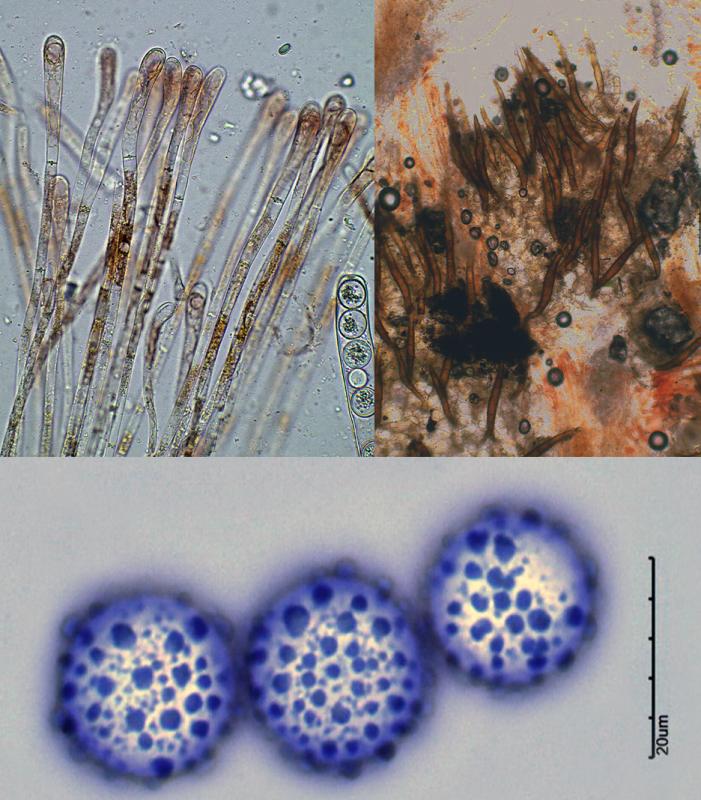

I would say it is likely to be Scutellinia barlae.
Looking at the other species with round or almost round spores. They are too small for S citrina the spores look to have isolated rounded pustules which rules out S legaliae, S trechispora and S hetersphaera(and the hairs are too short for this species). The pustules are not large enough for S sinensis and too large for S minor.
That leaves S barlae which fits for the hairs and spores pretty well.
Mal

Michel.
Confirmais las opciones que estaba barajando.
Saludos,
carlos