
21-04-2026 13:36
Gernot FriebesHi,I am out of ideas for this one. I collected Sal
21-04-2026 13:19
Gernot FriebesHi,this Lophodermium on Typha has ascospores measu
21-04-2026 13:05
Gernot FriebesHi,this hyphomycete feels familiar but I was not a
20-04-2026 22:00
 Malcolm Greaves
These pale yellow, hairy ascos were growing on cul
19-04-2026 21:23
Steve ClementsBonjour, I found this anamorphic fungus on old pl
19-04-2026 20:46
Steve Clements1 mm diameter approx spherical conidiophores on pl
12-04-2026 17:56
 Hardware Tony
Found on dead stems in February earlier this year
17-04-2026 19:16
 Enrique Rubio
Hi to everybodyI would appreciate any assistance r
14-04-2026 05:32
Ethan CrensonHi all, A few weeks back a friend pointed out som
Geoglossum
Malcolm Greaves,
16-11-2016 00:18
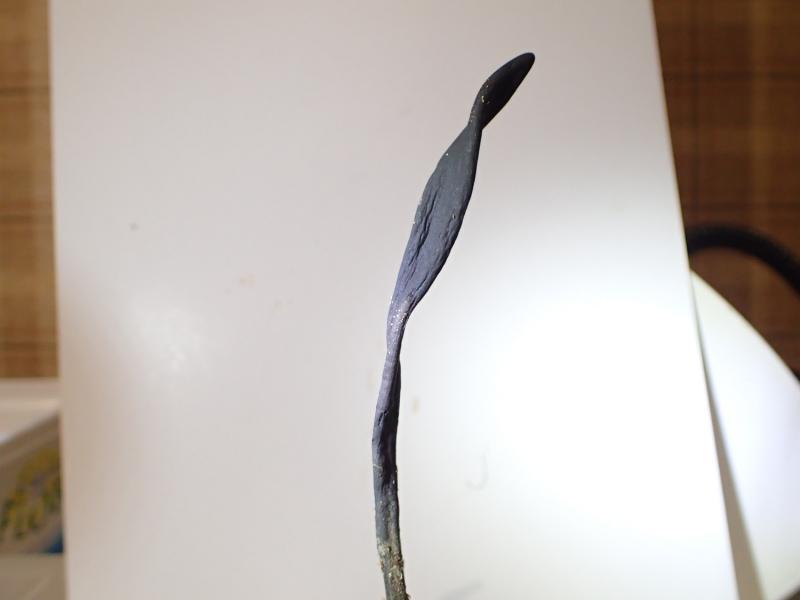
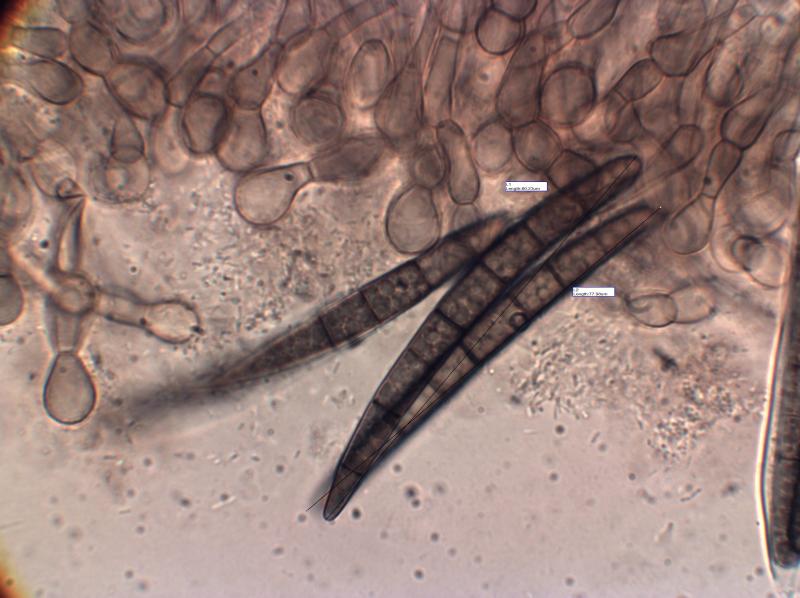
A group of these large 10cm pointed Geoglossum were in a local cemetery.The dark spores were mostly 7 septate with a few 3 4 or 5. From 66 - 83 long ave 76.5.
The Paraphyses were narrowly septate with swollen ends.
I was expecting G cookeanum but the spores are too big according to the details I have. The nearest I can find is G glabrum. It this a reasonable idea?
Thanks
Mal


Peter Püwert,
16-11-2016 02:43

Re : Geoglossum
Hello Malcolm,
this is in my opinion already G. cookeianum. The spores can already become long 80 µm, but always maximally only with 7 septa. The paraphyses on the photos are also rather typical. Geoglossum glabrum/sphagnophilum is a little species of wet locations (Sphagnum) with other paraphyses and evenly 7x septate spores.
In literature I have as a PDF:
BENKERT, D. (1976): Bemerkenswerte Ascomyceten der DDR. II. Die Gattungen Geoglossum und Trichoglossum in der DDR. Mykologisches Mitteilungsblatt 20 (3): 47-92. Halle.
OLSEN, SIGURD (1986): JORDTUNGER I NORGE. Agarica Vol. 7 Nr. 14 pp. 120-168.
ROOBEEK, C. F. (2009): Aardtongen in de duinen van Noord-Kennemerland. (2005 t/ m 2008). RO- rapo 09/10. Bergen, NH.
If I could send when required.
Greetings Peter.
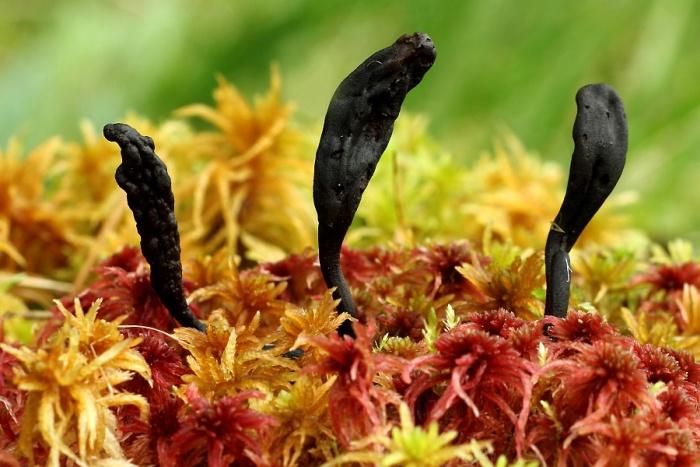
Here still a photo of G. glabrum, unfortunately I havn't photo from G. cookeianum.
this is in my opinion already G. cookeianum. The spores can already become long 80 µm, but always maximally only with 7 septa. The paraphyses on the photos are also rather typical. Geoglossum glabrum/sphagnophilum is a little species of wet locations (Sphagnum) with other paraphyses and evenly 7x septate spores.
In literature I have as a PDF:
BENKERT, D. (1976): Bemerkenswerte Ascomyceten der DDR. II. Die Gattungen Geoglossum und Trichoglossum in der DDR. Mykologisches Mitteilungsblatt 20 (3): 47-92. Halle.
OLSEN, SIGURD (1986): JORDTUNGER I NORGE. Agarica Vol. 7 Nr. 14 pp. 120-168.
ROOBEEK, C. F. (2009): Aardtongen in de duinen van Noord-Kennemerland. (2005 t/ m 2008). RO- rapo 09/10. Bergen, NH.
If I could send when required.
Greetings Peter.
Here still a photo of G. glabrum, unfortunately I havn't photo from G. cookeianum.
Malcolm Greaves,
16-11-2016 15:18
Re : Geoglossum
Thanks Peter I have two keys one giving 70 as a maximum length of spores and the other 80. Any extra information would be helpful so the PDF would be good.
Thanks
Mal
Thanks
Mal
Peter Püwert,
16-11-2016 18:09
Re : Geoglossum
Hi Malcolm,
I have sent the PDF. Unfortunately BENKERT is faulty.
Greetings Peter.
I have sent the PDF. Unfortunately BENKERT is faulty.
Greetings Peter.
Viktorie Halasu,
16-11-2016 18:41

Re : Geoglossum
Hello, Peter,
if by "faulty" you mean "bad scan", my digital copy of Benkert's article looks ok. Sending to you both.
if by "faulty" you mean "bad scan", my digital copy of Benkert's article looks ok. Sending to you both.
Peter Püwert,
16-11-2016 18:56
Re : Geoglossum
Hi Victorie,
many thanks ! My own PDF was destroyed.
Greetings Peter.
many thanks ! My own PDF was destroyed.
Greetings Peter.
Malcolm Greaves,
16-11-2016 21:31
Re : Geoglossum
Thanks both.
Mal
Mal