20-05-2026 20:08
 Andreas Millinger
Good evening,another quite distinctive find from M
20-05-2026 21:49
Margot en Geert VullingsWe found this Lachnum on Juncus stems mown last ye
20-05-2026 17:47
Margot en Geert VullingsWe found this Mollisia on dead Juncus stems mown l
20-05-2026 12:57
 Ingo Ibelshäuser
Hello everybody, on decayed hardwood e.g. Quercus
22-04-2026 20:54
 Enrique Rubio
Hi to everybody.This Pyrenopeziza grew in moist le

19-05-2026 12:55
 Hardware Tony
After checking Gminder and Otto's library I cannot
19-05-2026 10:27
Patrice TANCHAUDBonjour, récolte récente sur terre retournée i
Strange paraphyses
Malcolm Greaves,
06-07-2016 13:49
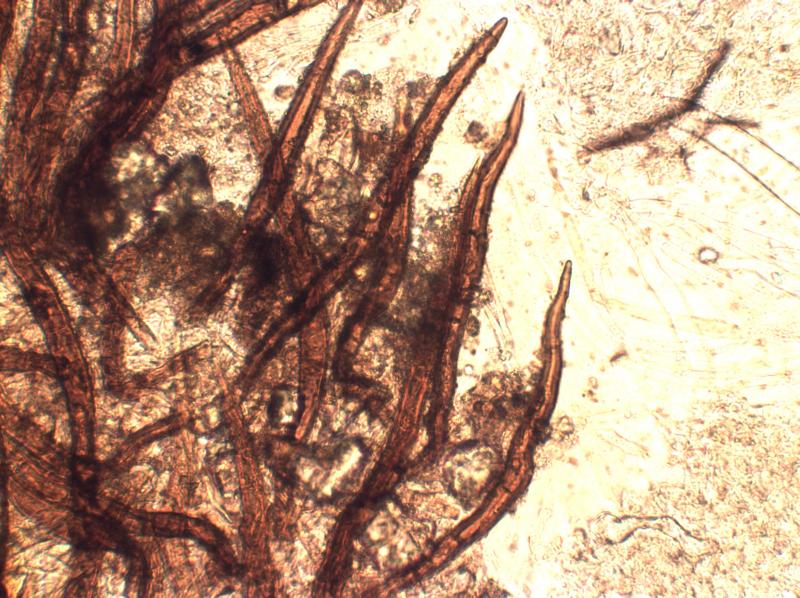
 This as yet immature Scutellinia was on the side of a muddy track in some local woodland. The fruit bodies are very small mostly under 2 mm. The hairs are bent, often ventricose and uneven with a maximum length of 250µ. They have up to 4 septa and are simple or occasionally bi-furcate. I have found not ejected spores yet so cannot show any ornamentation on the elipsoid 18x11.5 spores. I am trying to get the fruitbodies to maturity.
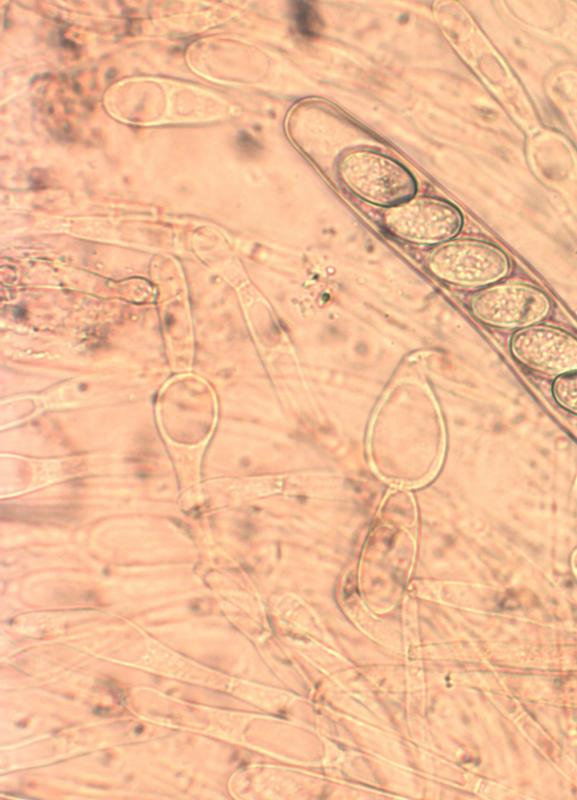
The reason for this post is because many of the paraphyses are swollen not at the end but below the last septa some to 20µ. I can find no mention of this for any species in Schumacher so was just wondering if anyone else had seen this?
Thanks
Mal

 IS-5-0001.jpg
Michel Hairaud,
06-07-2016 14:22

Re : Strange paraphyses
Bonjour Malcolm,
This phenomenon called fortoulime (fortulism in ENglish ?) (swollen paraphyses) is rather frequent in the genus Peziza ( mostly in P. varia, but others too) and not so rare in Scutellinia .
In former posts on this Ascofrance forum, René Dougoud among others mentionned it and I already observed it several times in Scutellinia collections, particularly in wet conditions.
Amitiés
Michel
This phenomenon called fortoulime (fortulism in ENglish ?) (swollen paraphyses) is rather frequent in the genus Peziza ( mostly in P. varia, but others too) and not so rare in Scutellinia .
In former posts on this Ascofrance forum, René Dougoud among others mentionned it and I already observed it several times in Scutellinia collections, particularly in wet conditions.
Amitiés
Michel
Hans-Otto Baral,
06-07-2016 14:41

Re : Strange paraphyses
I also know this phenomenon but was unaware of the term. I correct to fortoulisme. Is this a French word and what is the root of it?
Michel Hairaud,
06-07-2016 14:53
Re : Strange paraphyses
After the mycologist Fortoul , from SOuth of France , I suppose he's the one who published with Donadini
Michel
Michel
Malcolm Greaves,
06-07-2016 16:00
Re : Strange paraphyses
Thanks. Of no help in the identification process so just hope the specimens mature and I can get a view of the ornamentation.
Mal
Mal
Malcolm Greaves,
07-07-2016 14:02
Re : Strange paraphyses
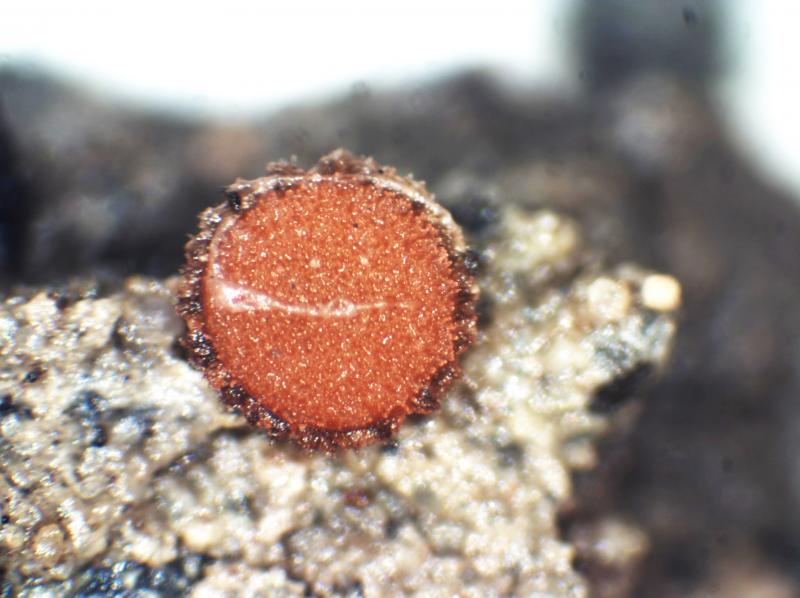
Not even sure if this was the same species but it was collected alongside the above specimen. This had a slightly convex surface but looked to have even shorter hairs so I thought it might be more mature and give better spores.
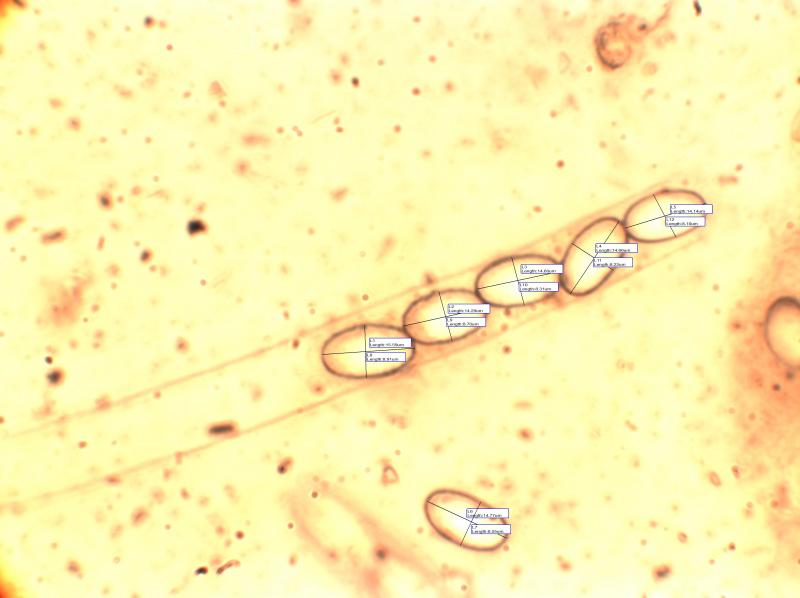
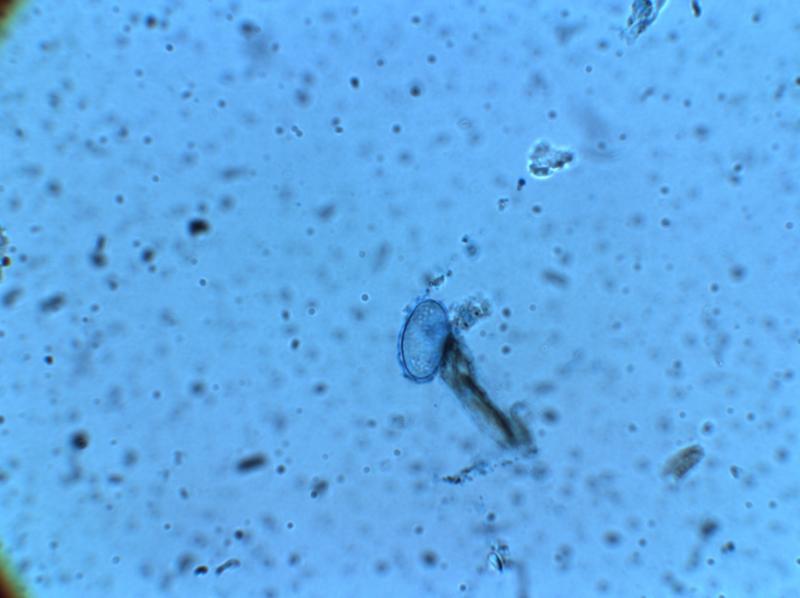
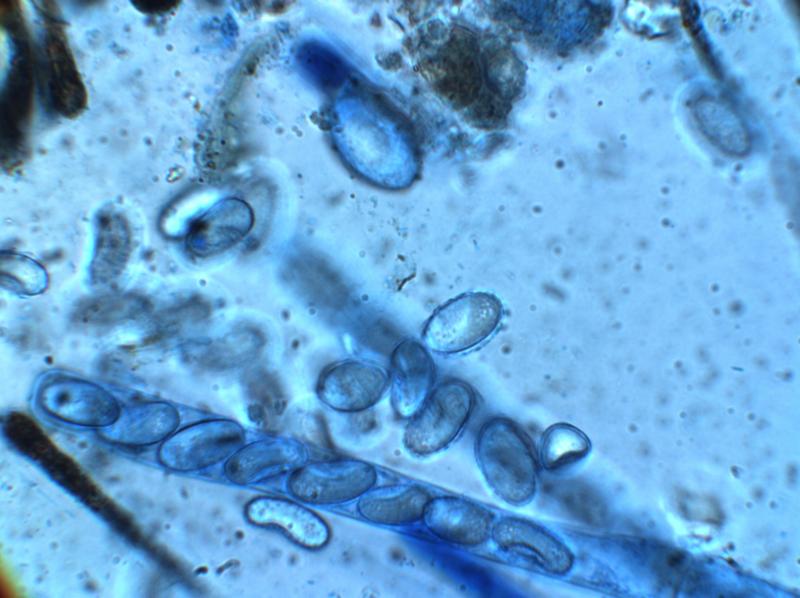
It did! The spores averaged 16 x 8.5 with small sometimes converging warts. This time I managed to heat in cotton blue and found the hoped for reaction and the outer layer came away from the spore.
Is this likely to be S minutella.
Thanks
Mal
It did! The spores averaged 16 x 8.5 with small sometimes converging warts. This time I managed to heat in cotton blue and found the hoped for reaction and the outer layer came away from the spore.
Is this likely to be S minutella.
Thanks
Mal