
27-04-2026 20:52
 Lothar Krieglsteiner
Found on hanging tiwg of Olea europaea in dried-ou
27-04-2026 18:48
Tony MoverleyCollected 23rd April 2026, Norfolk, EnglandSwarms
27-04-2026 17:41
Lothar Krieglsteiner
.. Algarve, same leaf than the last post. The con
27-04-2026 18:05
Lothar Krieglsteiner
... still attached at standing tree. The green con
27-04-2026 17:16
Lothar Krieglsteiner
.. Algarve, moist lying.The conidiomata look like
27-04-2026 12:54
Steve ClementsBonjour. Ce petit champignon blanc résupiné et
27-04-2026 09:59
Pauline. PennaBonjour Can anyone advise me on these pycnidia fo

22-04-2026 20:54
 Enrique Rubio
Hi to everybody.This Pyrenopeziza grew in moist le
Mycoarachis inversa.
Joop van der Lee,
11-12-2015 15:56

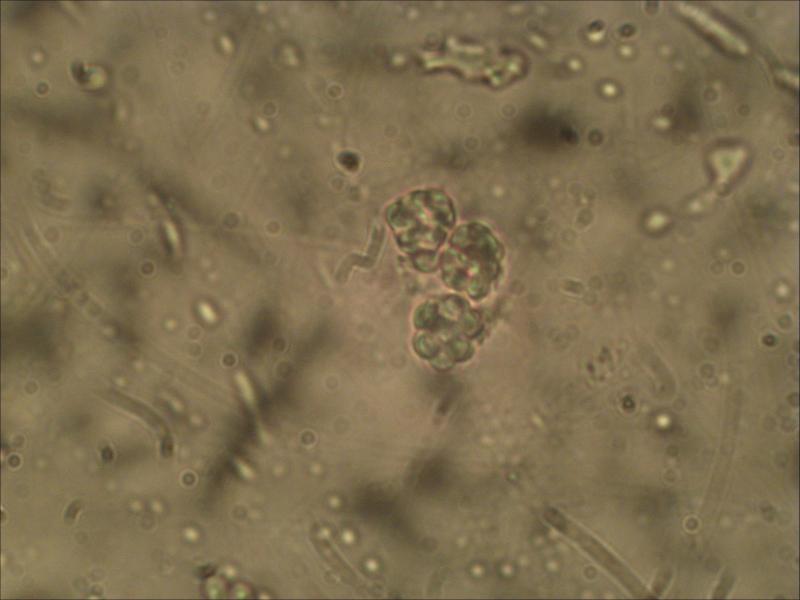
Found on cow dung.
Fruitbody ball shaped, diameter 155-166 um, at maturity it will develope a cap.
It contains spore clusters of 8 spores each.
Spores: 5.3-5.45x2.4-2.6 um


Michel Delpont,
11-12-2015 18:33

Re : Unknown pyrenomycete
It does not distinguish well, but can you be seeking to Kernia? Have you seen hair?
Michel.
Michel.
Joop van der Lee,
11-12-2015 18:44
Re : Unknown pyrenomycete
No hairs observed Michel
David Malloch,
12-12-2015 16:12

Re : Unknown pyrenomycete
Hi Joop..
That looks like it might be Mycoarachis inversa. It seems to be most common in dry regions, which hardly describes The Netherlands. However, the similar species Nigrosabulum globosum is also characteristic of dung in dry regions yet was common on my collections of horse dung from Sable Island, Canada and Shackleford Bank, USA, both sand dune areas in very humid climates.
The attached paper, although old and out of date, may be some help.
Dave
That looks like it might be Mycoarachis inversa. It seems to be most common in dry regions, which hardly describes The Netherlands. However, the similar species Nigrosabulum globosum is also characteristic of dung in dry regions yet was common on my collections of horse dung from Sable Island, Canada and Shackleford Bank, USA, both sand dune areas in very humid climates.
The attached paper, although old and out of date, may be some help.
Dave
 Malloch-amp-Cain-Pseudeurotiaceae-1970-0001.pdf
Joop van der Lee,
12-12-2015 18:38
Re : Unknown pyrenomycete
Thank you very much for the information David.
Joop