
12-06-2026 14:50
 François Freléchoux
Bonjour, Voici la brève description d'une Mollis
10-06-2026 21:16
François Freléchoux
Bonsoir,Le dernier du jour, en attendant votre avi
11-06-2026 19:01
 William Slosse
Hello all,In an attempt to make a culture of a sus
11-06-2026 19:03
 Nicolas VAN VOOREN
Chers membres d'Ascofrance,Le site sera placé en

09-06-2026 18:32
Camille MertensSur morceau de roseau immergé 0,5 - 0,7 mm de dia
10-06-2026 12:54
Steve ClementsBonjour encore, Pouvez-vous m'aider, s'il vous pl
10-06-2026 21:07
François Freléchoux
Toutes les tiges de gentianes jaunes de l'an passÃ
10-06-2026 13:41
François Freléchoux
Bonjour à nouveau, Voici une trouvaille d'hier.
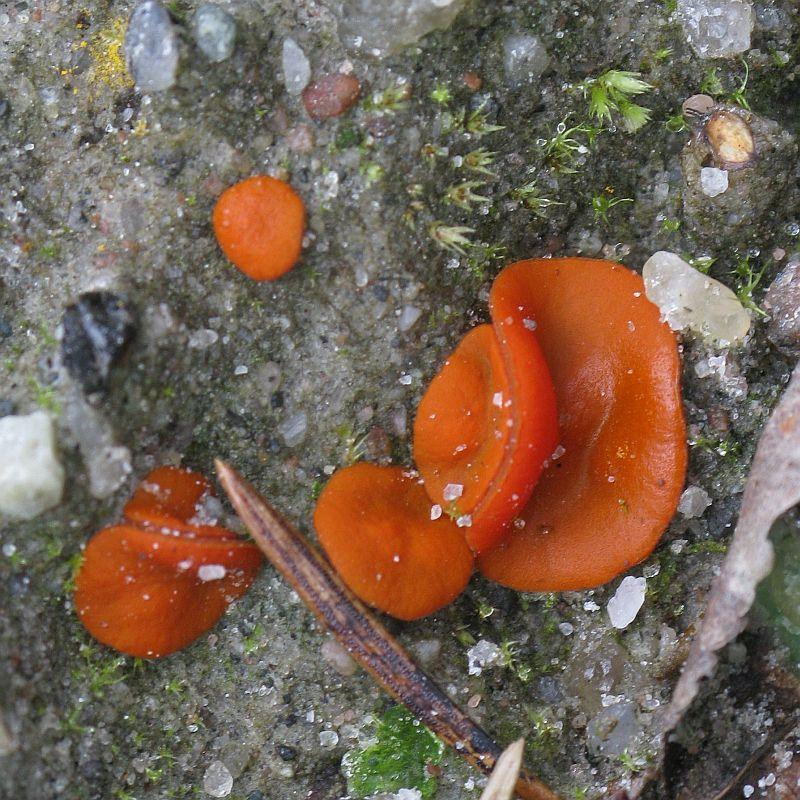
 Hi, I had this image for identification since few years, and I wished to share here perhaps someone can help. It looks quite similar in shape to Ascocoryne sp. (namely A. cylichnium) except the colour is too much orangish. It was found in very damp sandy/girty soil at the side of a forest ditch.
-----[.fr]-------------
Bonjour, j'avais cette image pour l'identification depuis quelques années et j'ai voulu partager ici peut-être quelqu'un peut aider. Cela a l'air tout à fait semblable en forme à Ascocoryne sp. (À savoir A. cylichnium) sauf la couleur est trop d'orangish. Il a été trouvé dans le sol sandy/girty très humide au côté d'un fossé forestier.

Hello,
I hardly can believe that this should be a Ascocoryne species.
The colour suggests, that it is a species with carotenoid pigments, which would lead to the Humariaceae. Also the occurence on ground leads to that group.
So in my opinion may be a Melastiza, Neotiella, Ramsbottomia or something like that. No chance without micro details.
best regards,
Andreas
Gilbert
Many thanks once again.