
25-05-2026 16:35
 Bernard CLESSE
Bonjour à toutes et tous,J'ai trouvé récemment,
29-05-2026 15:35
daniel FERREBonjour à tous,Je voudrais votre aide pour cette
28-05-2026 16:15
James MitchellHello,Does anyone have the original publication of
28-05-2026 11:06
Thomas Læssøehttps://svampe.databasen.org/observations/10596750
23-05-2026 11:44
 Charles Grapinet
Hello, I am having trouble identifying this copro
25-05-2026 16:44
François BartholomeeusenHi forum members,During an excursion organised by
26-05-2026 21:25
Dirk GerstnerHello everyone, I'm completely stumped by this li
26-05-2026 22:44
Ethan CrensonHi all, I think I have Incrucipulum capitatum her
22-05-2026 14:44
 Lothar Krieglsteiner
in unripe condition citrine yellow, then soon fadi
22-05-2026 13:29
Gernot FriebesHi,I am curious to hear your opinion on this mater
 Hello all,
 I wondered if anyone might have details of the spore sizes etc for Lichenochora hyperphysciae, a lichenicolous fungus on Hyperphyscia adglutinata?
With regards,
Jenny
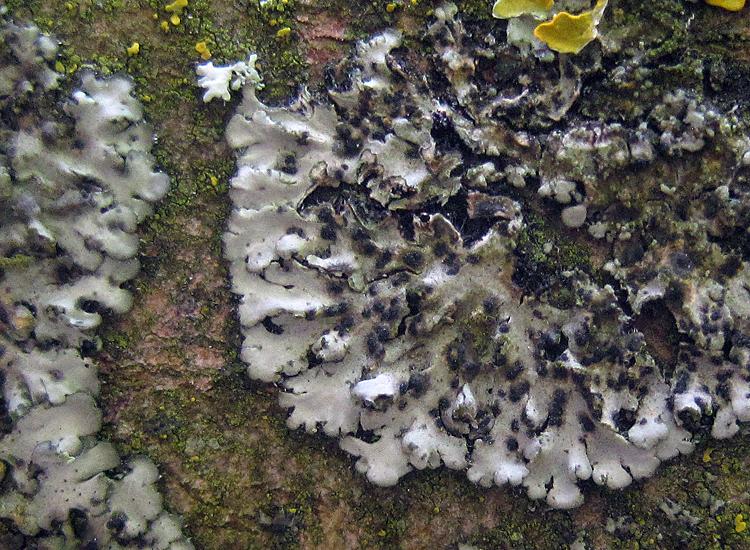
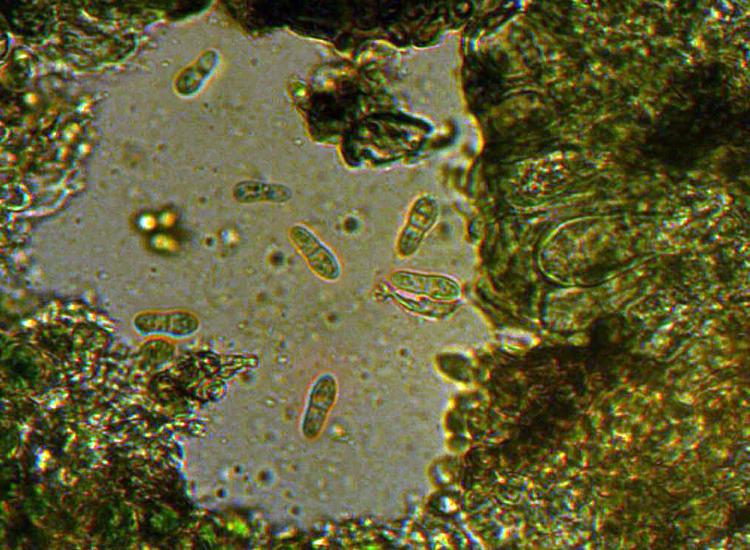
The reason for the above request is that I found a lichenicolous fungus forming abundant black perithecia on the lobes of Hyperphyscia adglutinata. Spores were hyaline, 1-septate, 12.5-15(-17) x 5-6 µm and somewhat 'sole-shaped'.
I reached Lichenochora using the 2010 draft keys to the Lichenicolous Fungi
of Great Britain, Ireland, the Channel Islands, Iberian Peninsula, and Canary Islands - they give details of Lichenochora obscuroides (with slightly larger spores) on Phaeophyscia but nothing for Hyperphyscia adglutinata.
Googling produced a 2011 record for Lichenochora hyperphysciae on Hyperphyscia adglutinata:
"Etayo, J. 2011. Lichenochora hyperphysciae, a new lichenicolous fungus found in Mexico and Spain. Bibliotheca Lichenologica 106:53–56. [New species: Lichenochora hyperphysciae Etayo (on Hyperphyscia adglutinata).]. "
I'm hoping I'm on the right track which is why I wondered if anyone might have access to this publication with the spore size etc for Lichenochora hyperphysciae?
With regards,
Jenny

Hi Jenny,
It's perhaps not a Lichenochora. Have you more informations (asci, paraphyses s.l., ...) ?
You should ask directly to Javier informations about L. hyperphysciae.
Alain
Thanks for your reply but no paraphyses that I could see and only the indistinct asci that are (just) visible in the microphoto. It was a very bad section cut with the help of a propped torch as the lightbulb in my dissecting 'scope had just blown.....!
As I'm waiting for a replacement bulb I'll email the images to Brian Coppins and see what he might suggest.
With regards,
Jenny
Ok, wait and see...
Stil many solutions to my mind, but one first point is to describe : ascomata, is it perithecia ? With such ascospores I would think more at other genus than Lichenochora.
Keep in touch,
Alain
Now I can see what I'm looking at the host is Phaeophyscia orbicularis and there are ascomata with indistinct margins rather than perithecia.
No wonder the spores looked arthoniod - my spore measurements slightly longer than those given in the key but Arthonia phaeophysciae?
My apologies for posting before I was able to properly examine the specimen,
Jenny
Hi Jenny,
Don't worry, identify lichen + lichenicolous fungi is not easy !
Alain
It was my first idea.
Nevertheless, at least check if hymenium is J+ (red wine).
Alain
excuse me by my delay. Yes, it seemed Arthonia phaeophysciae. Lichenochora spores are very typical with a very reduced lower cell and the fungus forms galls.
If you are interested in the paper on Lichenochora I can send the paper to your email.
My address is seawright.jenny@gmail.com
With regards,
Jenny
Dear Javier,
I would appreciate the copy too ...
Alain