
29-05-2026 15:35
daniel FERREBonjour à tous,Je voudrais votre aide pour cette
28-05-2026 16:15
James MitchellHello,Does anyone have the original publication of
28-05-2026 11:06
Thomas Læssøehttps://svampe.databasen.org/observations/10596750
23-05-2026 11:44
 Charles Grapinet
Hello, I am having trouble identifying this copro
25-05-2026 16:44
François BartholomeeusenHi forum members,During an excursion organised by
26-05-2026 21:25
Dirk GerstnerHello everyone, I'm completely stumped by this li
26-05-2026 22:44
Ethan CrensonHi all, I think I have Incrucipulum capitatum her
22-05-2026 14:44
 Lothar Krieglsteiner
in unripe condition citrine yellow, then soon fadi
25-05-2026 16:35
 Bernard CLESSE
Bonjour à toutes et tous,J'ai trouvé récemment,
22-05-2026 13:29
Gernot FriebesHi,I am curious to hear your opinion on this mater
Coniochaeta ligniaria?
Chris Johnson,
05-03-2015 13:07
Found on pony dung.
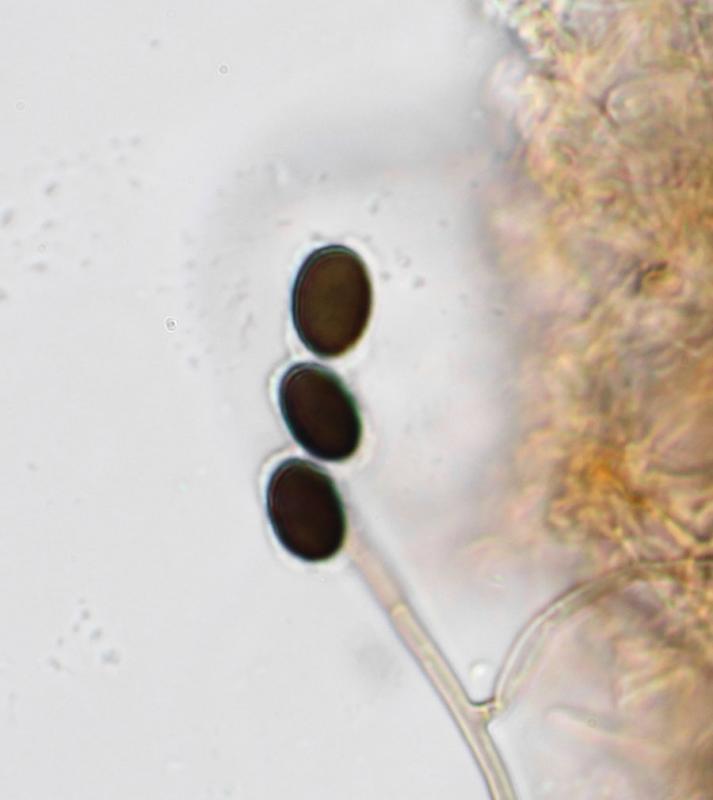
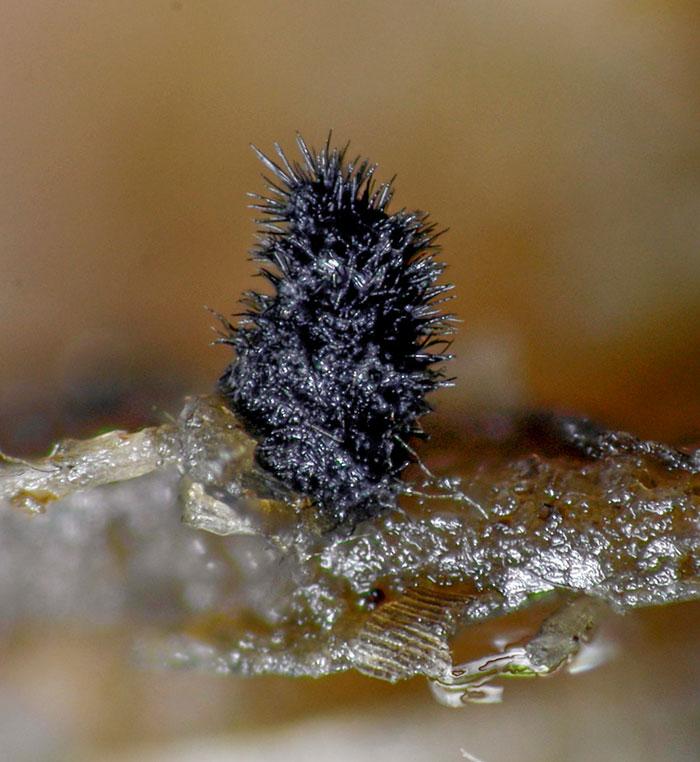
Perithecia 600µm tall x 400µm wide covered in setae, 60-75µm long, thich-walled with acute apices.
Asci 8-spored, uniseriate, 165-178 x 13µm
Spores with vertical germ slit, 11.4 x 9.1 x 6.7 (average) mostly measured within the asci. Spores have a gelatinous sheath.
My main concern is the spore-size. Althought mine sit comfotable in the lower size-range, Mahoey & LaFavre and Checa give a larger range. Checa also notes that the spore-size is quite variable.
Comments welcome. Thank you, Chris
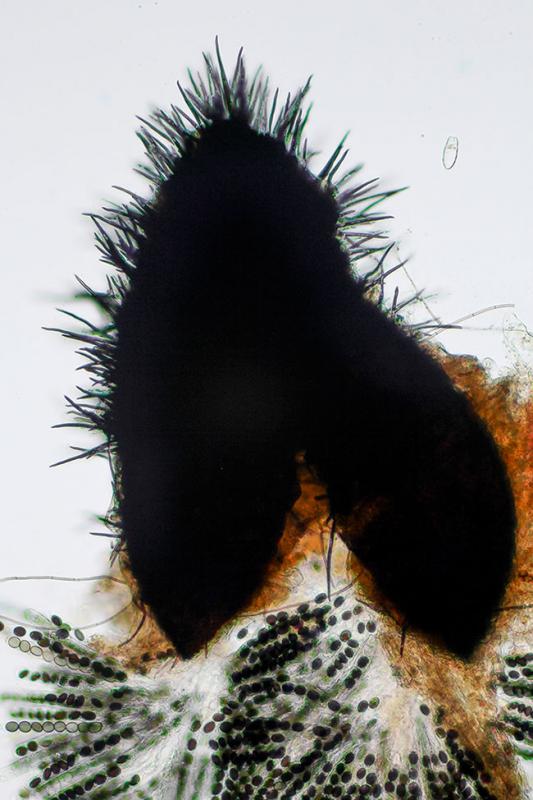
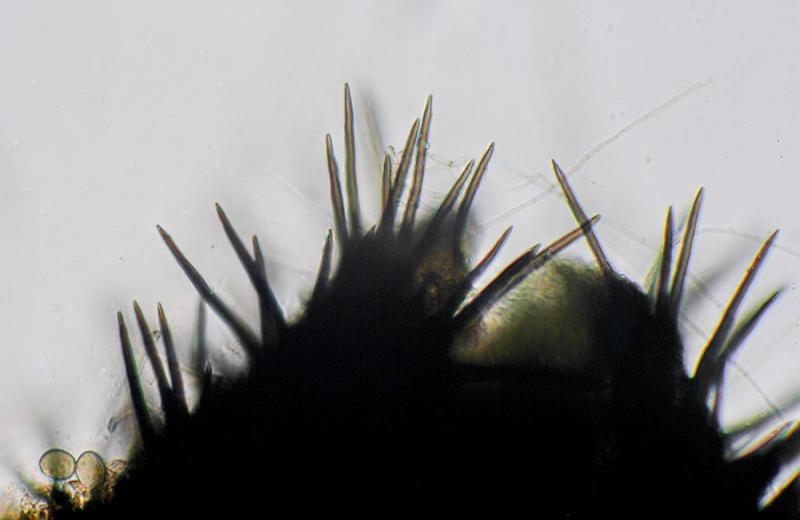
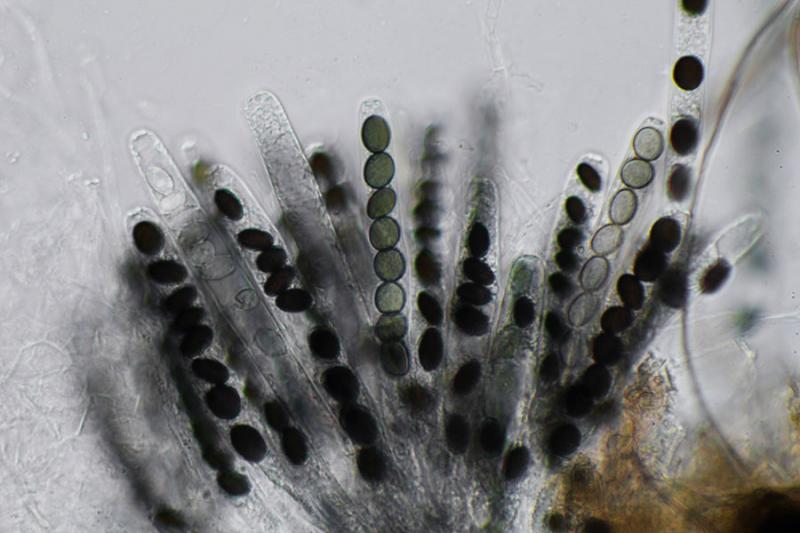
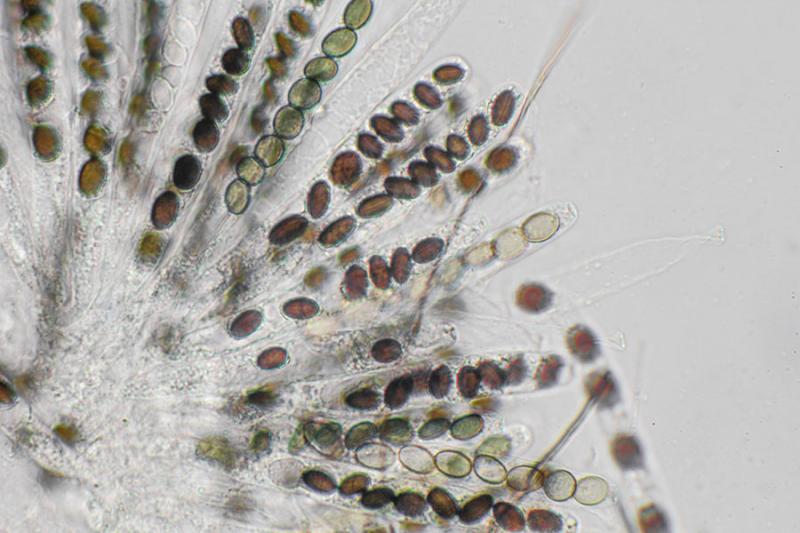

Michel Delpont,
05-03-2015 14:50

Re : Coniochaeta ligniaria?
Hi Chriss.
I think it is indeed C.vagans. Many authors divide C.ligniaria (rather on wood) of C.vagans on dung. The latter usually have more rounded spores in front view. Have you observed the germination slit around the spore? Spore size is actually quite variable.
Michel.
I think it is indeed C.vagans. Many authors divide C.ligniaria (rather on wood) of C.vagans on dung. The latter usually have more rounded spores in front view. Have you observed the germination slit around the spore? Spore size is actually quite variable.
Michel.
Chris Johnson,
05-03-2015 16:24
Re : Coniochaeta ligniaria?
Hi Michel
Thank you for the confirmation. Germ slits were observed best with the microscope, especially on slightly immature spores.
Mike Richardson worked on dung fungi for many years, mainly in Scotland and the islands and recorded Coniochaeta ligniaria numerous times on various types of dung although, as far as I can ascertain, not on horse.
Bita Asgari, et al, have Coniochaeta vagans with a smaller spore-range more in keeping with mine but, as you say, they can be quite variable. My main concern is that Coniochaeta vagans has only one record on the national database and that may be dubious as there is no data attached to it.
Regards, Chris
Thank you for the confirmation. Germ slits were observed best with the microscope, especially on slightly immature spores.
Mike Richardson worked on dung fungi for many years, mainly in Scotland and the islands and recorded Coniochaeta ligniaria numerous times on various types of dung although, as far as I can ascertain, not on horse.
Bita Asgari, et al, have Coniochaeta vagans with a smaller spore-range more in keeping with mine but, as you say, they can be quite variable. My main concern is that Coniochaeta vagans has only one record on the national database and that may be dubious as there is no data attached to it.
Regards, Chris