
28-04-2026 20:07
 Lothar Krieglsteiner
... on twig in the air at standing Ceratonia siliq
12-05-2026 15:41
 Nicolas VAN VOOREN
Dear Ascolovers, especially interested in Pezizale
27-04-2026 20:52
Lothar Krieglsteiner
Found on hanging tiwg of Olea europaea in dried-ou
11-05-2026 20:22
Lothar Krieglsteiner
on attached twig of standing Ficus caricaquite uns
11-05-2026 12:32
 Bernard CLESSE
Pourriez-vous m'aider à identifier cette héloti
29-04-2026 10:44
Lothar Krieglsteiner
growing at moist, drying-out soil at the side of a
05-04-2026 22:46
Lothar Krieglsteiner
on wood of Ceratonia, Algarve, 3.4.2026.The color
10-05-2026 16:18
brigitte vignotbonjour trouvée en Ariège sur bois une petite
Struggling to identify this coelomycete on the flower-sheaths of Marram (Ammophila arenaria).
Quite numerous, apothecia largely immersed, black: averaging 250 µm wide by 170 µm tall.
Spores hyaline, smooth, quite pointed and pinched at one end: 8.5-14.3 x 4.5-6.5 µm.
Does anyone know of a key to coelomyctes?
Any help welcome, as usual.
Cordialement,
Chris
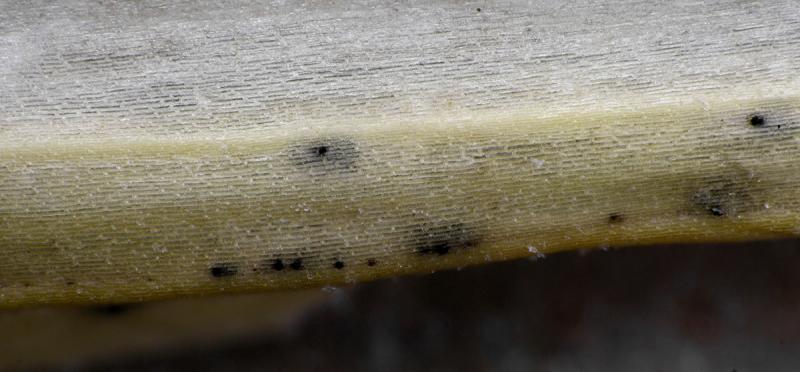
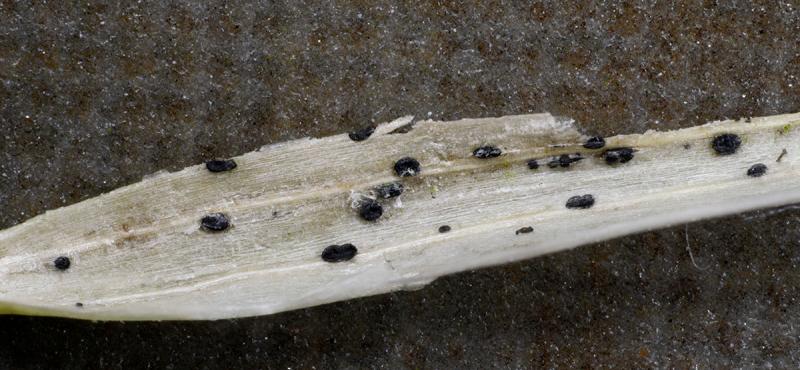
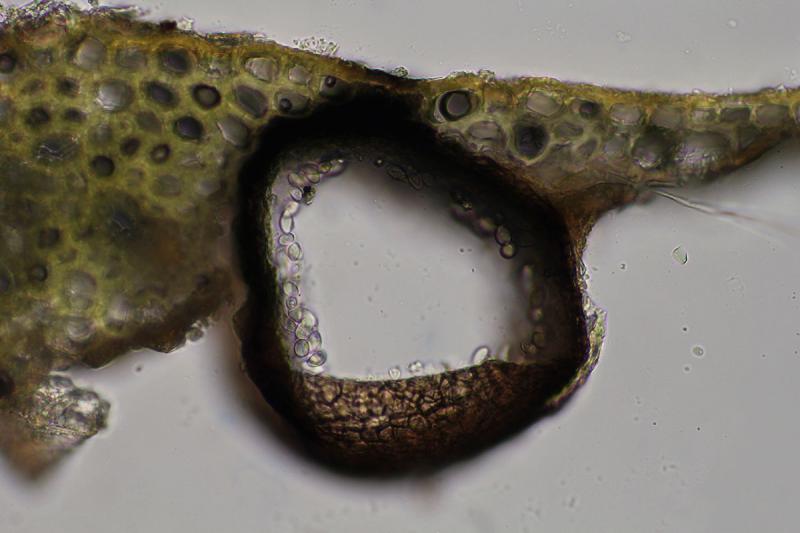


do you have pictures of the conidiophores?
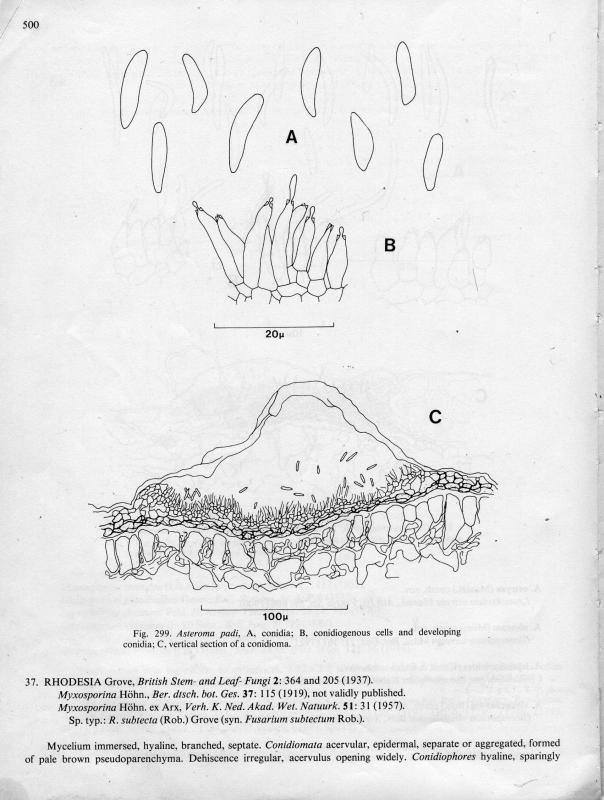
It could be Rhodesia subtecta (see attached description by Sutton 1980). Though described conidiomata shound be more inconspicuous and pale brown only.
regards
Martin
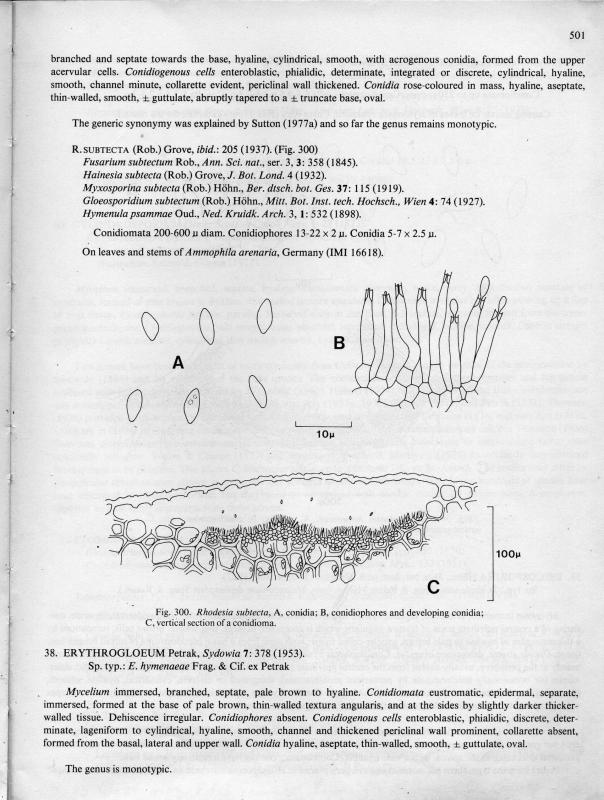
Thank you for looking at this for me.
I don't have any images of the conidiophores.
My concern is that the conidia of Rhodesia subtecta are rather narrow. Sutton (1980), 5-7 x 2.5; Grove (1937), 12-14 x 2 and Ellis & Ellis (1997), 5-7 x 2-3.
Also, two of the authors give peak season as July - August.
I'm make a fresh collection and see if I can provide some additional information.
Regards, Chris

regards
Chris

Despite the spores size, Rhodesia is an acervular coelomycetes, and your specimen clearly forms pycnidia. So the genus Rhodesia is really out of the rule.
Unfortunately without "see" the conidiogenesis any attempt to identify this fungus will be a "shot in the dark", unless someone here in the forum already found it.
I recommend you to check Sutton's monograph but you really need clarify the conidiogenesis. Because there are several pycnidial coelomycetes with non septated hyaline conidia.
You can also check for any kind of extracellular appendage, like a mucilaginous sheath or cap, in the conidia (but I'm afraid your fungus has none), in this case NagRaj's monograph will be more useful.
Thank you for giving some thought to this fungus. I have been through Groves, Sutton and Ellis & Ellis without success, but agree I needs some more details. I'm not familiar with NagRaj's monograph.
I tried to make a fresh collection this week but failed to find the fungus again. We have a lot of Marram here so will try again at a new site.
Regards, Chris
Here is the reference of Nag Raj's Monograph:
Nag Raj TR. 1993. Coelomycetous anamorphs with appendage-bearing conidia. Mycologue Publications: Waterloo, Canada. 1101 pp.
Good luck.
Best wishes, Chris
In case you notice any kind of appendage I can try to scan the synoptic key from Nag Raj' monograph.
There are no appendages on the first collection but I will pursue it and try to find some more material. It won't be for a few days as we are expecting 170kph winds! Isn't it possible to scan for NO appendages?
Thank you for the offer, I will hopefully come back with better details.
Chris