
22-04-2026 01:06
 Richard VALERI
Bonjour à tous.Je vous présente cette Nectria s.
21-04-2026 22:14
Margot en Geert VullingsThis cup fungus was found on April 10, 2026, on lo
21-04-2026 13:36
Gernot FriebesHi,I am out of ideas for this one. I collected Sal
21-04-2026 13:19
Gernot FriebesHi,this Lophodermium on Typha has ascospores measu
21-04-2026 13:05
Gernot FriebesHi,this hyphomycete feels familiar but I was not a
20-04-2026 22:00
 Malcolm Greaves
These pale yellow, hairy ascos were growing on cul
19-04-2026 21:23
Steve ClementsBonjour, I found this anamorphic fungus on old pl
19-04-2026 20:46
Steve Clements1 mm diameter approx spherical conidiophores on pl
12-04-2026 17:56
 Hardware Tony
Found on dead stems in February earlier this year
Lophiostoma macrostomum?
Björn Wergen,
29-01-2011 16:29
 Hello,
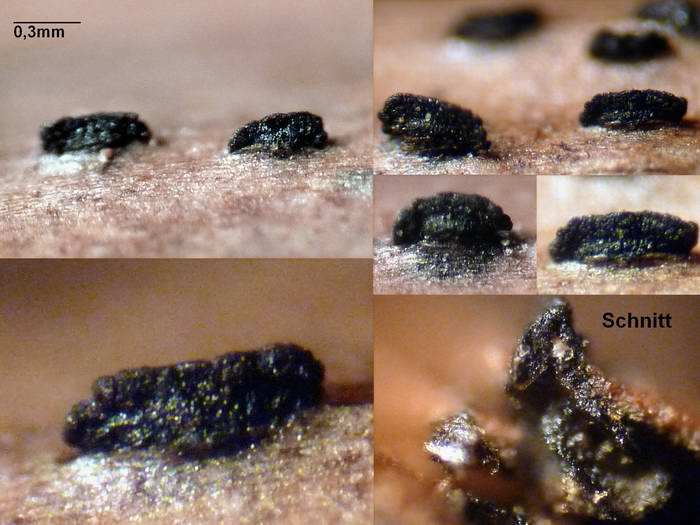
I have found an lophiostomoid fungus on dead stems of Aruncus (dioicus) with the following macro- und microscopical features:
Fruitbody lophiostomoid, ca. 0,2-0,5x0,1-0,2 mm, black.
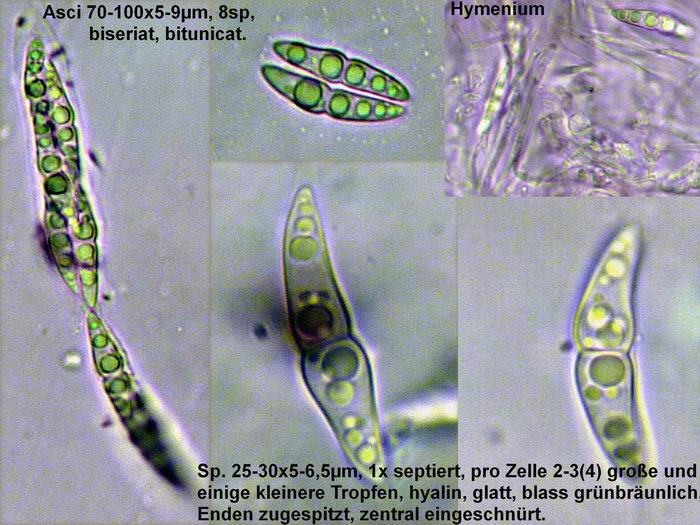
Spores 25-30x5-6,5 µm, with one central septe, each cell with 2-4 bigger and a few smaller guttules, hyaline with pale green-brownish color, endings pointed.
Asci 70-100x5-9 µm, with 8 spores (biseriate), bitunicate.
Paraphyses hyaline, 2-4 µm.
Perhaps someone can help with determination, I think it is Lophiostoma macrostomum, but is Aruncus a substrate for this species? I don't have any good literature about this dothideo-families :D
regards and thanks for help,
Kazuya
Björn Wergen,
29-01-2011 16:30
Re:Lophiostoma macrostomum?
micro
Björn Wergen,
29-01-2011 16:33
Re:Lophiostoma macrostomum?
Ah oui, not to forget: The spores have hyaline appendices on both endings, ca. 2-6µm long and not easy to see.
regards,
Kazuya
regards,
Kazuya
Alain GARDIENNET,
29-01-2011 16:57

Re:Lophiostoma macrostomum?
Even if ascospores are often given longer, I think your recolt is very probably L. macrostomum. This substrate is not a problem.
Alain
Alain
Björn Wergen,
29-01-2011 17:00
Re:Lophiostoma macrostomum?
hi Alain,
many thanks for the help, L. macrostomum spores are often given as 28-35µm long, I saw a few spores with over 32µm, but "normal" size was between 25 and 30µm.
regards
Kazuya
many thanks for the help, L. macrostomum spores are often given as 28-35µm long, I saw a few spores with over 32µm, but "normal" size was between 25 and 30µm.
regards
Kazuya
Gernot Friebes,
29-01-2011 17:02
Re:Lophiostoma macrostomum?
Hi Kazuya,
yes, this looks very much like L. macrostomum. It occurs on many different plants (on both wood and herbaceous stems).
Best wishes,
Gernot
yes, this looks very much like L. macrostomum. It occurs on many different plants (on both wood and herbaceous stems).
Best wishes,
Gernot
Björn Wergen,
29-01-2011 17:31
Re:Lophiostoma macrostomum?
many thanks Gernot ;)
regards,
Kazuya
regards,
Kazuya