
11-05-2026 12:32
 Bernard CLESSE
Pourriez-vous m'aider à identifier cette héloti
13-05-2026 15:26
 François Freléchoux
Bonjour,Voici une récolte faite il y a quelques j
12-05-2026 15:41
 Nicolas VAN VOOREN
Dear Ascolovers, especially interested in Pezizale
13-05-2026 12:05
 Thierry Blondelle
Bonjour à tous,J'aimerais avoir confirmation de c
10-05-2026 23:17
 Andreas Gminder
Hello,today we found in a moist steep decidous for
28-04-2026 20:07
 Lothar Krieglsteiner
... on twig in the air at standing Ceratonia siliq
27-04-2026 20:52
Lothar Krieglsteiner
Found on hanging tiwg of Olea europaea in dried-ou
11-05-2026 20:22
Lothar Krieglsteiner
on attached twig of standing Ficus caricaquite uns
29-04-2026 10:44
Lothar Krieglsteiner
growing at moist, drying-out soil at the side of a
Lachnum aff longipilosum
Miguel Ángel Ribes,
23-11-2010 00:50
 Good night
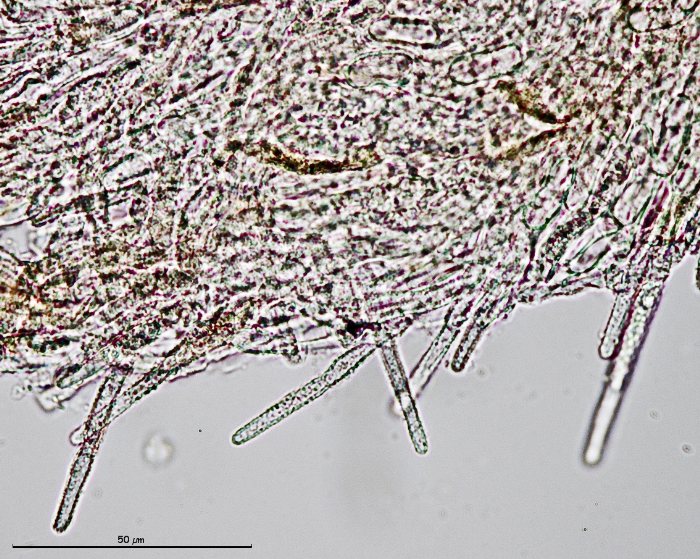
I have a new ascomycete on Echinospartum horridum, less than 0.5 mm, with the hymenium cream-pink and white hairs. Small asci with croziers and IKI +. Cylindrical spores. Paraphyses lanceolate, plenty of VBs and longer than asci. Hairs cylindrical, septate, granular and not thickened at the apex, up to 100 microns long.
The spore measures at 1000x in water are:
(7.8) 8.6 - 12.1 (12.3) x (0.9) 1.1 - 1.5 (1.7) microns
Q = (5.6) 6.4 - 9.7 (10.4), N = 19
Me = 10.1 x 1.3 microns, Qe = 8
Measurements of asci at 1000x in water are:
(34.6) 37.2 - 42.2 (42.8) x (3.9) 4.4 - 5.1 (5.7) microns
N = 15; Me = 39.6 x 4.7 microns
With Baral key (subkey 3) I arrive to L. longipilosum.
Thank you very much,
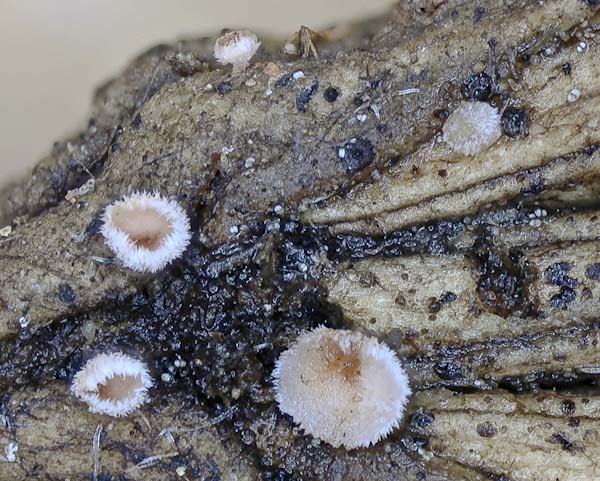
Miguel Ángel Ribes,
23-11-2010 00:52
Re:Lachnum aff longipilosum
Small asci with croziers and IKI+
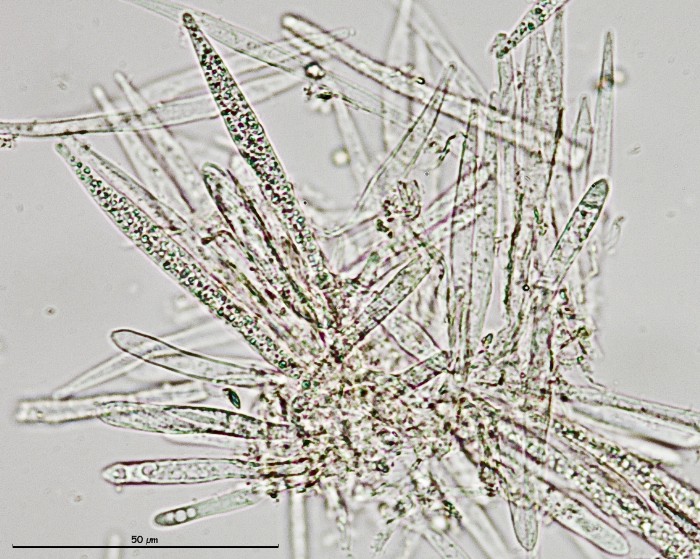
Miguel Ángel Ribes,
23-11-2010 00:53
Re:Lachnum aff longipilosum
Croziers
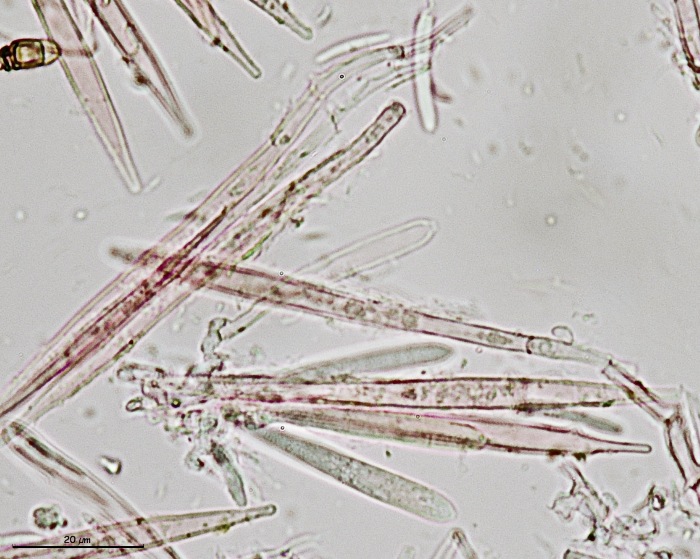
Miguel Ángel Ribes,
23-11-2010 00:53
Re:Lachnum aff longipilosum
Cylindrical spores
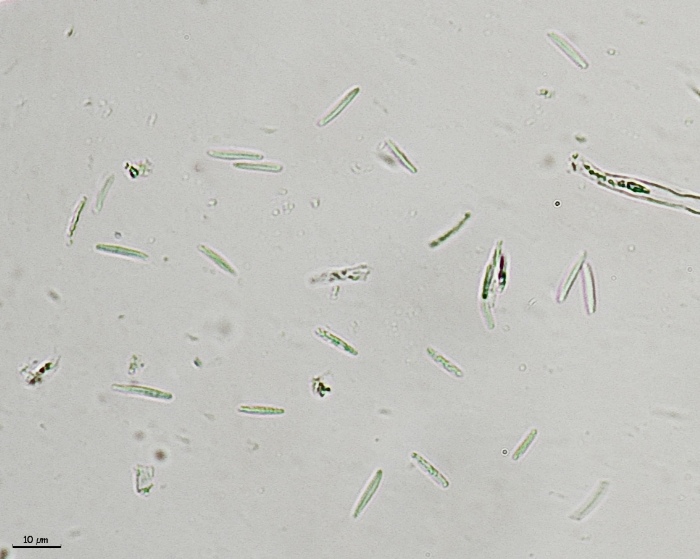
Miguel Ángel Ribes,
23-11-2010 00:55
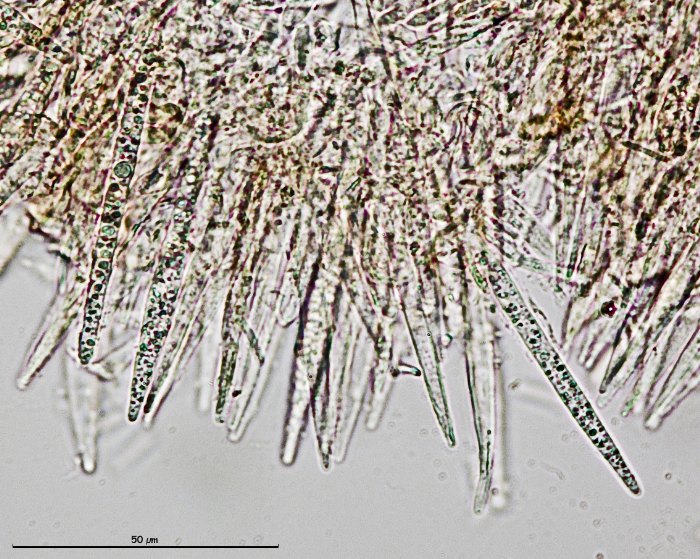
Re:Lachnum aff longipilosum
Long lanceolate paraphysis protruding and with abundant VBs.
Miguel Ángel Ribes,
23-11-2010 00:56
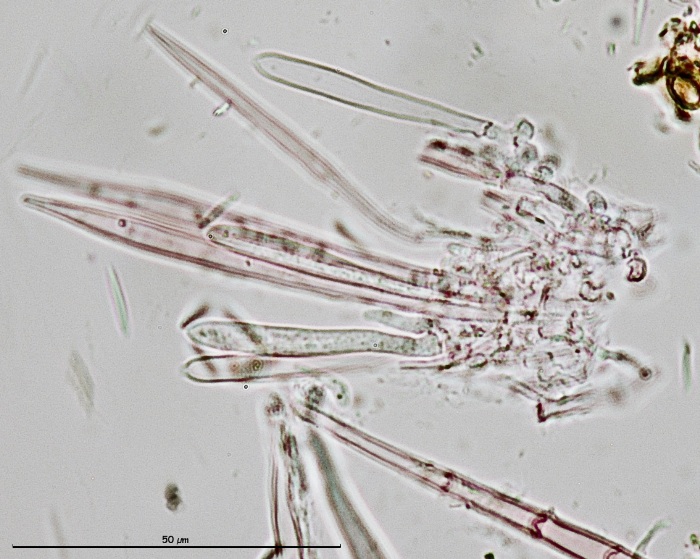
Re:Lachnum aff longipilosum
More protruding paraphysis in congo red
Miguel Ángel Ribes,
23-11-2010 00:57
Re:Lachnum aff longipilosum
Hairs
Miguel Ángel Ribes,
23-11-2010 00:58
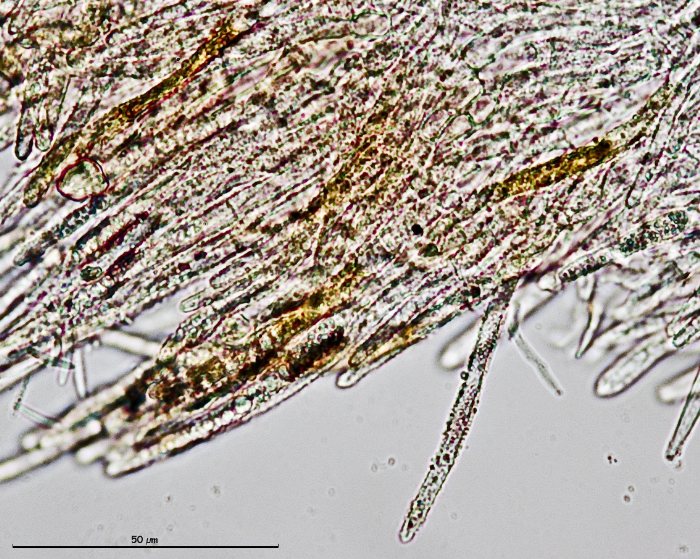
Re:Lachnum aff longipilosum
More hairs
Miguel Ángel Ribes,
23-11-2010 00:59
Re:Lachnum aff longipilosum
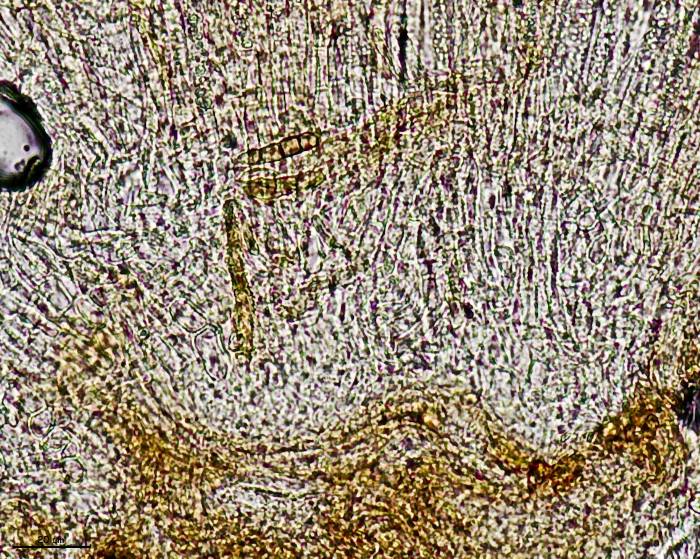
And finally medular excipulum
Hans-Otto Baral,
23-11-2010 09:31

Re:Lachnum aff longipilosum
Dear Miguel
the micros acutally are very close to longipilosum or elongatisporum, but the macro (rose hymenium) and substrate (I feel it is bark) are quite strange. The two species are strictly graminicolous as far as we presently know.
Is the rose hymenium perhaps a result of oxidation of the VBs? It is difficult to give an advice what to look at, your data are quite complete. IKI+ means blue?
perhaps something new. Is it from southern Spain?
Zotto
the micros acutally are very close to longipilosum or elongatisporum, but the macro (rose hymenium) and substrate (I feel it is bark) are quite strange. The two species are strictly graminicolous as far as we presently know.
Is the rose hymenium perhaps a result of oxidation of the VBs? It is difficult to give an advice what to look at, your data are quite complete. IKI+ means blue?
perhaps something new. Is it from southern Spain?
Zotto
Miguel Ángel Ribes,
23-11-2010 17:25
Re:Lachnum aff longipilosum
Dear Zotto
Echinospartum is a small spinose shrub (erizón o cojín de monja, in spanish), not very near to a grass, I think.
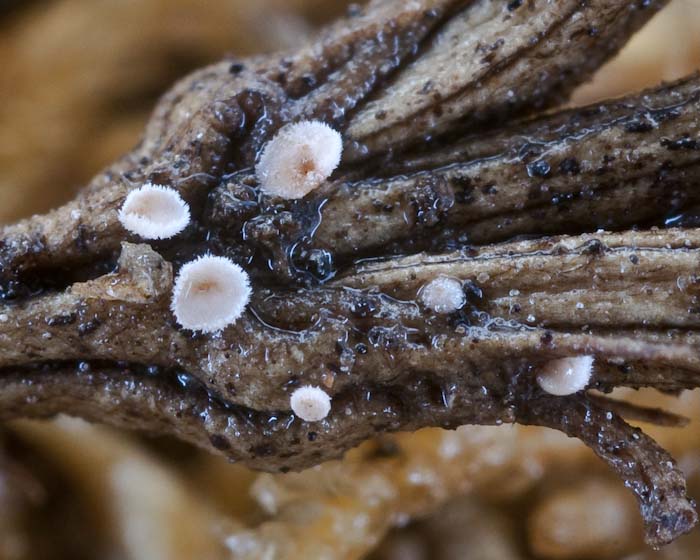
About hymenium, it seems pink from young (I attach a new photo).
Yes, IKI + is blue. It is from northen Spain, Pyrenees, Huesca.
Thank you
Echinospartum is a small spinose shrub (erizón o cojín de monja, in spanish), not very near to a grass, I think.
About hymenium, it seems pink from young (I attach a new photo).
Yes, IKI + is blue. It is from northen Spain, Pyrenees, Huesca.
Thank you
Hans-Otto Baral,
23-11-2010 17:43
Re:Lachnum aff longipilosum
Thanks! Looks like a new species. I cannot see a stalk on the macrophotos. Are the apothecia completely sessile?
Zotto
Zotto
Miguel Ángel Ribes,
23-11-2010 17:56
Re:Lachnum aff longipilosum
I think not completely sessile. In the first image, the upper one has a very small stalk. I am going to send to your private some big images.
Thank you, Zotto.
Miguel Ángel
Thank you, Zotto.
Miguel Ángel