
27-04-2026 09:59
Pauline. PennaBonjour Can anyone advise me on these pycnidia fo

22-04-2026 20:54
 Enrique Rubio
Hi to everybody.This Pyrenopeziza grew in moist le
24-04-2026 03:16
 David Chapados
Found while looking at something else from wood in
22-04-2026 01:06
 Richard VALERI
Bonjour à tous.Je vous présente cette Nectria s.
22-04-2026 20:17
 Marian Jagers
Is anyone familiar with the Hyphomycetes genus Pse

Nectriaceae?
Piet BORMANS,
07-09-2010 12:01
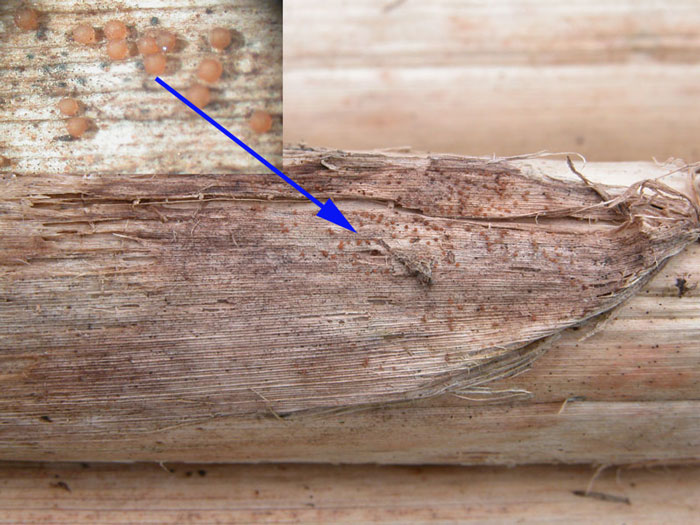
 Est-ce que quelqu'un peut m'aider à déterminer cet asco, qui selon moi appartient au genre Nectriaceae.
Récolté samedi passé sur des tiges mortes de Typha latifolia.
Ascomata rond, couleur jaune-orange, poussant au-dessus du substrat, dimension du diamètre 0,20-0,23mm
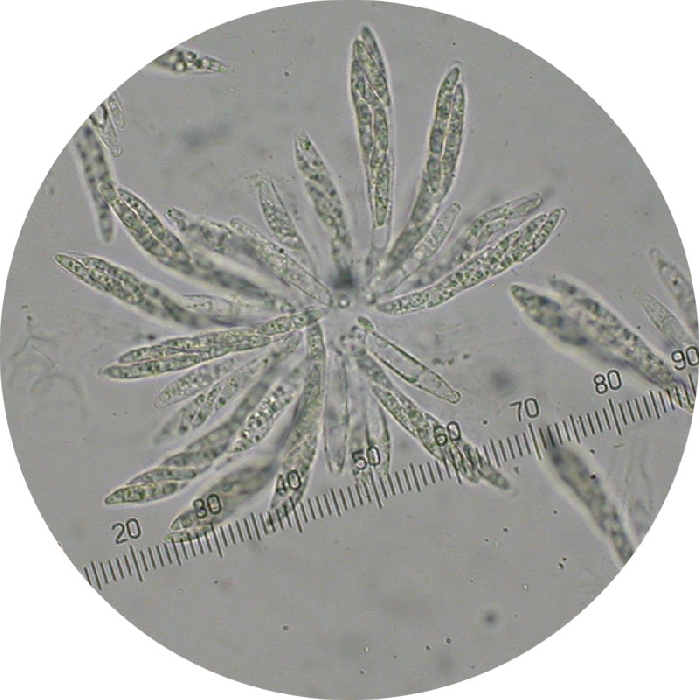
Asci 70-85 x 9 - 12 µm.
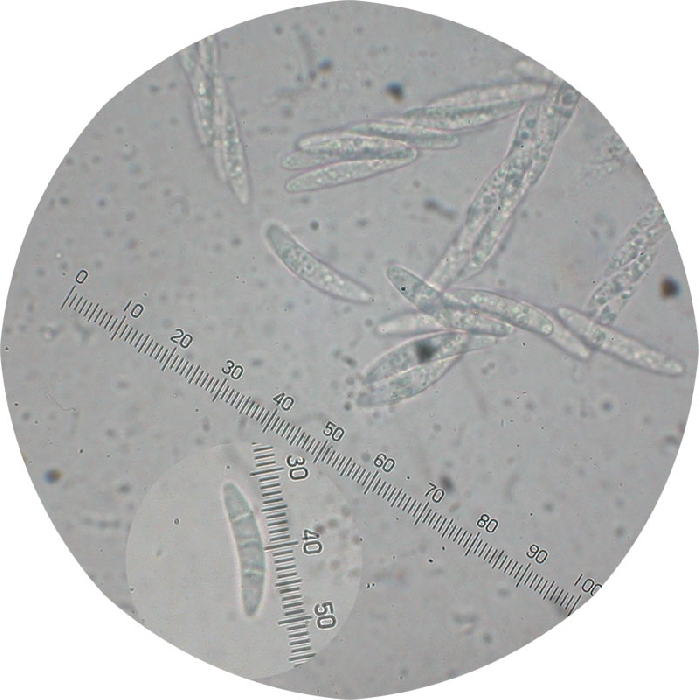
Spores 17-24 x 4-5 µm, cloisonnées 3 fois.
Alain GARDIENNET,
07-09-2010 12:12

Re:Nectriaceae?
Bonjour Piet,
Un Hydropisphaera certainement, donc un Bionectriaceae (tester la non réaction à KOH).
Probablement Hydropisphaera erubescens. Les spores seraient-elles striées ?
Alain
Un Hydropisphaera certainement, donc un Bionectriaceae (tester la non réaction à KOH).
Probablement Hydropisphaera erubescens. Les spores seraient-elles striées ?
Alain
Alain GARDIENNET,
07-09-2010 12:17
Re:Nectriaceae?
Mais je m'interroge sur l'habitat, H. erubescens étant régulièrement observé sur feuille de houx.
Si un spécialiste pouvait prendre le relai...
Alain
Si un spécialiste pouvait prendre le relai...
Alain
Piet BORMANS,
07-09-2010 12:25
Re:Nectriaceae?
Asci dans l'eau (x 400)
Piet BORMANS,
07-09-2010 12:26
Re:Nectriaceae?
Spores dans l'eau (x 1000)
Piet BORMANS,
07-09-2010 12:28
Re:Nectriaceae?
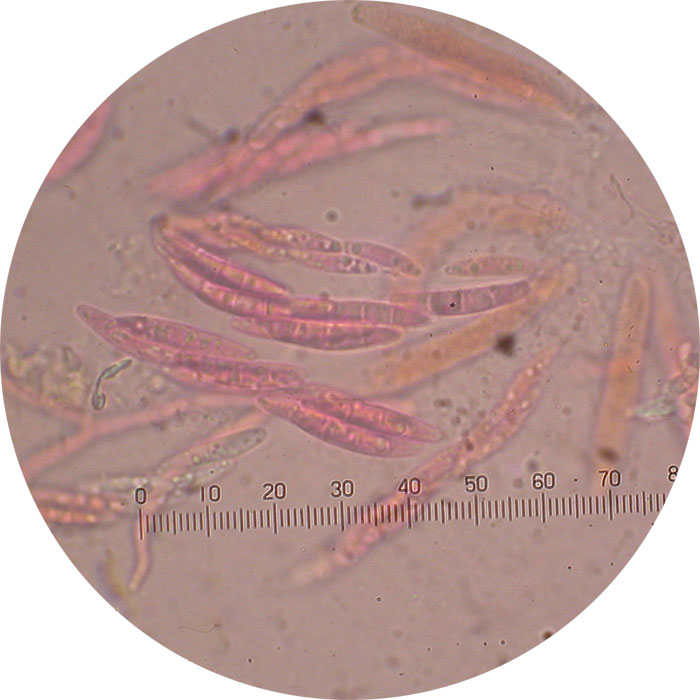
Spores dans eosine x kongorouge
Gary Samuels,
07-09-2010 14:26
Re:Nectriaceae?
Good Morning Piet!
I agree with Alain, your fungus is most likely Hydropisphaera erubescens. We've had it on a wide range of substrata, including Holly (Ilex) in France, and geographic locations (as far away as New Zealand). An interesting, and distinctive, feature of this species is the presence of orange globules in crush mounts in water.
Gary
I agree with Alain, your fungus is most likely Hydropisphaera erubescens. We've had it on a wide range of substrata, including Holly (Ilex) in France, and geographic locations (as far away as New Zealand). An interesting, and distinctive, feature of this species is the presence of orange globules in crush mounts in water.
Gary
Piet BORMANS,
07-09-2010 21:40
Re:Nectriaceae?
Merci beaucoup Alain pour votre réponse trés rapide. La réaction au KOH est négative et les spores sont lissent.
Also many thanks to Gary for his confirmation and explanation.
Piet Bormans
Also many thanks to Gary for his confirmation and explanation.
Piet Bormans