
21-02-2024 16:22
 Laurent Bonneau
petites apothécies blanchâtre Spores verruqueus
20-02-2024 22:58
ruiz JoseHola en resto de herbáceas sin determinar, ¿de t
17-02-2024 11:59
 Francisco SÁNCHEZ
Os presento esta colección sobre ramas muertas de
20-02-2024 17:23
 Luc Bailly
Bonjour,Voici une récolte d'une Calloriaceae pour
20-02-2024 15:53
Laurent Bonneau
EN observant mes Saccobolus issus de laissées de
20-02-2024 12:10
Luc Bailly
Bonjour à vous, J'ai une récolte d'un Mollisia
19-02-2024 16:00
 Thierry Blondelle
HiI am asking for confirmation for Dasyscyphella n
19-02-2024 16:24
Thierry Blondelle
HelloI am looking for a recent key of european Hel
11-02-2024 16:28
Karen PoulsenHi Under thick bark on just felled 90-year-old, s
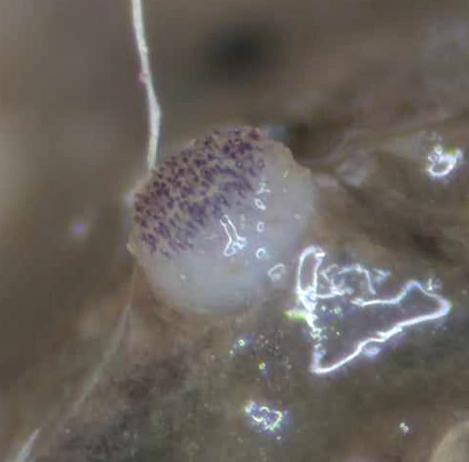
Ascobolus sur laissées de sanglier
Laurent Bonneau,
21-02-2024 16:22
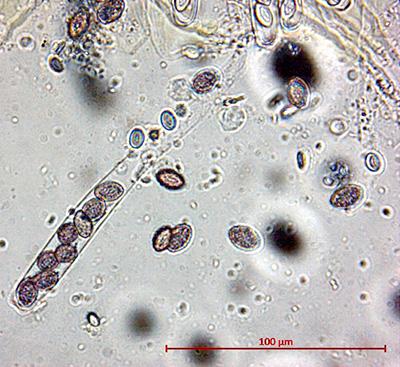
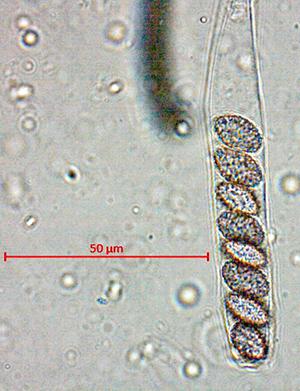
petites apothécies blanchâtre
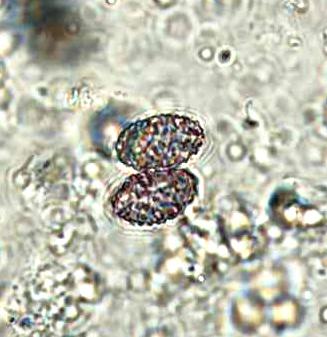
Spores verruqueuses à crêtées: 13,2-16 x 7,5-9,9 µm
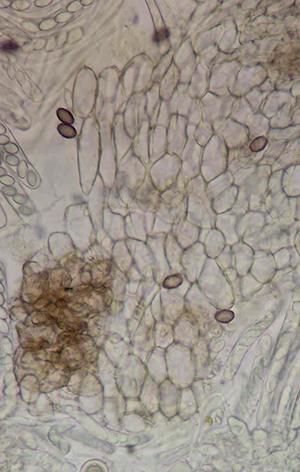
Excipulum à cellules globuleuses à anguleuses et allongées
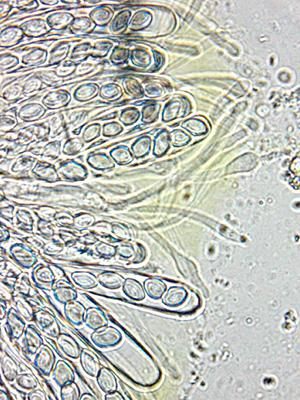
Asques: 150-160 x 15-17 µm
paraphyses à renflement épars surtout dans la partie supérieure
Si je suis la clé proposé dans l'article suivant: An update on the genera Ascobolus and Saccobolus with keys and descriptions of three coprophilous species, new to Italy
mon coeur balance entre aglaosporus et hawaiiensis...
Michel Delpont,
21-02-2024 16:41

Re : Ascobolus sur laissées de sanglier
Je dirais plutôt A.aglaosporus; regarde le message laissée hier à ce sujet.
Michel.
Laurent Bonneau,
21-02-2024 16:54
Re : Ascobolus sur laissées de sanglier
Bonjour Michel,
j'avais lu la publication précédente. Ce serait donc l'ornementation des spores qui ferait la différence entre les deux espèces ?
Et je n'ai pas de coloration lilacine citée dans la description.
Laurent
Michel Delpont,
21-02-2024 17:56
Re : Ascobolus sur laissées de sanglier
Sur la troisième photos on distingue des reflets lilacins, sinon, l'ornementation est différente ainsi que la taille des spores.
Michel.