
20-09-2015 00:24
 Rubén Martínez-Gil
Hola a todos. Subo unas fotos de un asco que hemo
19-09-2015 20:06
Eduard OsieckOn the same Alnus branch with Dimerella pineti (so
18-09-2015 17:07
Marja PennanenHi,these nearly 1mm wide cups grow on Pteridium aq
17-09-2015 22:48
Regina SiemianowskiHi to all,today I have found a black, immersed per
17-09-2015 20:45
 Chris Yeates
Bonsoir tousI think I have got this correct, but a
16-09-2015 20:09
 Andreas Gminder
Hello, today I found a small white Hyaloscyph
16-09-2015 20:18
Andreas Gminder
Hello, another one which puzzles me. Macroscopic
Hymenoscyphus ??
Eduard Osieck,
19-09-2015 12:42
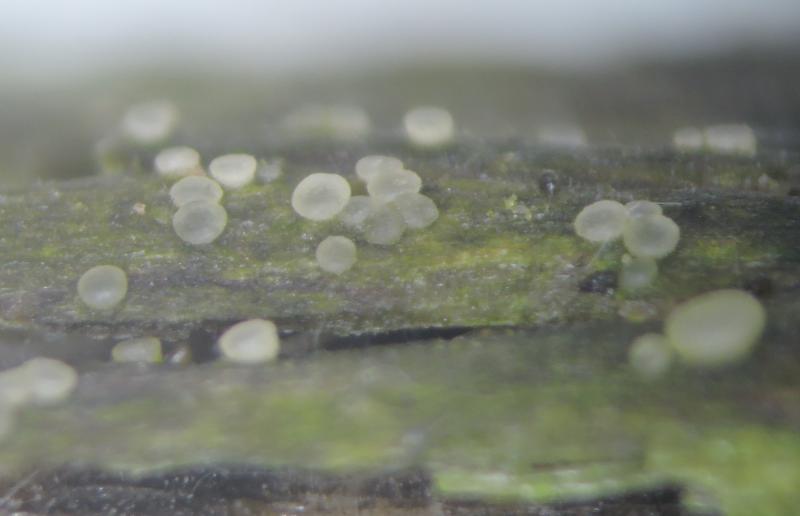
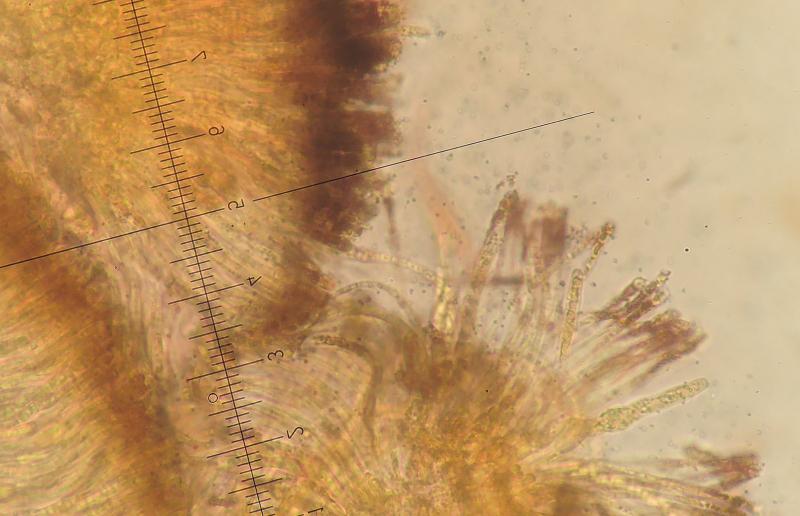
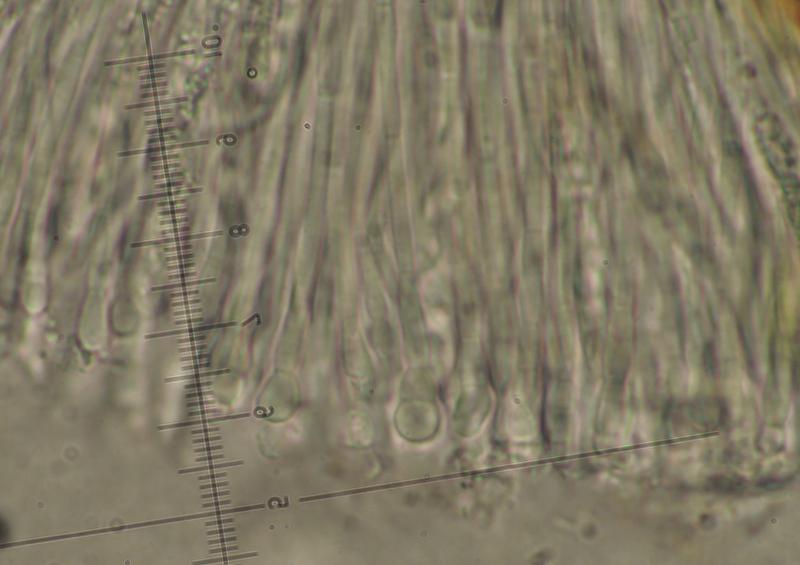
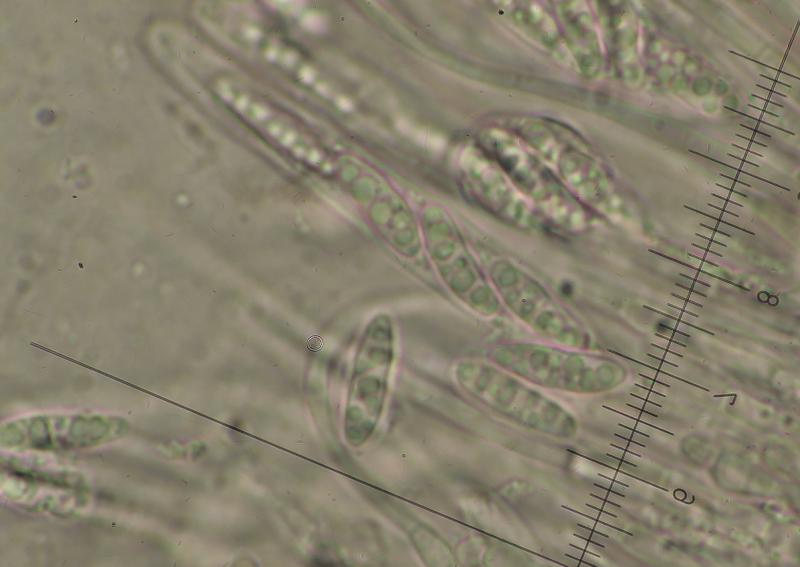
Although it has some good characters I have not been been able to identify it:
- asci 8-spored, ascus top J- (even so after KOH-treatment), cylindric, length 60-70 micron
- spores ellipsoid, 1-septate (constricted at septum), full with drops, 9.5-13 x 3-4 micron
- paraphyses clavate to sub-capitate, with septa, constricted at top septa, longer than asci (8 um)
- hymenium brown in Lugol.
No idea what it is. Hymenoscyphus possibly?
All advice much appreciated!
Eduard



Gernot Friebes,
19-09-2015 12:52
Re : Hymenoscyphus ??
Hi Eduard,
looks a bit like Coenogonium/Dimerella pineti (a lichenized ascomycete) to me...
Best wishes,
Gernot
looks a bit like Coenogonium/Dimerella pineti (a lichenized ascomycete) to me...
Best wishes,
Gernot
Eduard Osieck,
19-09-2015 13:18
Re : Hymenoscyphus ??
Hi Gernot
Thank you for your prompt reaction! I think you are wright, if I compare it with pictures available on Internet e.g. http://www.freenatureimages.eu/Plants/Funghi,%20Paddestoelen,%20Mushrooms%20and%20Toadstools/Dimerella%20pineti/index.html. The paraphyses are very much the same.
I hadn't considered the possiblity of a lichenized ascomycete, which can be explained by the inconspicuous thallus: "Thallus very thin, effuse, scurfy, green-grey to greenish black but may ± disappear apparently to leave only the apothecia; apothecia fleshy, short-lived (winter-spring), to 0.5mm in diameter, translucent-pallid to pinkish or sometimes pale orange, sometimes accompanied by white pycnidia. Widespread but minute and easily overlooked, on shaded bark, sometimes on other substrates, including soil."
(from: http://www.lichens.lastdragon.org/Dimerella_pineti.html).
Thanks a lot for the identification!
All the best, Eduard
Thank you for your prompt reaction! I think you are wright, if I compare it with pictures available on Internet e.g. http://www.freenatureimages.eu/Plants/Funghi,%20Paddestoelen,%20Mushrooms%20and%20Toadstools/Dimerella%20pineti/index.html. The paraphyses are very much the same.
I hadn't considered the possiblity of a lichenized ascomycete, which can be explained by the inconspicuous thallus: "Thallus very thin, effuse, scurfy, green-grey to greenish black but may ± disappear apparently to leave only the apothecia; apothecia fleshy, short-lived (winter-spring), to 0.5mm in diameter, translucent-pallid to pinkish or sometimes pale orange, sometimes accompanied by white pycnidia. Widespread but minute and easily overlooked, on shaded bark, sometimes on other substrates, including soil."
(from: http://www.lichens.lastdragon.org/Dimerella_pineti.html).
Thanks a lot for the identification!
All the best, Eduard
Javier Etayo,
20-09-2015 12:24
Re : Hymenoscyphus ??
Hi Eduard,
the hymenium with that granulous, orange pigment does not remind Coenogonium to me.
the hymenium with that granulous, orange pigment does not remind Coenogonium to me.