10-06-2026 13:41
 François Freléchoux
Bonjour à nouveau, Voici une trouvaille d'hier.
09-06-2026 18:32
Camille MertensSur morceau de roseau immergé 0,5 - 0,7 mm de dia
10-06-2026 11:53
Steve ClementsBonjour, This disco is abundant on dead stems of
10-06-2026 12:54
Steve ClementsBonjour encore, Pouvez-vous m'aider, s'il vous pl
10-06-2026 10:45
François Freléchoux
Bonjour à nouveau, Encore une détermination qui
08-06-2026 10:16
 Spooren Marco
I don`t have a clou about this fungus,it is not in
10-06-2026 09:24
François Freléchoux
Bonjour, J'imagine que cette détermination ne do
08-06-2026 17:00
François BartholomeeusenGood day everyone, On June 5 2026, I collected de
07-06-2026 15:10
 William Slosse
Hello everyone,On 05-06-26, I found following asco
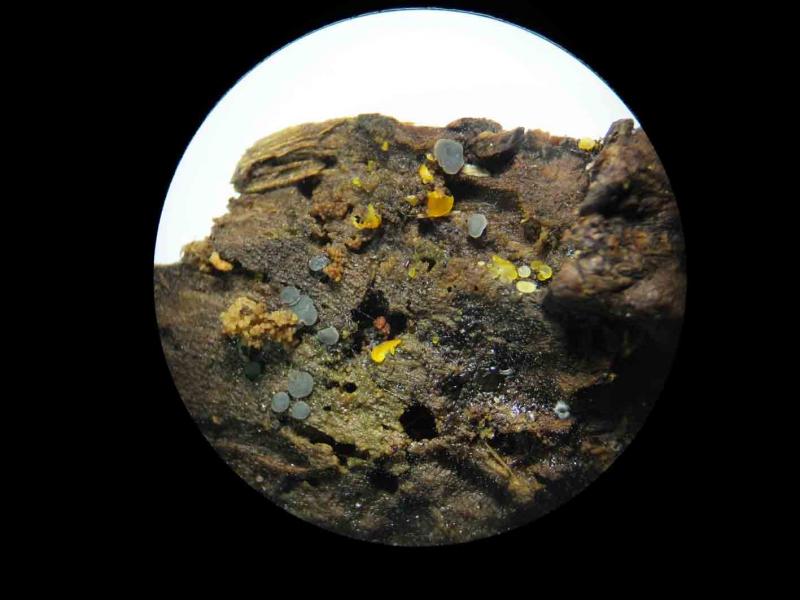
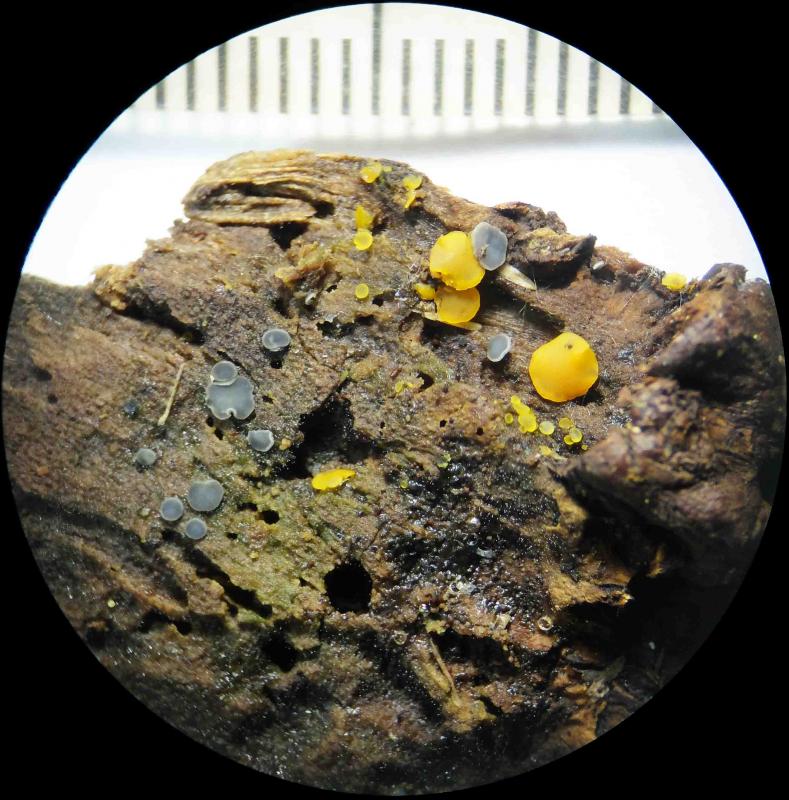
on a trouvé cet Orbilia sur le bois de bouleau. Les petits et grands ascocarpes, tous les deux, avaient les mêmes caractéristiques microscopiques.
Hi,
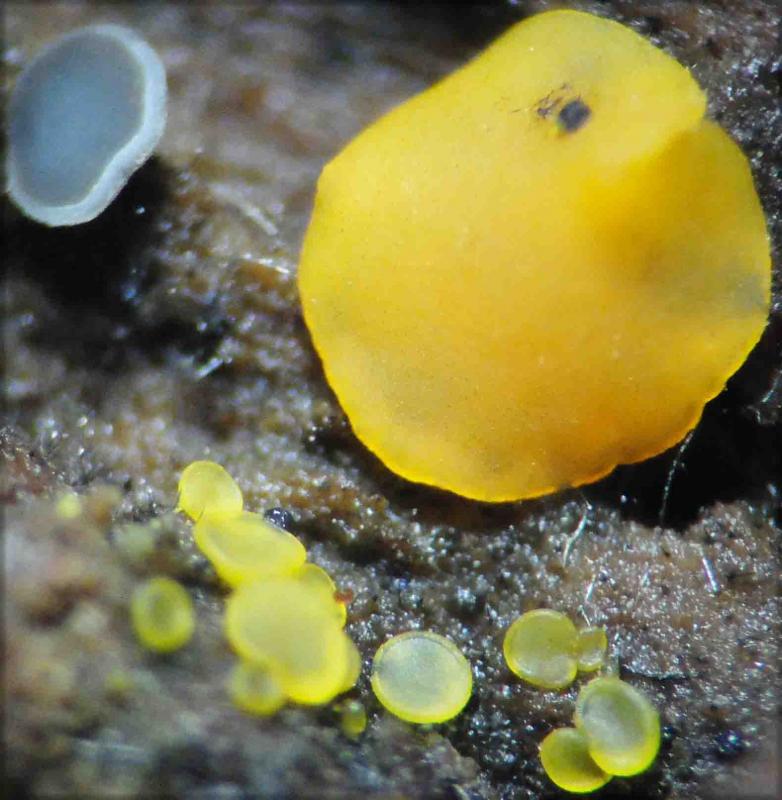
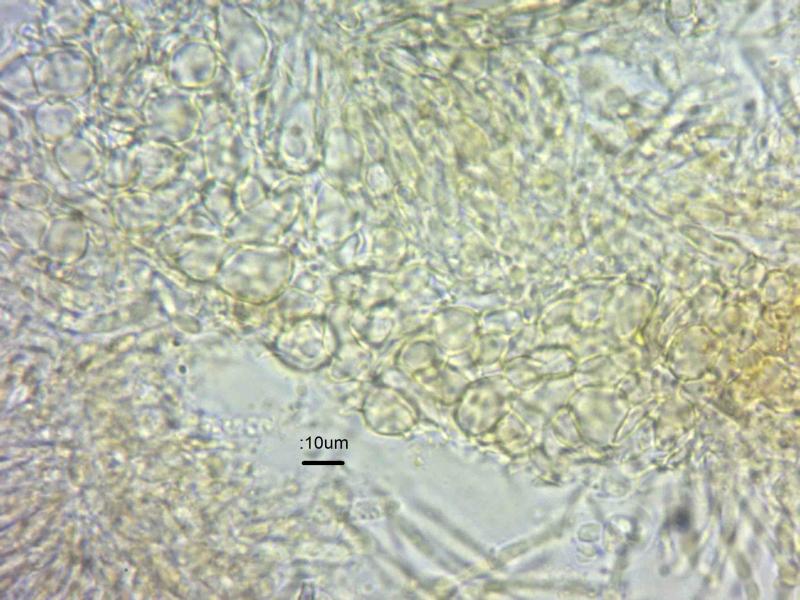
We found this Orbilia growing with Mollisia-type ascos on a birch log. Both the glassy-looking small ascocarps and the larger opaque ones had the same microscopy. The ascocarps were small (up to 0.65 mm) and large (up to 2.2 mm).
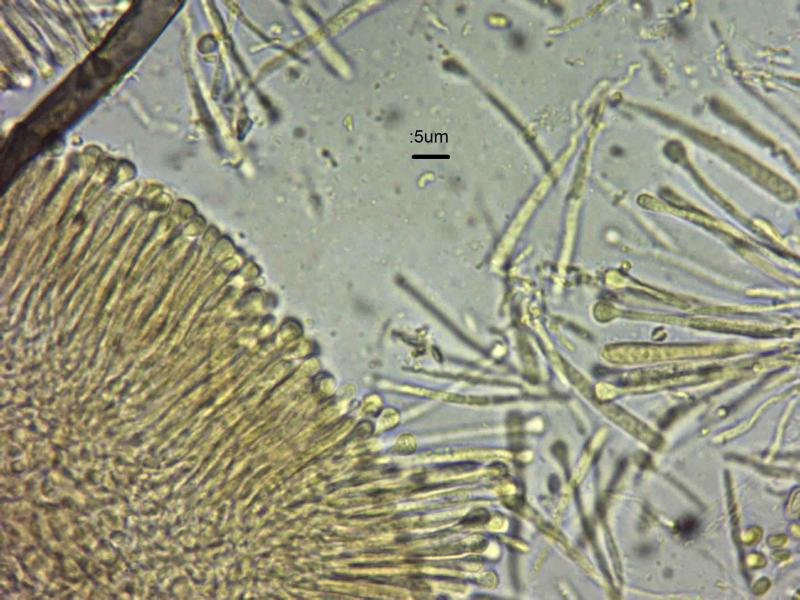
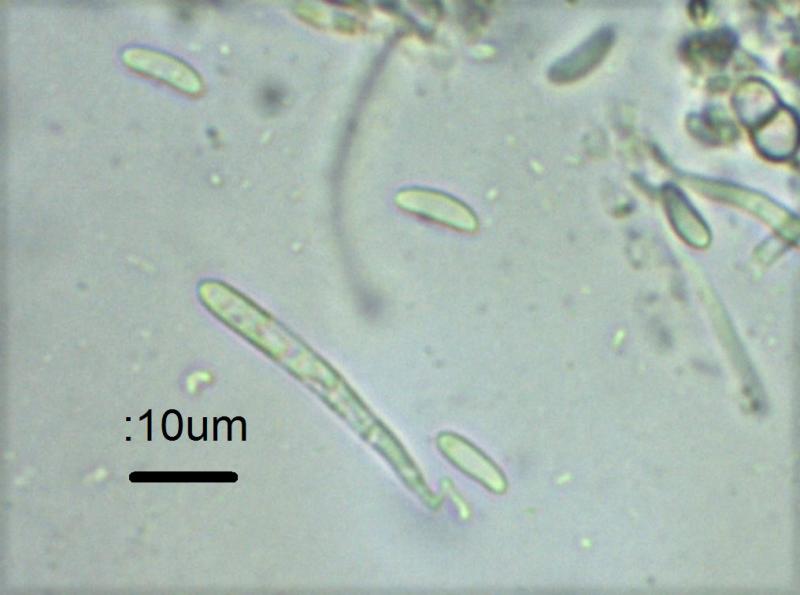
Paraphyses had swollen heads up to 3.5 um wide.
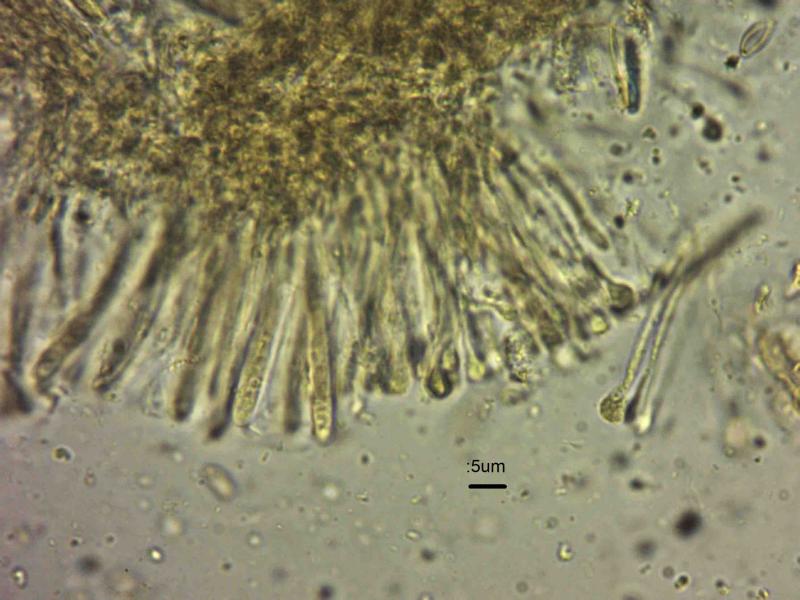
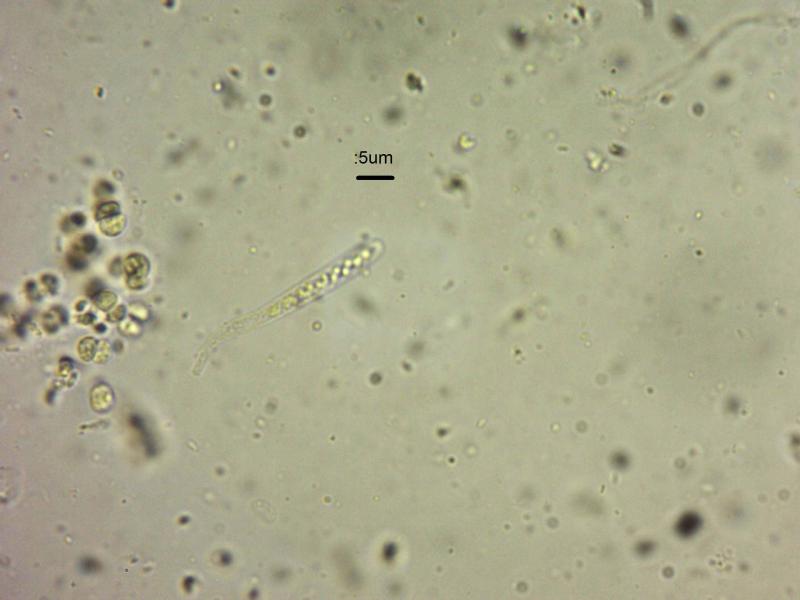
Asci were 35-45 x 3-4.
In my books I was unable to find a bright yellow Orbilia with spores of these dimensions ie 7-8.5 x 2-2.5.
Steve


Hello Steve,
I think you give pictures of two different discomycetes. The spores you measured are not from an Orbilia (maybe a Hymenoscyphus or Bisporella, as the macrofotos look like), but the next picture with the asci is. In this asci I see minute roundish spores, and I think this is what was earlier determined as Orbilia coccinella (s.l.). Zotto surely knows more, but this for the moment.
Regards from Lothar

I even think it is O. xanthostigma with reniform warted spores
Zotto
Zotto was right - the small one is Orbilia xanthostigma - and so is the large yellow one. Over 10 days they have both developed mature knobbly reniform spores. It's a very big Orbilia at 2.2 mm!
The spores which confused me were from the nearby Mollisia type asco.
That was a real mystery,
Thanks,
Steve