
04-05-2026 18:13
 Stephen Martin Mifsud
ID request for what seems to be a true aquatic fun
04-05-2026 16:39
Stephen Martin Mifsud
ID request: This specimen was collected in Malta o
04-05-2026 09:50
 Castillo Joseba
Me mandan el material seco de Galicia,(España) re
28-04-2026 20:07
 Lothar Krieglsteiner
... on twig in the air at standing Ceratonia siliq
02-05-2026 12:42
Alain BRISSARDBonjour à tousJeuidi 30 avril dernier on m'a remi
02-05-2026 13:06
Pauline. PennaBonjour Please can someone help me with this id
01-05-2026 22:45
 Thierry Blondelle
Bonjour à tous, Une récolte sur bouse séchée d
14-04-2026 05:32
Ethan CrensonHi all, A few weeks back a friend pointed out som
28-04-2026 20:33
Vitus SchäfftleinHello, I found Trochila ilicina on Ilex aquifoliu
Picoa lefebvrei?
Godorova Olga,
12-02-2015 19:56
 Hello, dear friends.
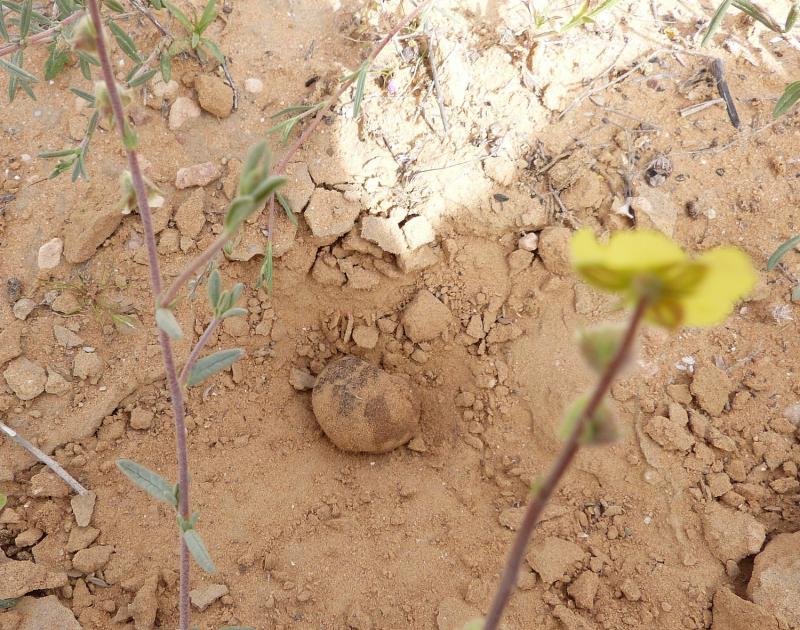
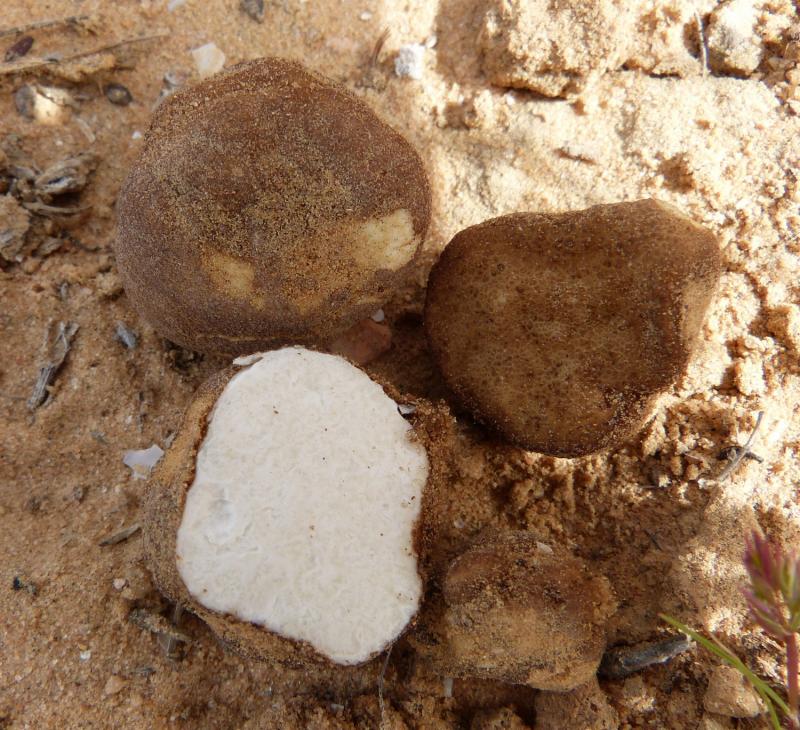
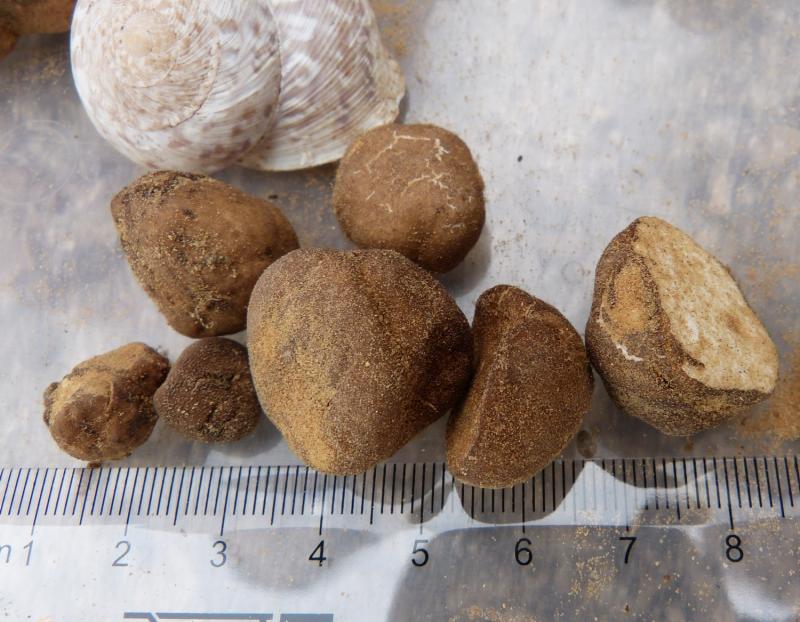
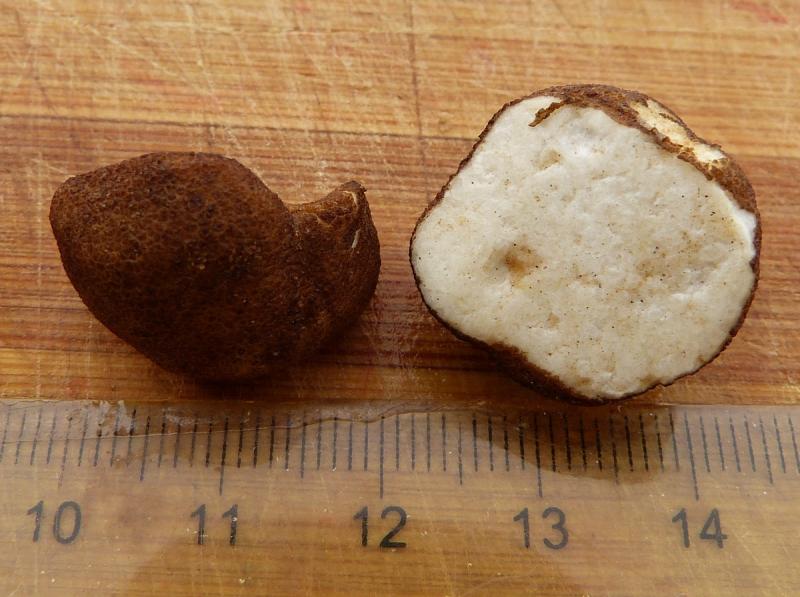
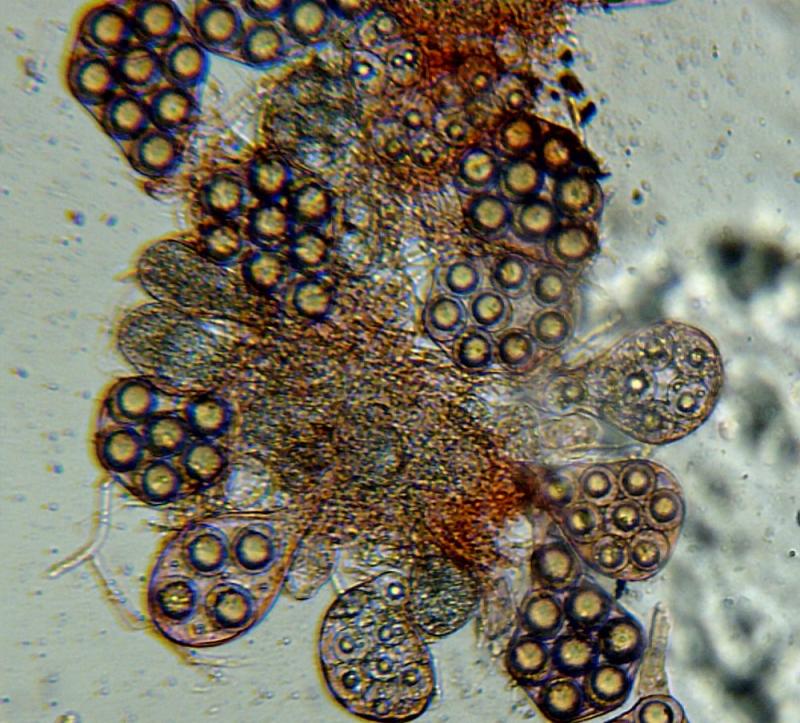
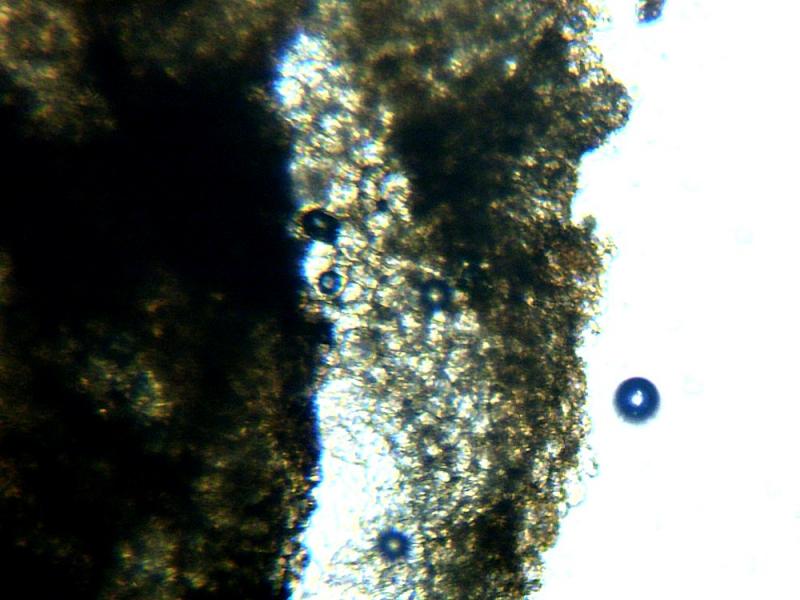
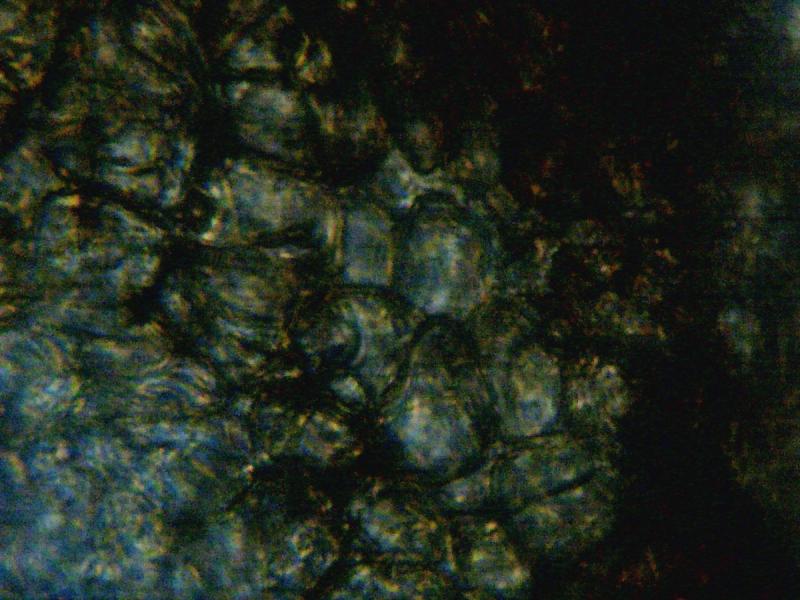
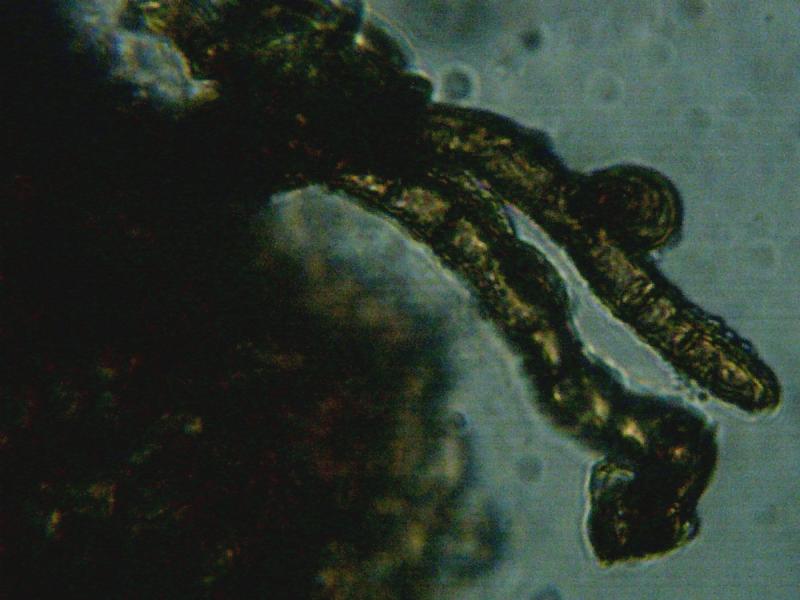
Two days ago we were in Negev desert of Israel and looked for desert truffels in the area, where several Helianthemum sp. grow.
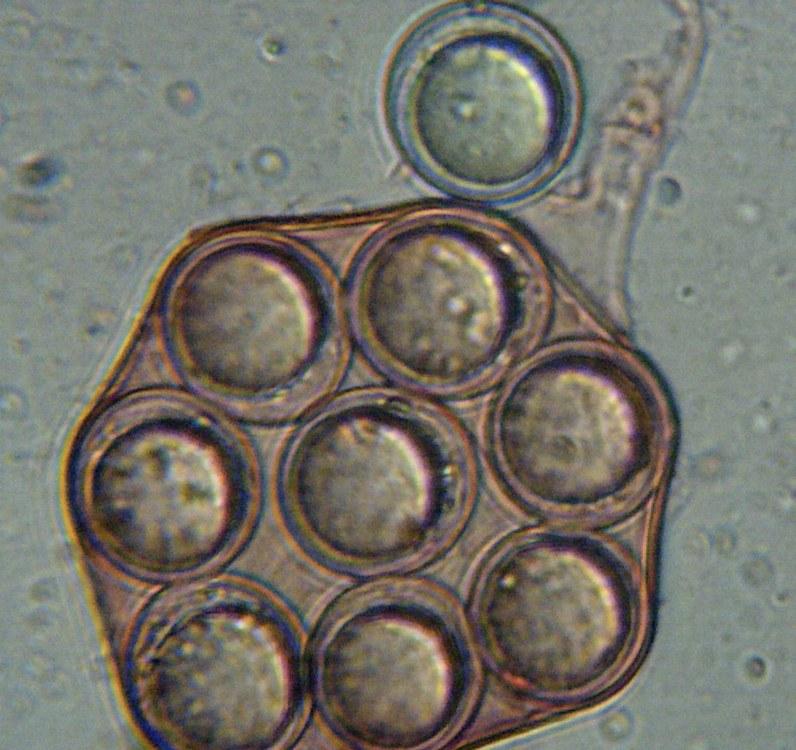
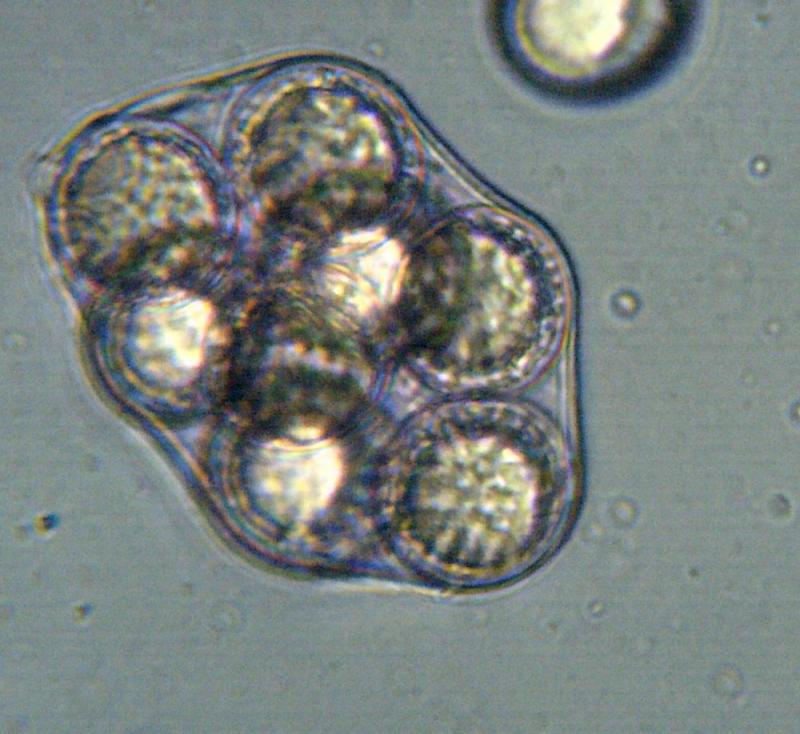
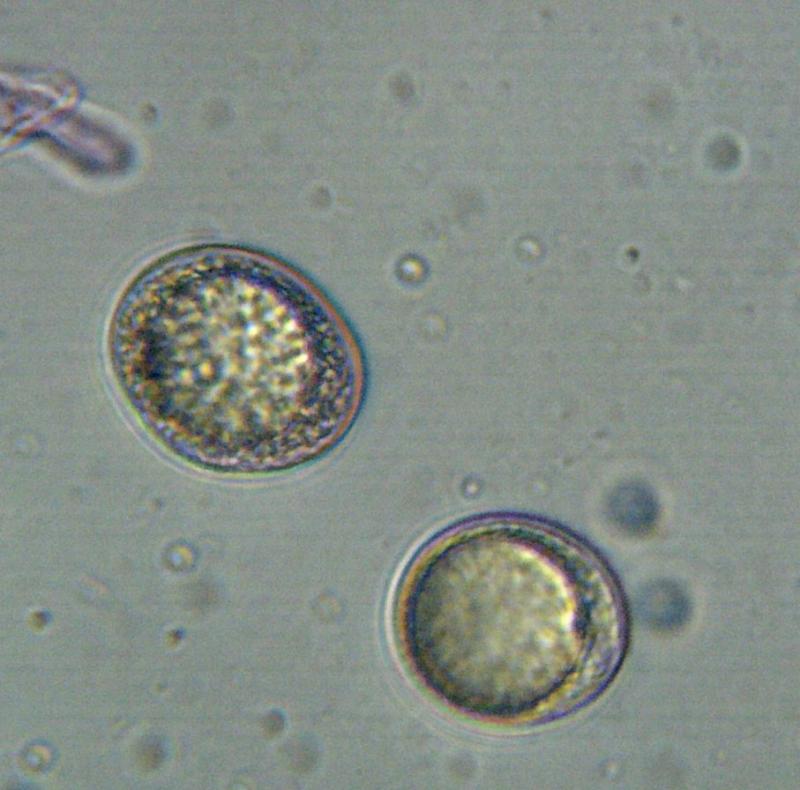
Several small hypogeious fungi were found there. And I think, it looks like Picoa lefebvrei. The mature spores look verrucose and reach 30-35 mkm. As I understand, the spores of Picoa juniperi, which is similar to this, must be smooth?
Miguel Ángel Ribes,
13-02-2015 01:10

Re : Picoa lefebvrei?
Hi Olga
I have this collection from Fuerteventura (Canary Islands) with Helianthemum canariense.
http://www.micobotanicajaen.com/Revista/Articulos/MARibesR/Fuerteventura001/Picoa%20lefebvrei%20130310%2063.pdf
In Phylogenetic affiliation of the desert truffles Picoa juniperi and Picoa lefebvrei, Sbissi & al. (2010) the main character to identify P. lefebvrei is the warty spore ornamentation (smooth in P. juniperi).
Good luck.
I have this collection from Fuerteventura (Canary Islands) with Helianthemum canariense.
http://www.micobotanicajaen.com/Revista/Articulos/MARibesR/Fuerteventura001/Picoa%20lefebvrei%20130310%2063.pdf
In Phylogenetic affiliation of the desert truffles Picoa juniperi and Picoa lefebvrei, Sbissi & al. (2010) the main character to identify P. lefebvrei is the warty spore ornamentation (smooth in P. juniperi).
Good luck.
Godorova Olga,
13-02-2015 05:24
Re : Picoa lefebvrei?
Great! Thank you very much! :)
Mario Filippa,
13-02-2015 14:38
Re : Picoa lefebvrei?
Great Olga, very interesting finding!