
23-05-2016 12:49
 Blasco Rafael
Hola, tengo otra Lachnellula esta vez sobre Pinus
23-05-2016 17:13
Lepista ZacariasHi everyone,I found this lirellate fungus on the r
21-05-2016 09:45
Elisabeth StöckliBonjour,Trouvé au sol sur branches cortiquées de
23-05-2016 17:07
Lepista ZacariasHi everyone,If I understood correctly the explanat
23-05-2016 13:03
Dragiša SavicHello everyone,I found this Niesslia species on de
23-05-2016 11:30
 Jacques Fournier
Hello forum,This ascomycete intrigues me. I found
22-05-2016 20:56
 Enrique Rubio
Hi to everybody This fungus was collected on smal
Lachellula 19-05-16
Blasco Rafael,
23-05-2016 12:49
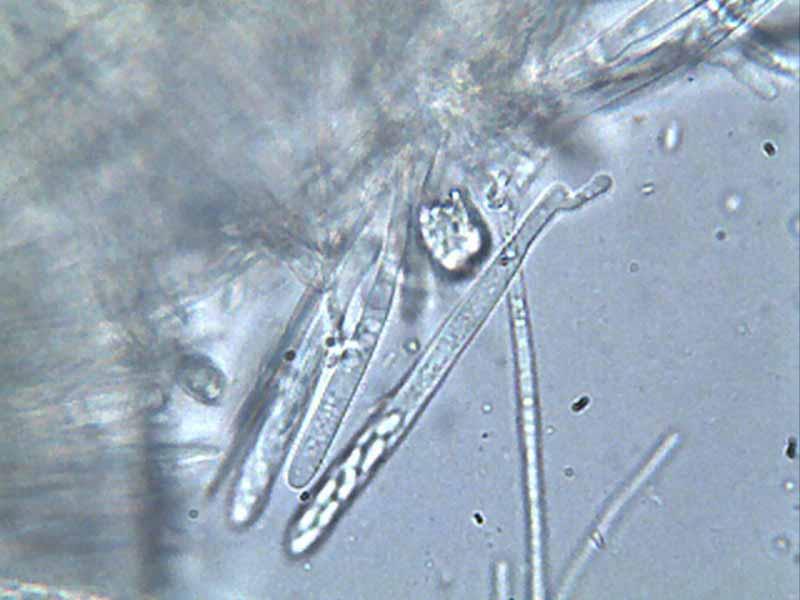
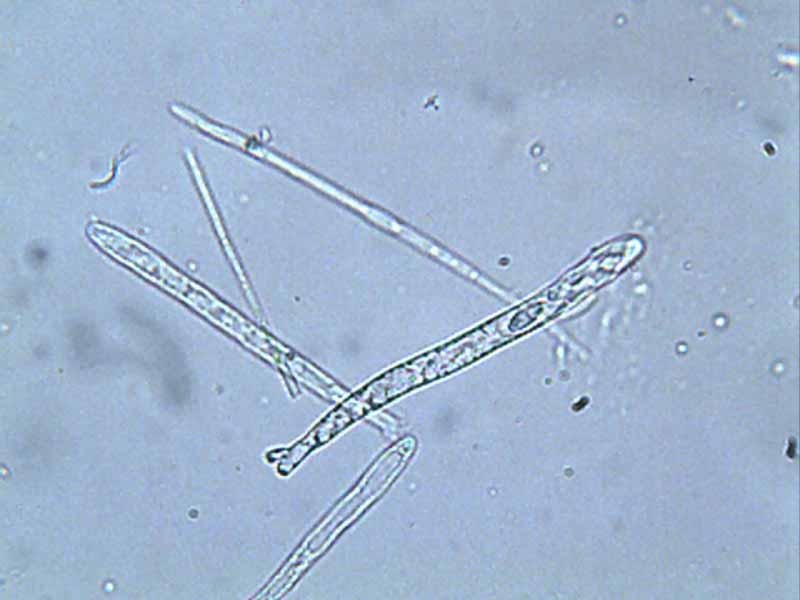
Hola, tengo otra Lachnellula esta vez sobre Pinus uncinata (Pino negro) a 1900m, rama caida de unos 12 mm.Puede ser otra vez subtilissima, no si si alguna otra pudiera ser.
diametro mayor medido 4 mm.
ascas 65--83 x 6--6,5
crozier + J +.
esporas 7--8 x 3--3,6
parafisis rectas, septadas alguna bifurcada cerca del apice, x2--x3
Pelos ¿¿ no vistos??
Un saludo
Rafael




Blasco Rafael,
24-05-2016 11:30
Re : Lachellula 19-05-16
Alguna idea??????
El detalle de la base del asca, puede llevarnos a L. subtilissima ?????, creo que este tipo de base no lo he visto en otras Lachnellulas amarillas
Rafael
El detalle de la base del asca, puede llevarnos a L. subtilissima ?????, creo que este tipo de base no lo he visto en otras Lachnellulas amarillas
Rafael