
04-06-2016 22:24
 Bernard CLESSE
Trouvé ce jour dans mon jardin, sur terre nue dan
07-06-2016 23:47
Bernard CLESSE
Bonsoir à tous,Pourriez-vous me confirmer qu'il s
08-06-2016 10:01
 Castillo Joseba
Me envian material secoEn caña de graminea sin id
08-06-2016 17:46
 Viktorie Halasu
Hello all,I'm trying to determine last week's Pezi
11-06-2016 17:04
 Blasco Rafael
Hola, necesito de su ayuda para determinar esta mu
11-06-2016 17:14
 Rubén Martínez-Gil
Hola a todos. Subo unas fotos de un asco encontra
10-06-2016 16:21
 Dartanha Soares
Hi everyone,I need help to obtain the works of Gai
anthracobia
PASCAL DUBOC,
12-06-2016 16:59
sur place à feu
spores lisses biguttulées d'en moyenne 18 x 9 microns
paraphyses clavées à contenu se colorant
problème de détection des poils ? j'hésite entre macrocystis et nitida ?
merci

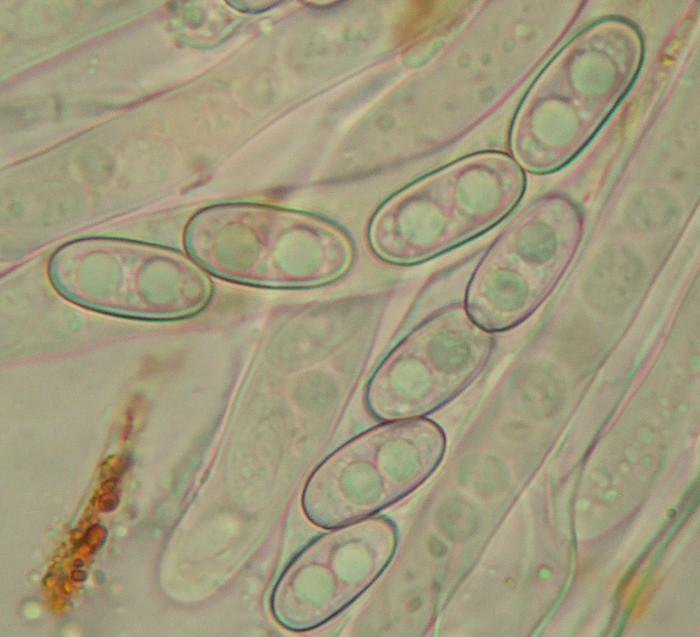

Nicolas VAN VOOREN,
12-06-2016 17:02

Re : anthracobia
Pascal,
la forme des spores va dans le sens de A. tristis.
la forme des spores va dans le sens de A. tristis.
PASCAL DUBOC,
12-06-2016 18:59
Re : anthracobia
j'hésitais avec aussi.. mais je croyais que les spores de tristis était plus "élancés"
je vais affiner
merci Nicolas
je vais affiner
merci Nicolas