
23-06-2022 08:52
 Josep Torres
Hola.Un pequeño discomiceto sobre la superficie d
28-06-2022 20:12
 Zuzana Sochorová (Egertová)
Hello,I repeatedly collect a foliicolous Ascobolus
01-07-2022 15:28
Thomas Læssøehttps://svampe.databasen.org/observations/10267081

28-06-2022 22:07
Zuzana Sochorová (Egertová)
Hello,I would welcome some help with these little
29-06-2022 10:29
ruiz JoseHola a todos,recientemente he mandado a analizar e
27-06-2022 15:49
 Andgelo Mombert
Bonjour, Sur branche morte attenante d'Ulmus mino
28-06-2022 21:27
 Hardware Tony
Hopefully there aren't too many 6-spored sps. to s
Ayuda con un hongo acuático liquenizado
Josep Torres,
23-06-2022 08:52
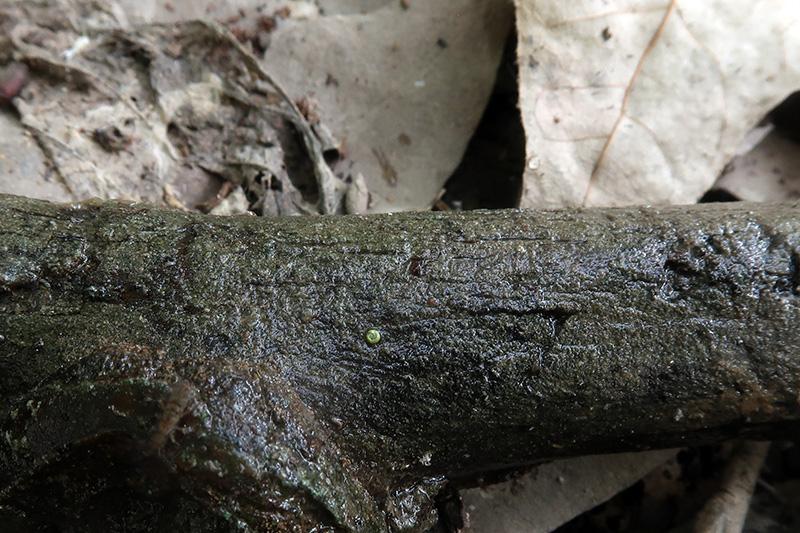
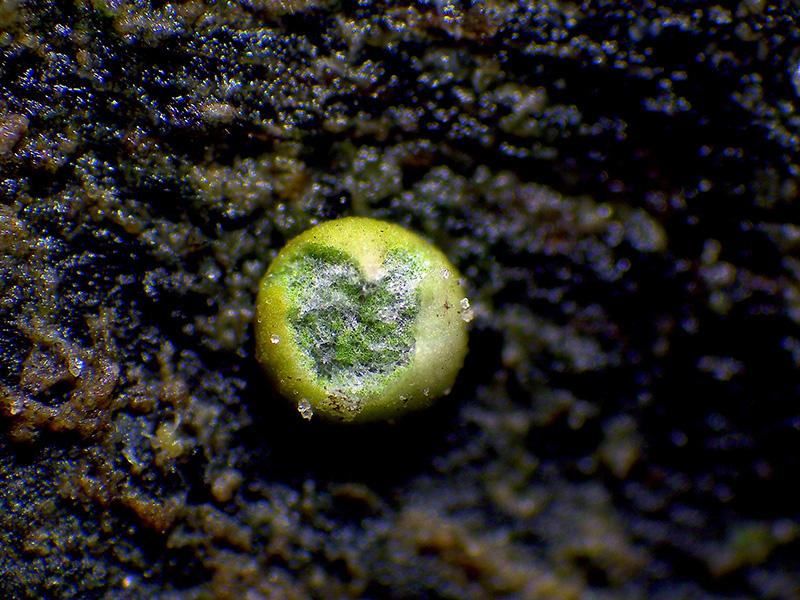
Hola.Un pequeño discomiceto sobre la superficie de un tronco descortezado y sumergido en el agua.
Un solo ejemplar de 0,86 mm. de diámetro, de color ocre amarillento, con una forma más o menos globosa, algo resquebrajado y abierto en su parte superior de manera irregular que deja entrever su interior verdoso, por el efecto quizás de las algas.
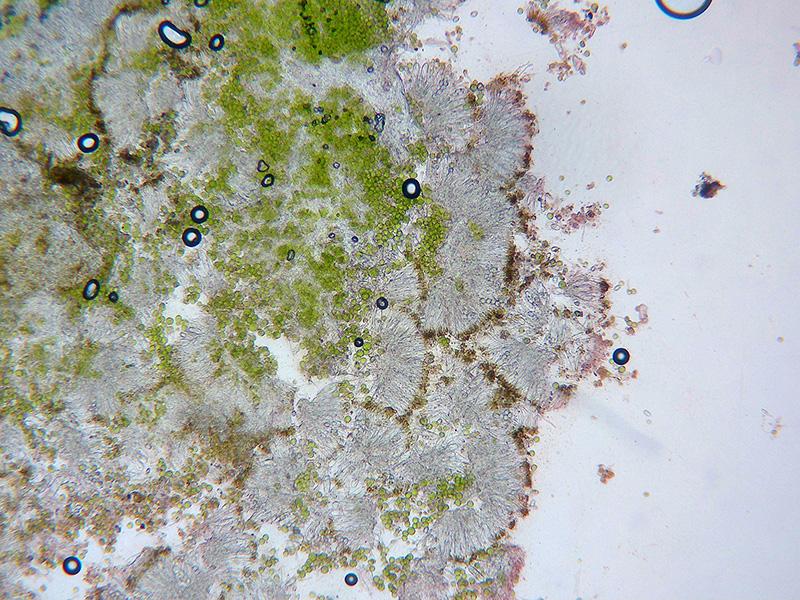
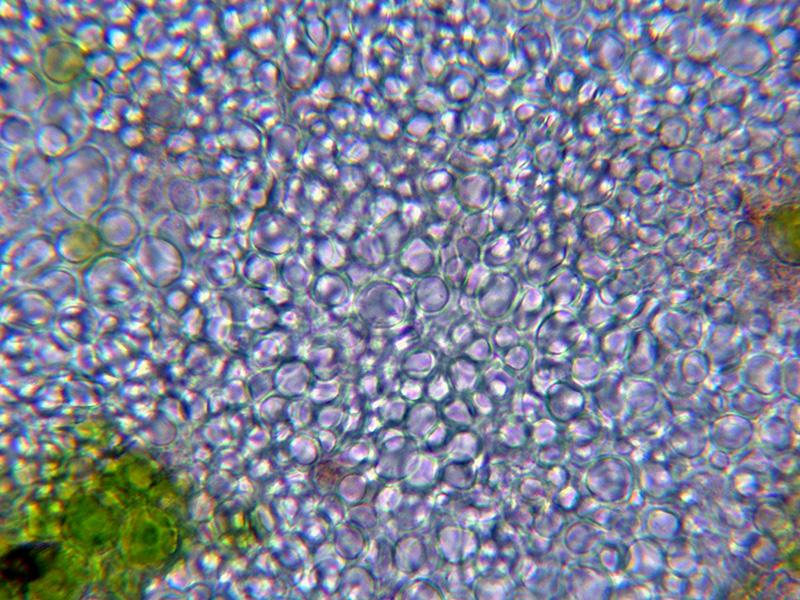
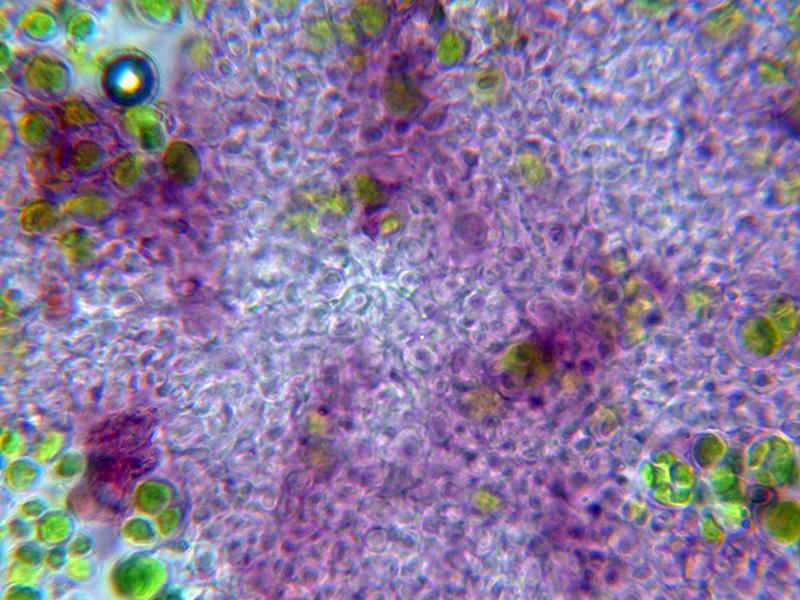
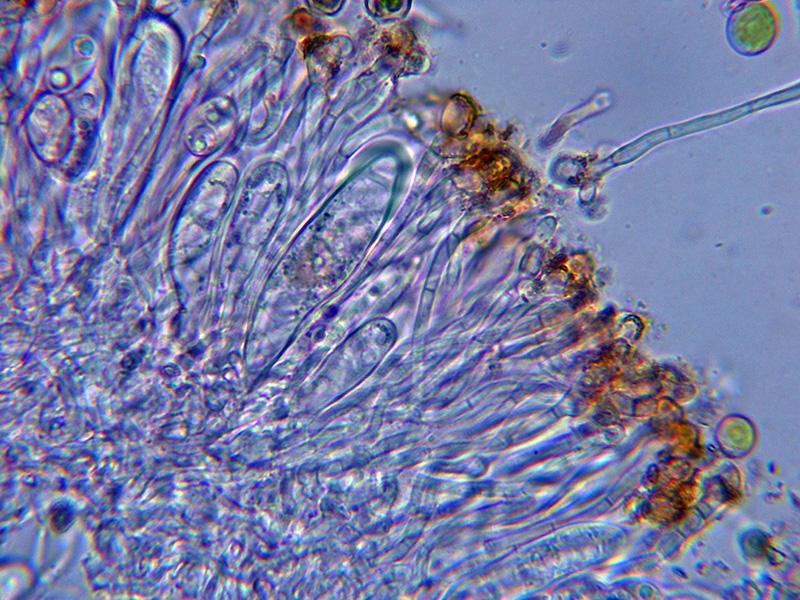
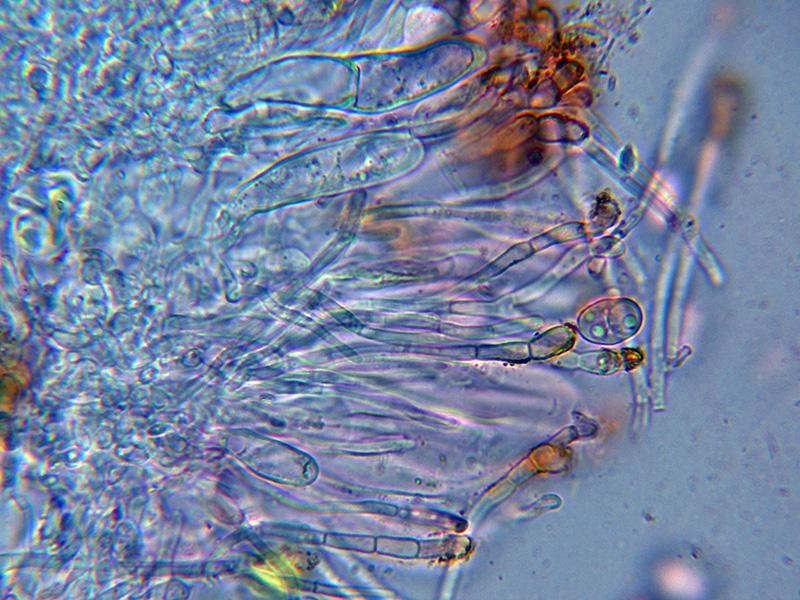
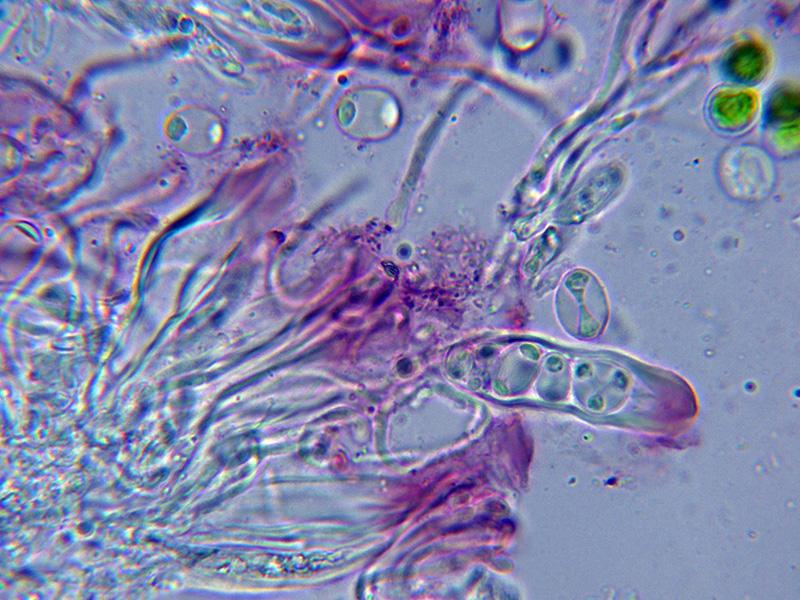
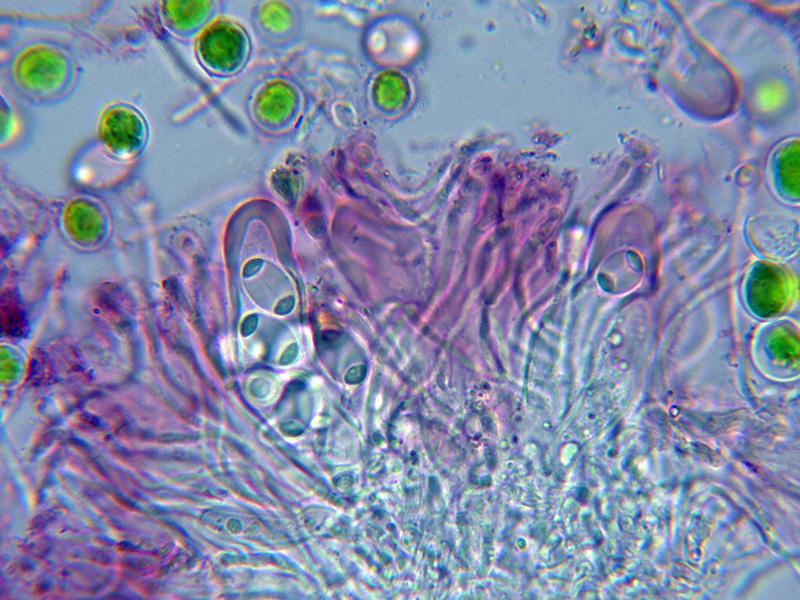
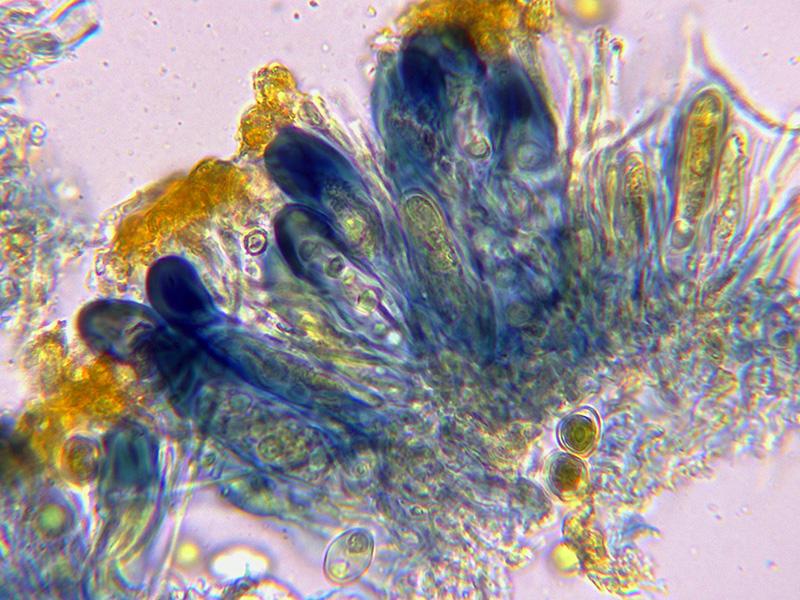
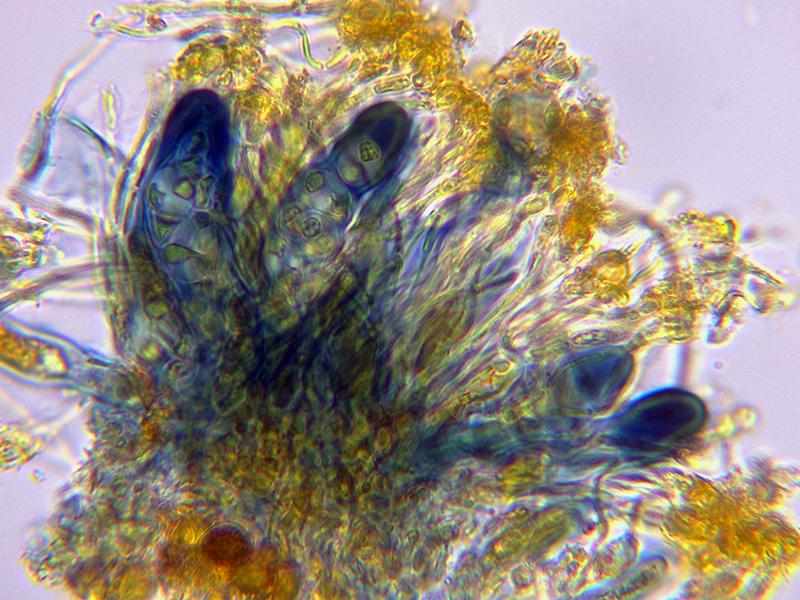
Excípulo formado por hifas globosas de pequeño tamaño que se tiñen de púrpura con la aplicación de KOH al 20%. con una gran cantidad de algas en su base.
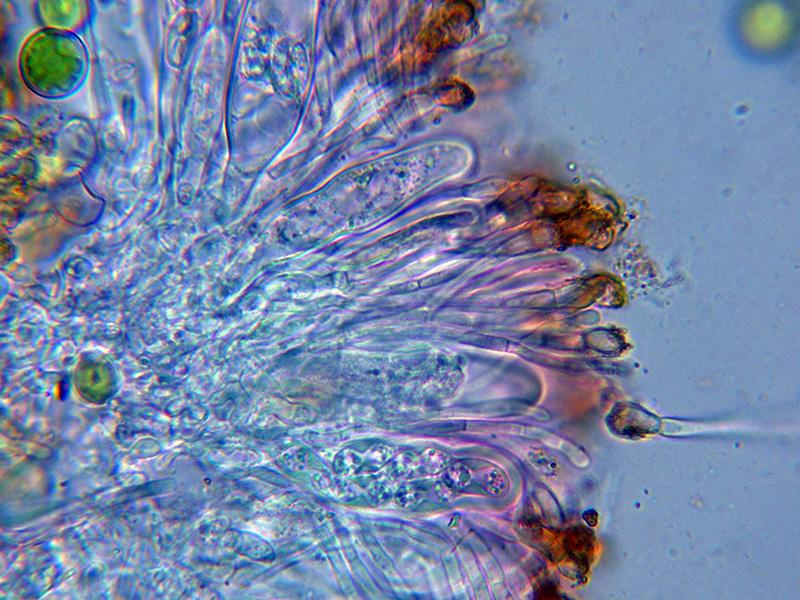
Himenio que al aplicar KOH también adquiere tonos púrpura intensos, especialmente en los ascos.
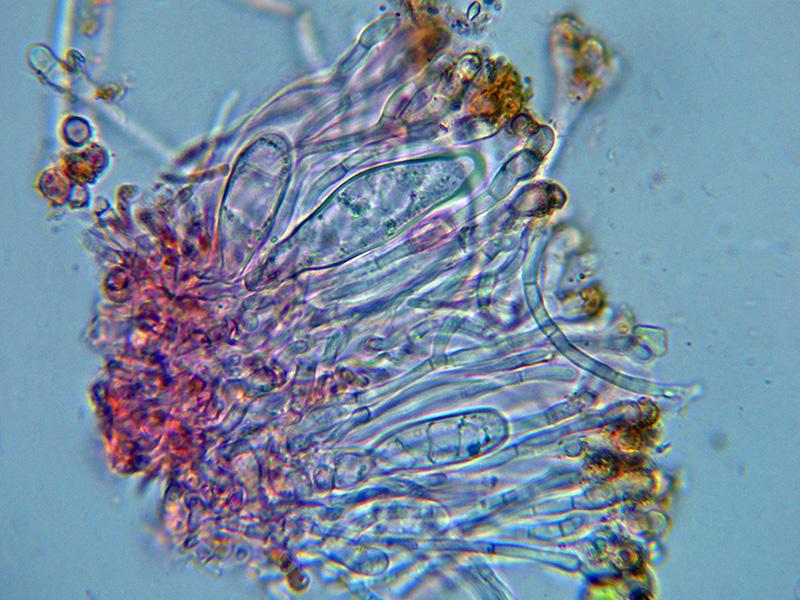
Himenio con comportamiento fuertemente amiloide con el Reactivo de Melzer.
Paráfisis septadas, ramificadas y fuertemente incrustadas y pigmentadas de naranja en su parte superior
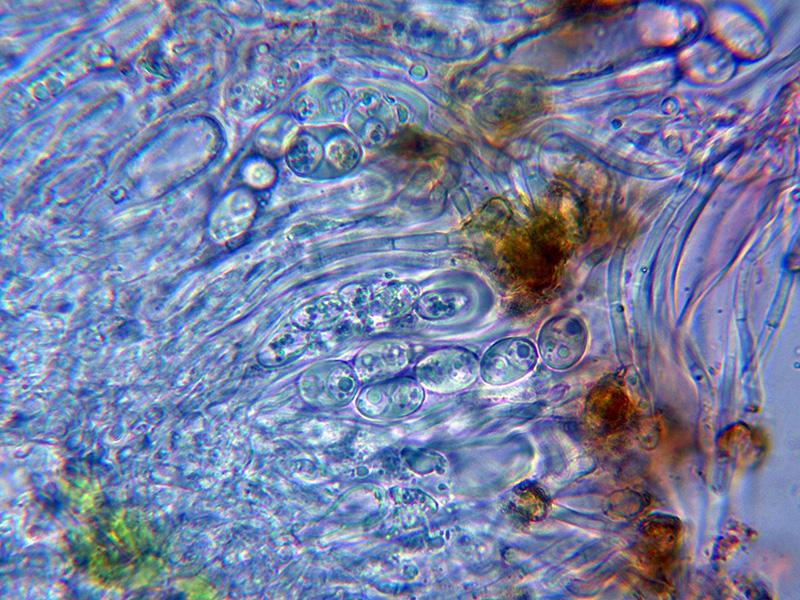
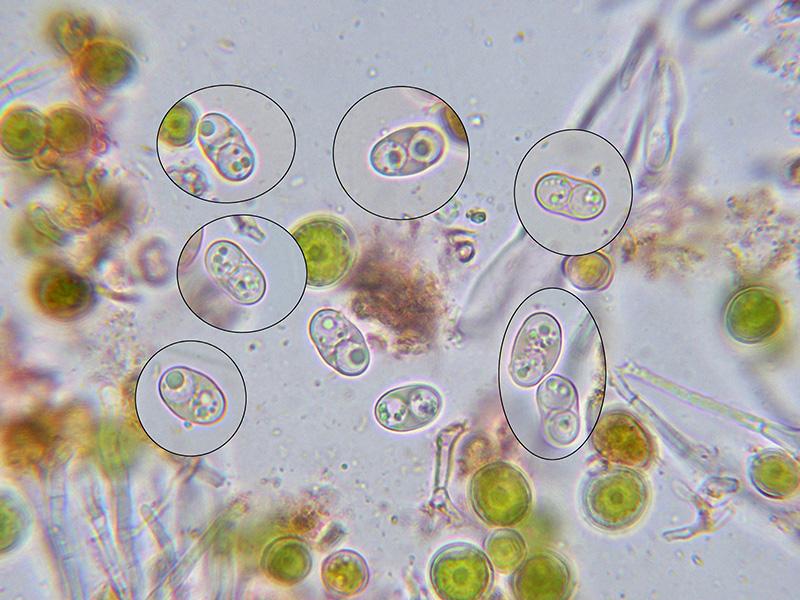
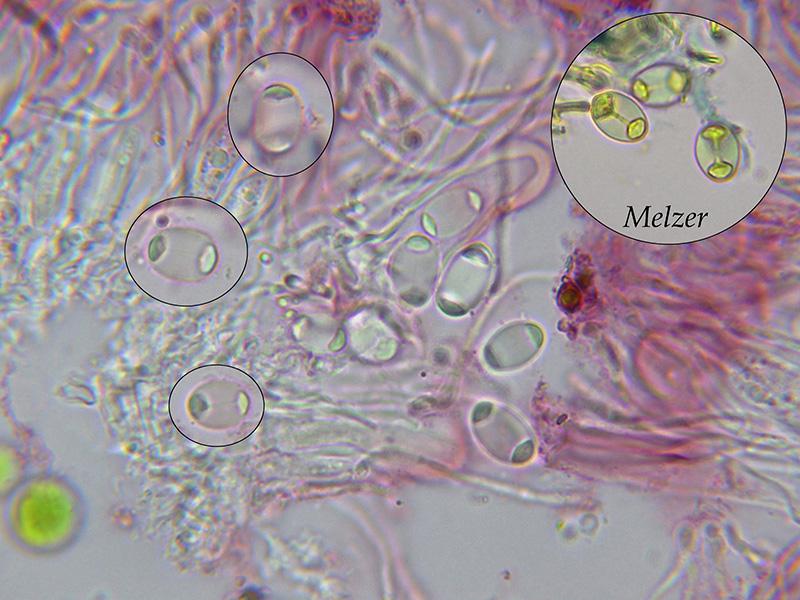
Ascos ostospóricos, que producen ascosporas elipsoidales, de pared fina, bigutuladas y con unas medidas de:
(8.6) 10.2 - 13.1 (13.7) × (5.1) 6.5 - 8.4 (9.2) µm
Q = (1.3) 1.4 - 1.8 (1.9) ; N = 34
Me = 11.7 × 7.5 µm ; Qe = 1.6
Observaciones: Sus características me recuerdan mucho a un líquen de géneros como Xanthoria, Lecanora, Caloplaca etc., etc. pero su condición de acuático me descoloca.
Cualquier propuesta por vuestra parte será bien recibida.
Muchas gracias de antemano.
Saludos cordiales.


Josep Torres,
30-06-2022 17:13
Re : Ayuda con un hongo acuático liquenizado
Alguna sugerencia...........................?
Thomas Læssøe,
01-07-2022 16:58
Re : Ayuda con un hongo acuático liquenizado
some characters point in the direction of Thelocarpon but a bit outside my comfort zone - but a nice job!
cheers
cheers
Josep Torres,
01-07-2022 19:41
Re : Ayuda con un hongo acuático liquenizado
Gracias Thomas, Thelocarpon parece una muy buena propuesta, pero los ascos de mi estudio son octospóricos, desconozco si hay algún Thelocarpon con esta característica.
Saludos cordiales.
Saludos cordiales.
Martin Bemmann,
02-07-2022 18:24

Re : Ayuda con un hongo acuático liquenizado
Hi Josep,
I am no lichenologist at all, but the spores of Thelocarpon lokok very different. The spores of your specimen are polarilocular as in Caloplaca, the shape of paraphyses would fit as well.
cf.: Caloplaca cerinella can even be marine:
Best
Martin
Josep Torres,
03-07-2022 16:08
Re : Ayuda con un hongo acuático liquenizado
Gracias Martín, con razón tal y como ya indico en el tema la microscopía me recordaba a Caloplaca, he repasado nuevas imágenes en mis archivos y todos los ascos observados son octospóricos, atendiendo a este dato por la información que he podido obtener quizás podría tratarse de la muy parecida Caloplaca cerinelloides, actualmente Athallia cerinelloides, con ascos octospóricos.
De nuevo MUCHAS GRACIAS.
Saludos cordiales.
De nuevo MUCHAS GRACIAS.
Saludos cordiales.