
08-05-2015 08:27
 Francisco SÁNCHEZ
Bonjour. Je passe un pick-up d'une Gyromitra alpin
05-05-2015 23:47
 Jenny Seawright
Hello all, I wondered if anyone might have details
06-05-2015 17:33
 Martin Cooper
Hi,I am new to this site, so please forgive any mi
06-05-2015 22:50
 Rubén Martínez-Gil
Hola a todos. Subo unas fotos de unas copitas que

07-05-2015 20:23
 Bernard Declercq
Hello,Collected on leaves of Rhododendron ponticum
07-05-2015 16:22
hannie wijersHello. I just have another one.Also on the dung o
07-05-2015 15:45
BELLIDO BERMEJO FERNANDOUn compañero de la asociación trajo el lunes pas
06-05-2015 20:37
 Miguel Ángel Ribes
Good eveningI have this small (<700 µm diam.)
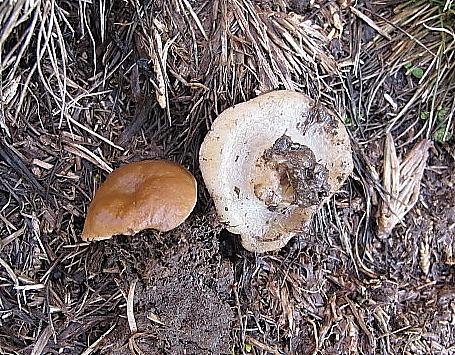
Bonjour. Je passe un pick-up d'une Gyromitra alpine connaître votre opinion.Il pourrait Gyromitra accumbens?
Recueilli dans la Sierra Nevada (Granada), 01/05/2015, 2.650 m., heboso dans le bord d'un ruisseau, dans un champ de neige. Conifères absents.
Apothécies subestipitados 25-35 mm, convexes avec le centre déprimé, de consistance gélatineuse, stipe 3-4 x 4-9 mm., Viande blanche ocrácea 2-3 mm. Hyménium couleur du cuir, brun chocolat plus tard, visage blanc ocráceo extérieure, couleur cannelle mature.
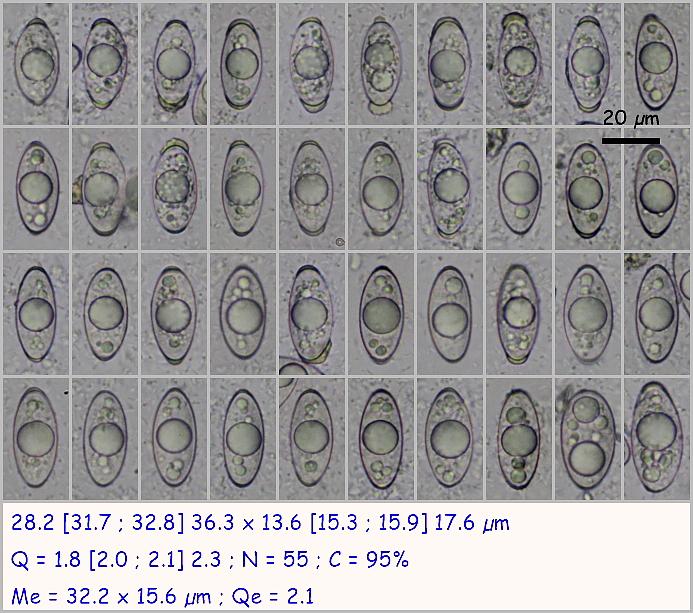
Spores ellipsoïdales, parfois légèrement asymétriques, souvent avec apículas obtus à 3,1 microns, jaunâtres. Avec un contenu intracellulaire peu dextrinóides avec IKI. Verruqueuse finement.
(28,4-)31,5-32.7(-35.8) x (14.1-)15,3-15.8(-17.0) microns
Q = (1,9-)2,0-2.1(-2.3) N = 40; C = 95%
Me = 32,1 x 15,6 microns; Qe = 2.1
Excípulo texture complexe hyalin hyphes, utriformes mélangés avec des objets gonflés.
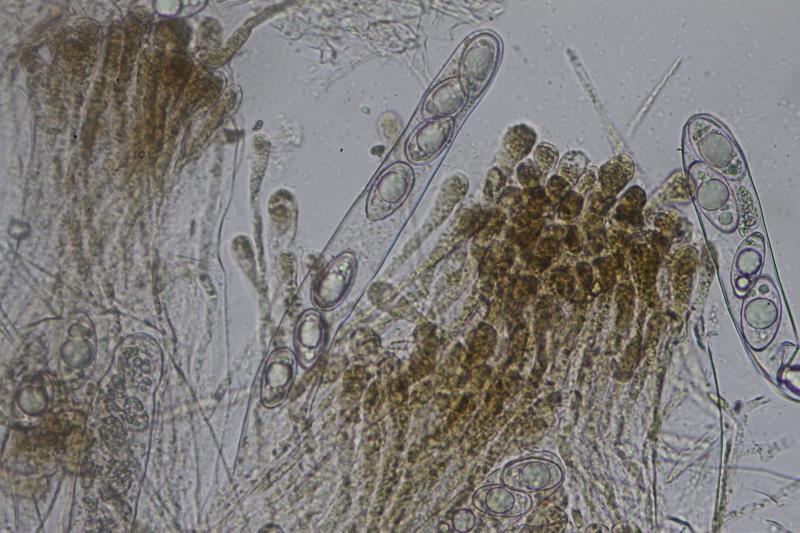
Paraphyses finaux minces apical avec élargies, avec un pigment granulaire orange-brun, la plus abondante à la fin.
Octospóricas asques, inamiloides cylindriques à paroi mince, atténuent à la base.
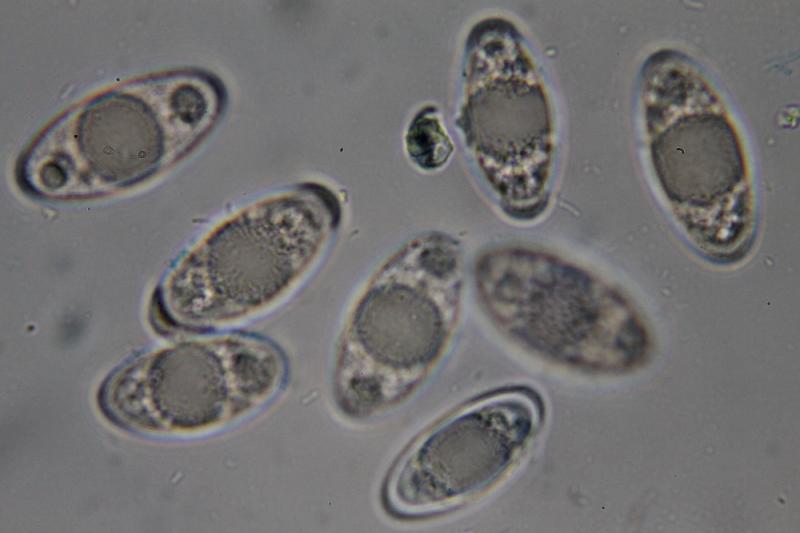
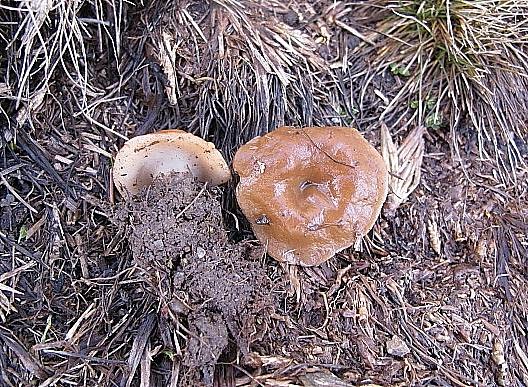
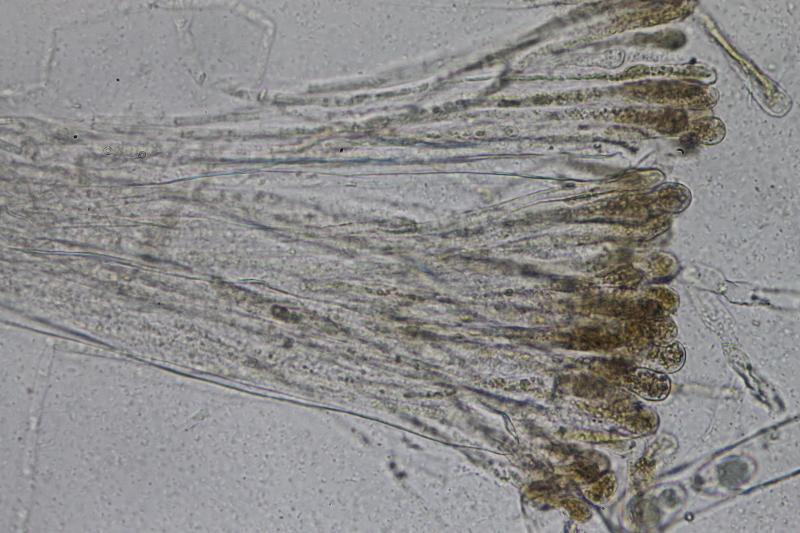

Elle est souvent confondue avec G. leucoxantha à cause de sa couleur, mais l'ornementation des ascospores est très différente.
Salutations.