
28-04-2026 20:07
 Lothar Krieglsteiner
... on twig in the air at standing Ceratonia siliq
04-05-2026 18:13
 Stephen Martin Mifsud
ID request for what seems to be a true aquatic fun
04-05-2026 16:39
Stephen Martin Mifsud
ID request: This specimen was collected in Malta o
04-05-2026 09:50
 Castillo Joseba
Me mandan el material seco de Galicia,(España) re
02-05-2026 12:42
Alain BRISSARDBonjour à tousJeuidi 30 avril dernier on m'a remi
02-05-2026 13:06
Pauline. PennaBonjour Please can someone help me with this id
01-05-2026 22:45
 Thierry Blondelle
Bonjour à tous, Une récolte sur bouse séchée d
14-04-2026 05:32
Ethan CrensonHi all, A few weeks back a friend pointed out som
28-04-2026 20:33
Vitus SchäfftleinHello, I found Trochila ilicina on Ilex aquifoliu
Tiny pinkish apothecia on Fagus bark
Edvin Johannesen,
25-11-2022 23:03
 Hello!
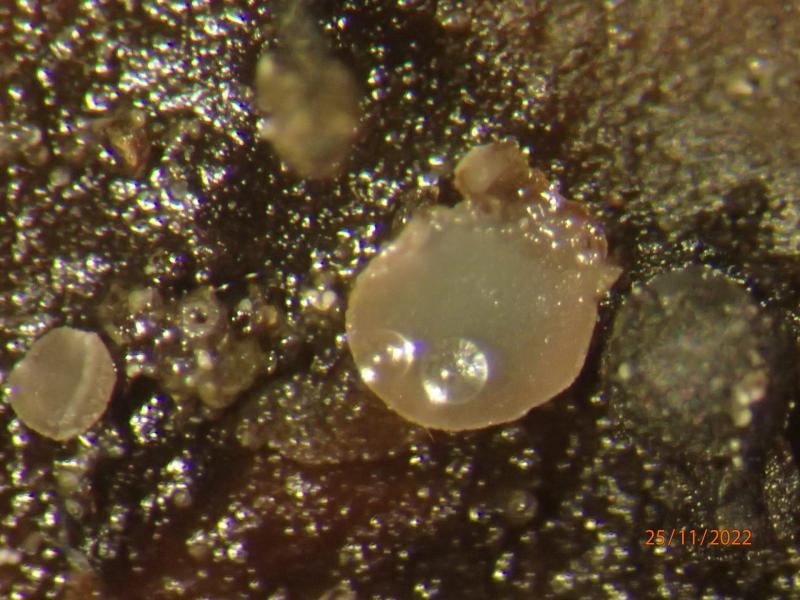
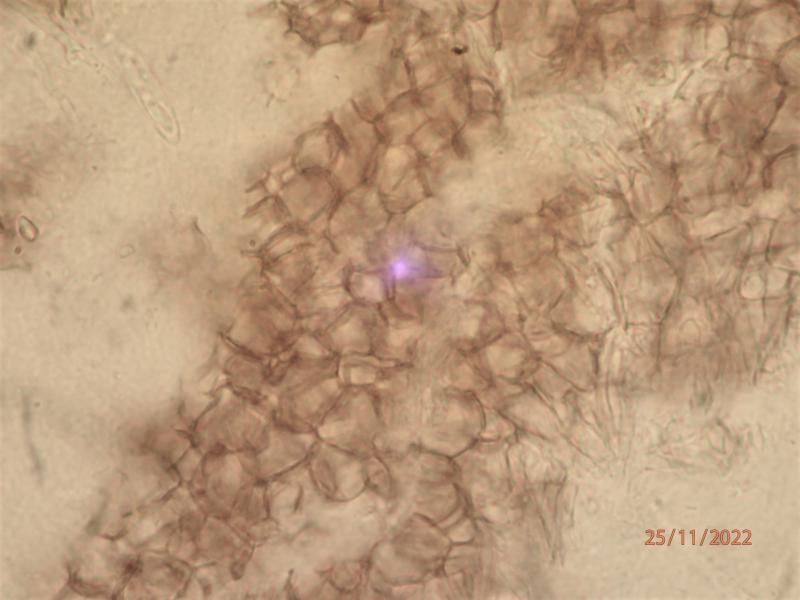
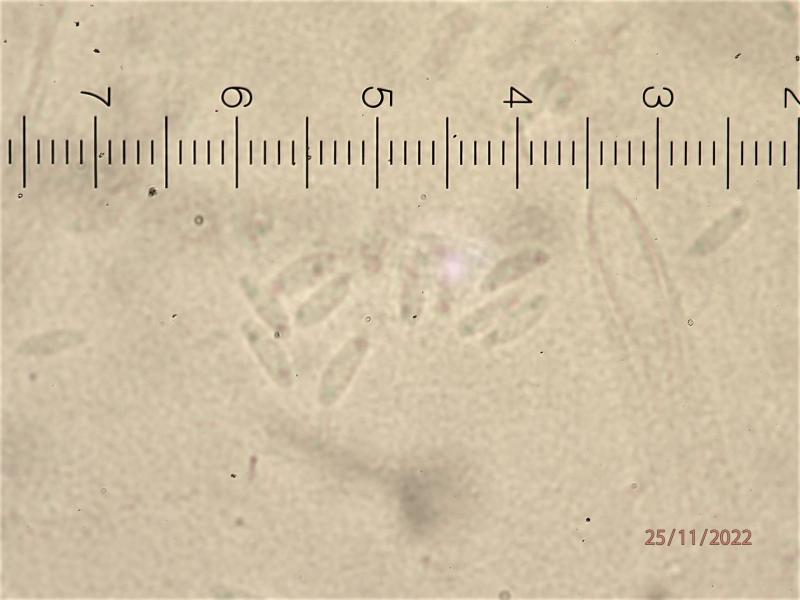
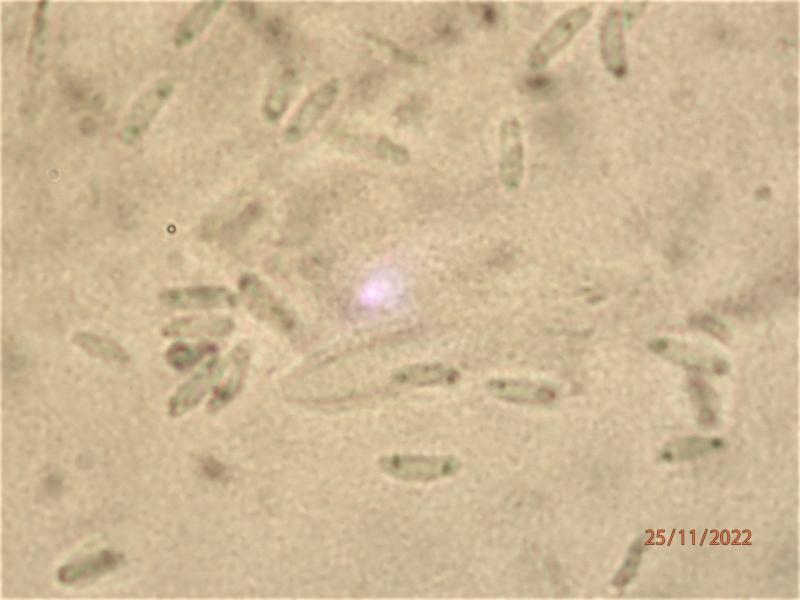
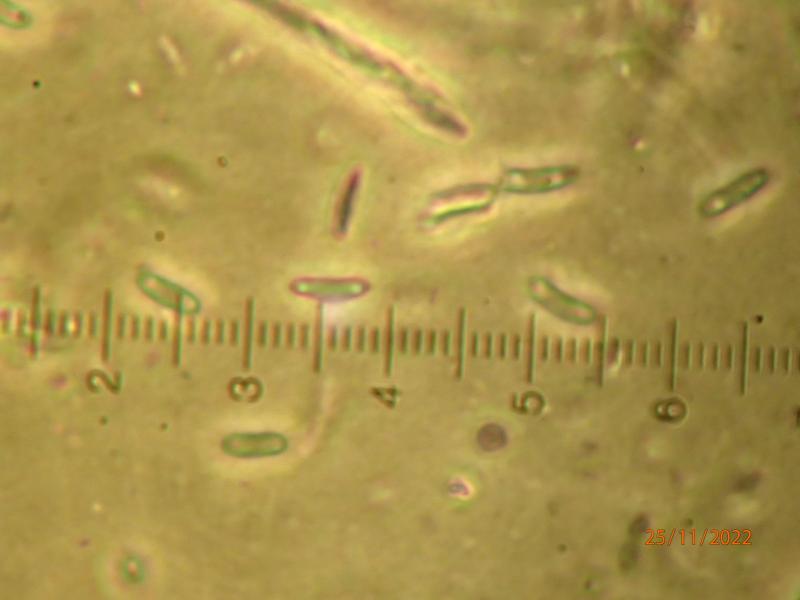
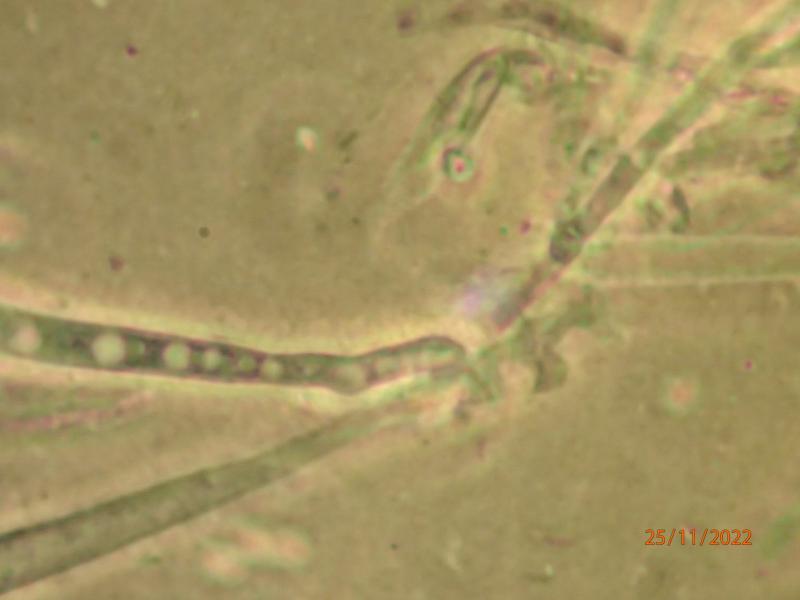
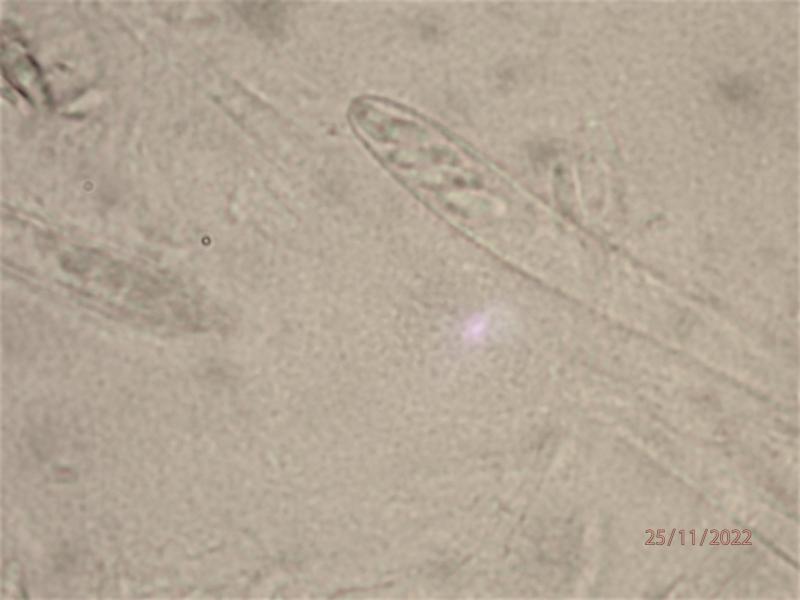
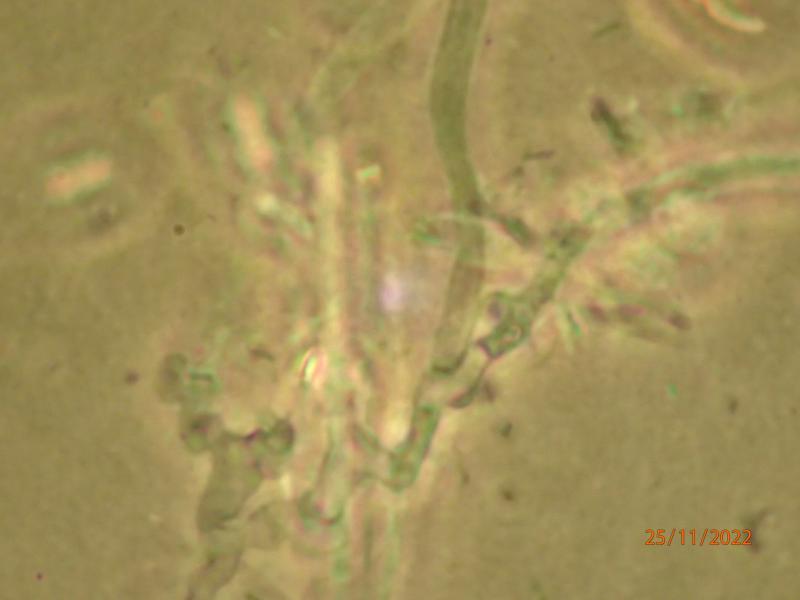
 These tiny (0.3-0.4 mm) greyish yellow/pinkish apos were found on thick bark, hidden under the thin outer bark of large rotting trunk of Fagus sylvatica lying on the ground. Attached to the substrate on a narrow, substipitate base. Outer surface with very short, pale protruding cells (appearing downy). Excipulum with large brownish, prismatic cells, gradually transitioning into paler, clavate cells towards the exterior. Asci IKI-, mostly ca. 50 x 5 microns, with croziers. Paraphyses cylindrical, without guttules, non-septate, 1.5 - 2 microns across. Spores elliptical, with a small guttule near each pole, ca. 5-6 x 1.5-2 microns.
Images from fresh material, in water.
Are we in Mollisia? Suggestions appreciated.
Thanks!


Hans-Otto Baral,
26-11-2022 09:29

Re : Tiny pinkish apothecia on Fagus bark
This could be Pyrenopeziza (Mollisia) caespiticia or alternatively Mollisia sublividula. The latter has yellowish VBs in te paraphyses which is probably not the case in your fungus.
Edvin Johannesen,
26-11-2022 12:34
Re : Tiny pinkish apothecia on Fagus bark
You're right - no yellowish VBs in the paraphyses. I have compared with P. caespiticia and that is indeed a good match. I have seen that species once before, but then immature apothecia in erumpent clusters. Thanks a lot!