21-03-2026 15:13
Lepista ZacariasHello everyone, Does any one know of any literatu
20-10-2017 09:23
Garcia SusanaEste otro crecía en el mismo trocito de madera qu
20-03-2026 16:16
 Edvin Johannesen
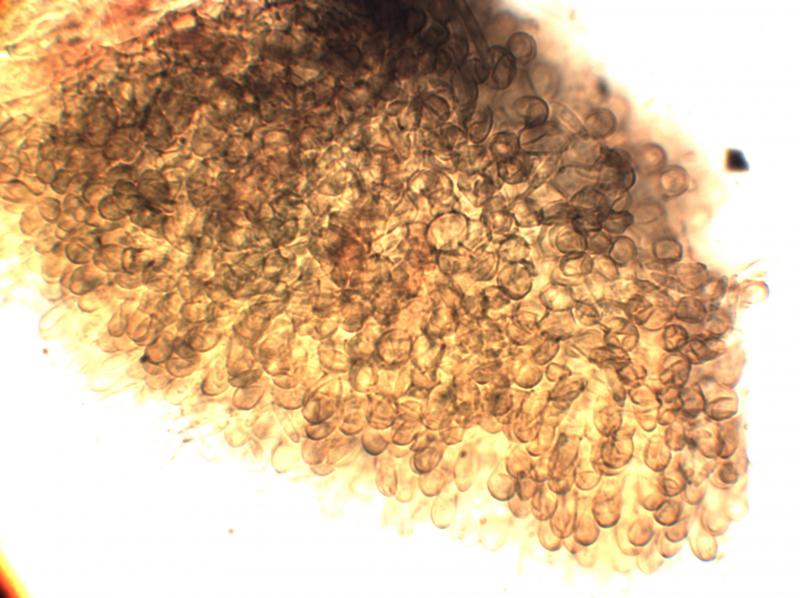
These 0.5 mm diam. acervuli were breaking through
19-03-2026 19:34
 Filip Fuljer
Hello everyone,a few days ago I collected this str
19-03-2026 18:25
 William Slosse
Good evening everyone, On 18/03/26 I found a few
17-03-2026 10:09
 François Freléchoux
Bonjour, Voici la description rapide d'un petit d
19-03-2026 17:50
 Enrique Rubio
Hi to everybodyThese thiny, blackish pseudothecia
18-03-2026 13:09
 Khomenko Igor
I recently examined Celtis occidentalis branches
 Can anyone confirm this as Pyrenopeziza plicata?
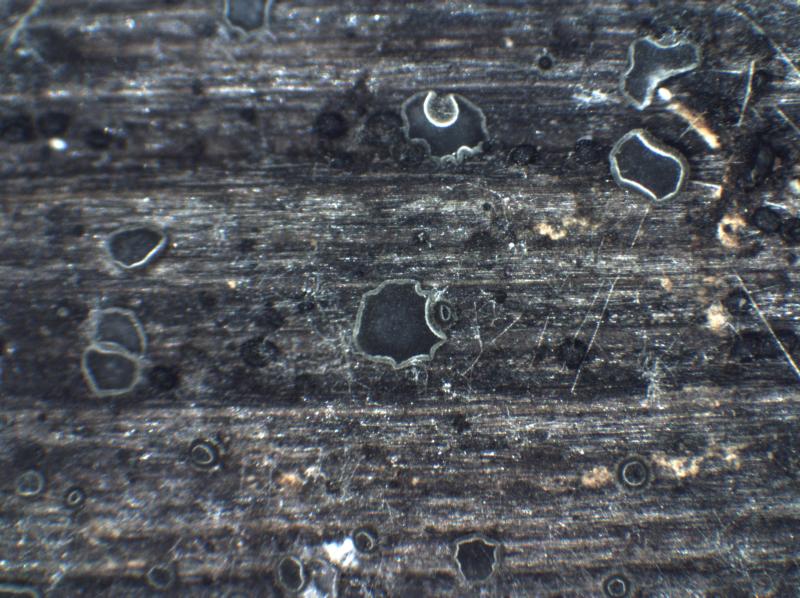
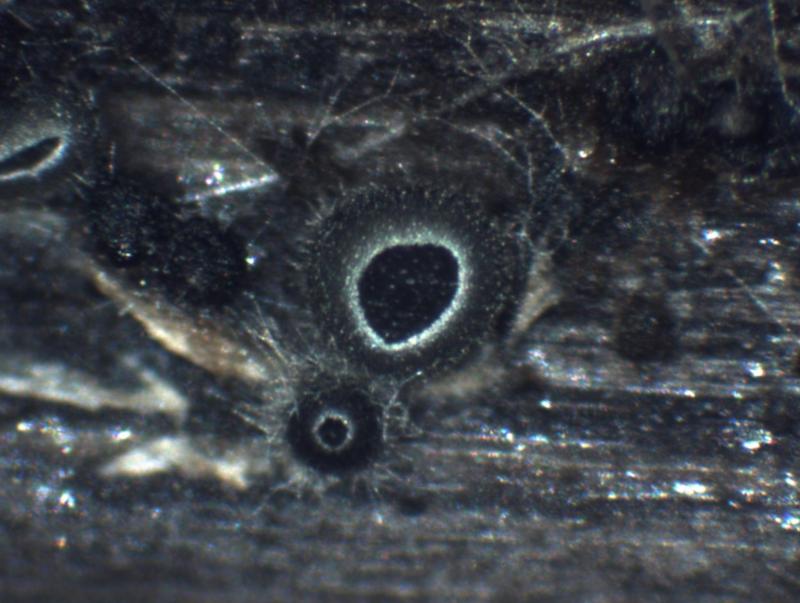
Growing on a dead stem of Angelica or Hogweed.
the Apothecia are up to 0.7 mm dark grey to almost black with a pale edge.
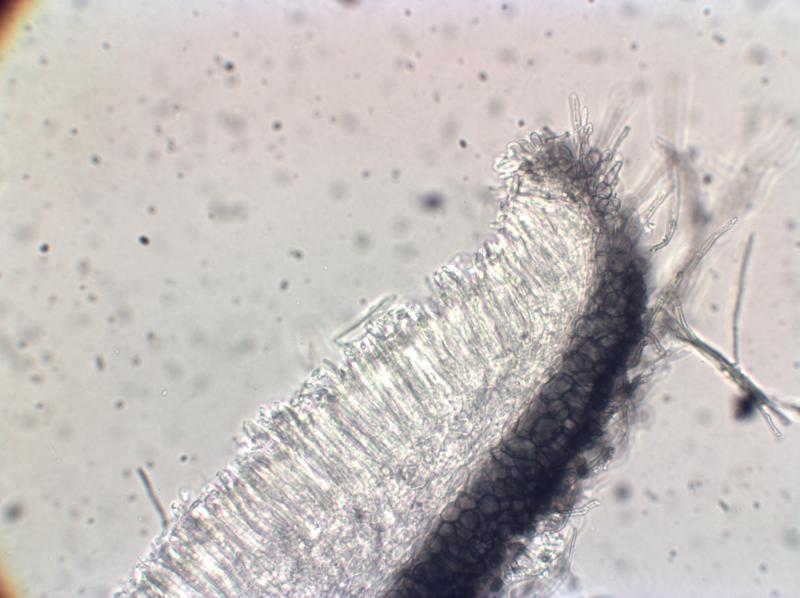
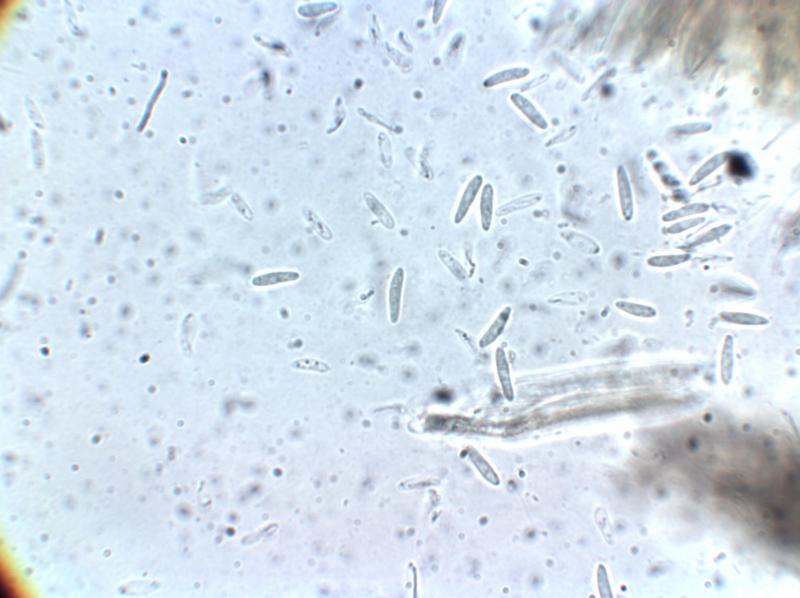
Asci tips blued. Spores 7-9.5 x 2
Thanks
Mal


Hi Malcolm
I do not know what P. plicata is.
I myself would call this P. atrata (P. escharodes ss. Zotto in former times).
The latter is surely a collective species - and I am not a specialist in Pyrenopeziza (nor in anything else ...)
Best regards,
Lothar

Rehm kannte eine P. plicata, auch eine P. subplicata hatte er bei Ruhpolding aufgesammelt. Im ATLAS sind beide Arten in BY aufgeführt, W. BEYER hat die Art in seiner Pilzflora, in der DGfM- Kartierung hatte sie R. LEFLER auch in der Obpf. Und in der neuesten RL D ist die Art auch aufgeführt. Habe aber auch keinerlei Ahnung, was das sein soll.
Grüße in die Nacht Peter.
Hallo Peter,
als ich schrieb, dass ich nicht weíß, was plicata ist, meinte ich nicht, dass ich den Namen noch nie gehört hätte (das habe ich).
Aber banal aussehende Pyrenopezizen mit banal kleiner Sporengröße an banalem Substrat (Wie es Angelica ist) würde ich ... nun ja, wenig wissenschaftlich ... eben atrata (escharodes) nennen.
Dir auch ganz liebe Grüße und Gute N8
Lothar
Hi Mal,
again me:
you write hogweed - and you write Angelica
istn`t hogweed (only?) Heracleum?
Or is Angelica hogweed, too?
I know a song of the gigantic group Genesis (in former times with Peter Gabriel) from the gigantic album "Nursery Cryme" where you can hear rhymes about the "giant hogweed" (Heracleum mantegazzianum") brought from the Caucasian mountains as a gift to the Royal Botanical Gardens of Kew. ... I realy love it and consider it one of the best albums ever produced ...
Anyway - what I say doesn`t contribute anything to the question how to call the Pyrenopeziza ... (I still would call it atrata)
Best regards,
Lothar
"

Whether P. atrata is heterogeneous I cannot say, much morphological variability I do not recall. There are some sequences by Andreas Gminder under the name escharodes and one by Florian Prell/ Ingo Wagner under atrata (FP269), and they all fall together with not much differences, but the clade is not very well delimited.
I could see almost no oil in the spores in water and as it does not have large marginal protudings using Declercq it leads to P chamaenerii. This species is shown (in E&E) as growing on Epilobium but Declercq also includes Angelica.
Is this a possiblilty?
Mal