
28-04-2026 20:07
 Lothar Krieglsteiner
... on twig in the air at standing Ceratonia siliq
14-04-2026 05:32
Ethan CrensonHi all, A few weeks back a friend pointed out som
28-04-2026 20:33
Vitus SchäfftleinHello, I found Trochila ilicina on Ilex aquifoliu

30-04-2026 10:28
Rot BojanHello, by appearance I would say that I am dealing
27-04-2026 18:48
Tony MoverleyCollected 23rd April 2026, Norfolk, EnglandSwarms
27-04-2026 20:52
Lothar Krieglsteiner
Found on hanging tiwg of Olea europaea in dried-ou
28-04-2026 22:51
 Bernard CLESSE
Bonsoir à toutes et tous,Pourriez-vous m'aider à
29-04-2026 08:01
Lothar Krieglsteiner
... on twig attached to small tree of Citrus auran
29-04-2026 10:44
Lothar Krieglsteiner
growing at moist, drying-out soil at the side of a
On Diphasiastrum (Lycopodium) complanatum
Marja Pennanen,
20-10-2015 20:06
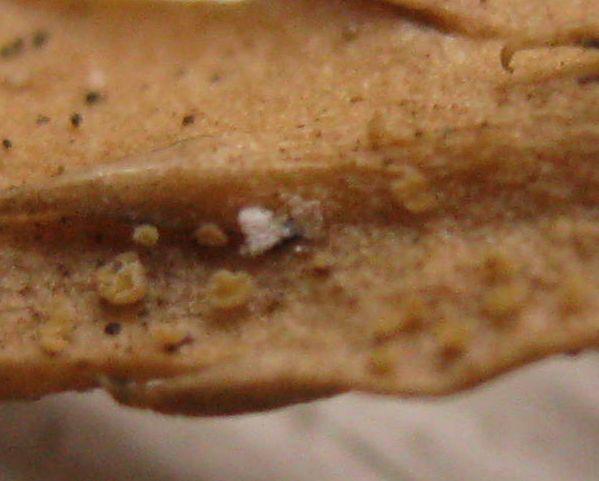
I collected yesterday Urceolella pani and noticed, that these ones were yellower.
I luckily decided to study them, too.
These are about 0,2 mm wide.
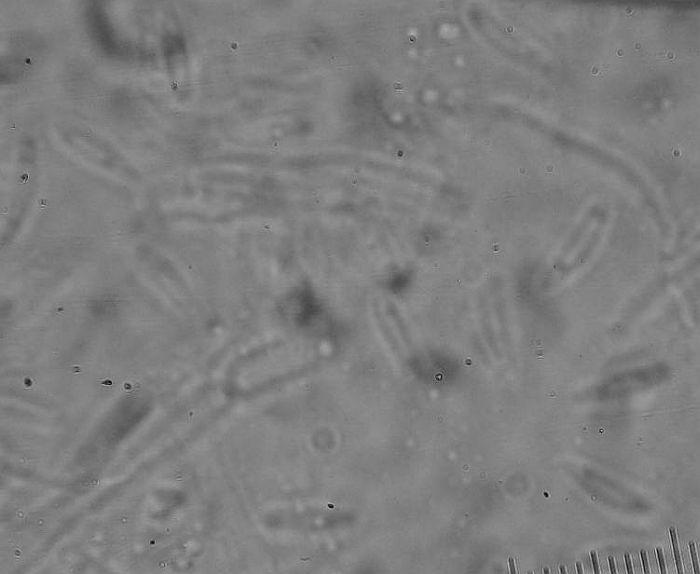
The spores are with two polar droplets, about 5-7x1.5.
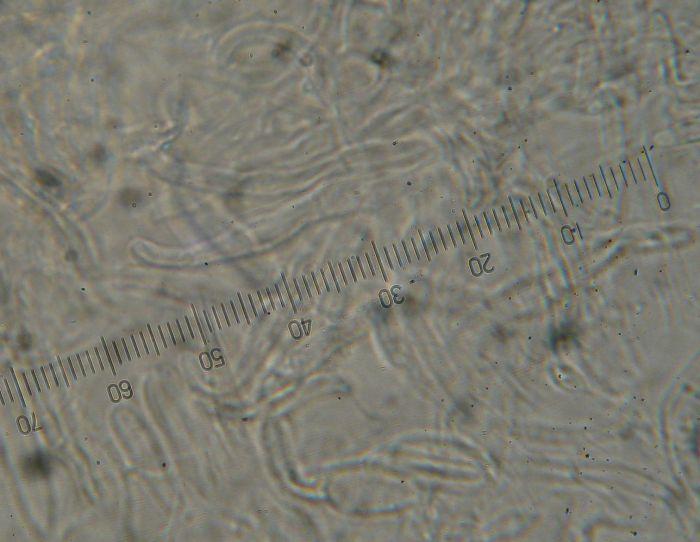
The asci are about 30-35x4-5, propably IKI blue.
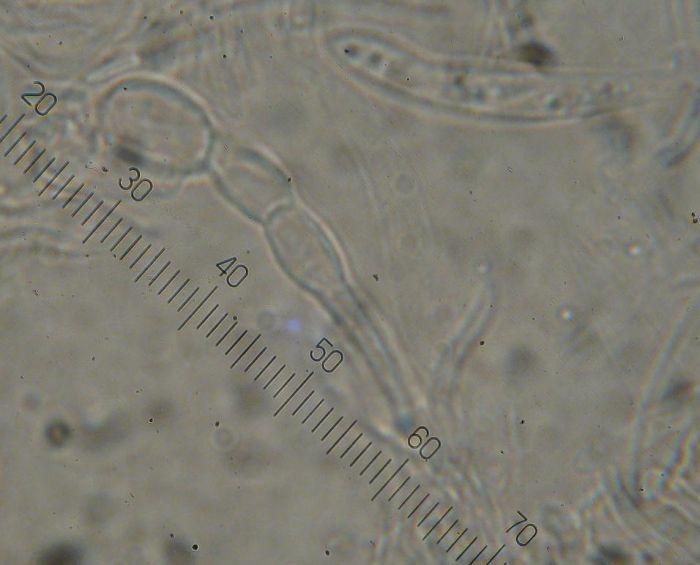
The hairs are septate (1-3), may be bent, about 20-35x3-5.
A Psilachnum species or something else?
Marja
Peter Püwert,
21-10-2015 00:07

Re : On Diphasiastrum (Lycopodium) complanatum
Hi Marja,
I had this also already on D. complanatum, could not address to him. In the next came Hamatocanthoscapha cf. lariciconis to HOLM et HOLM (1981) "Ascomycetes on Nordic Lycopods", microscopical also according to the Yours.
Regards Peter.
Marja Pennanen,
21-10-2015 01:00
Re : On Diphasiastrum (Lycopodium) complanatum
Hi Peter,
once again I had forgotten that Karstenia article. Thank you for reminding me.
H. laricionis is a good option. The yellowish colour and a bit wide and peculiar hairs makes me wonder, weather these on Lycopodium are an own variation or even species.
Marja
once again I had forgotten that Karstenia article. Thank you for reminding me.
H. laricionis is a good option. The yellowish colour and a bit wide and peculiar hairs makes me wonder, weather these on Lycopodium are an own variation or even species.
Marja