
06-05-2026 17:23
Thomas Læssøehttps://svampe.databasen.org/observations/10594257
06-05-2026 11:25
 Castillo Joseba
Me mandan el material seco de Galicia (España) re
28-04-2026 20:07
 Lothar Krieglsteiner
... on twig in the air at standing Ceratonia siliq
05-05-2026 22:40
Gernot FriebesHi,I believe this is a Plagiostoma growing on a Sa
04-05-2026 18:13
 Stephen Martin Mifsud
ID request for what seems to be a true aquatic fun
04-05-2026 16:39
Stephen Martin Mifsud
ID request: This specimen was collected in Malta o
28-07-2011 18:31
 Alex Akulov
Dear FriendsToday I made the pdf file of Velenovsk
04-05-2026 09:50
Castillo Joseba
Me mandan el material seco de Galicia,(España) re
02-05-2026 12:42
Alain BRISSARDBonjour à tousJeuidi 30 avril dernier on m'a remi
Pulviné, s/ Typha latifolia
Luc Bailly,
29-06-2011 23:06
 Bihain toujours, massif de massettes, sur gaines pourries.
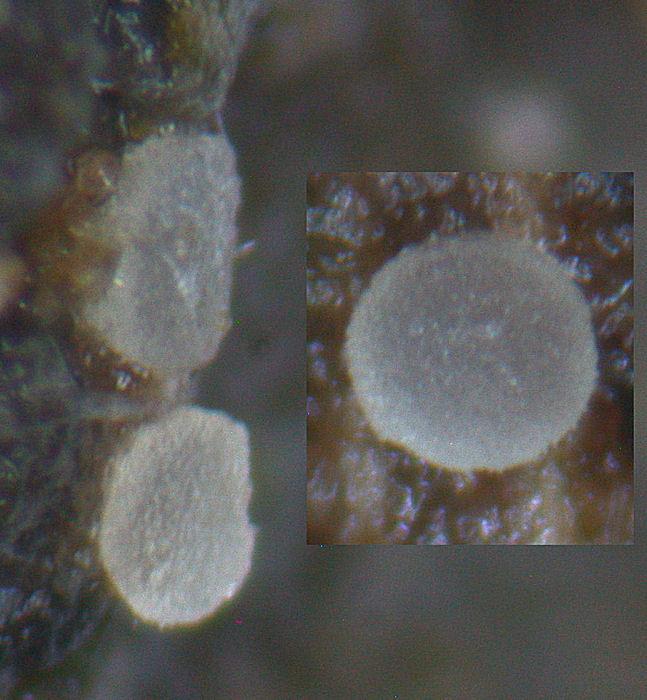
Apoth. pulvinées, sessiles, "charnues", minuscules (1/4 mm), complètement furfuracées, cendrées par la translucidité, apparemment hyalines, à marge émoussée à peine visible. Pas très mûr.
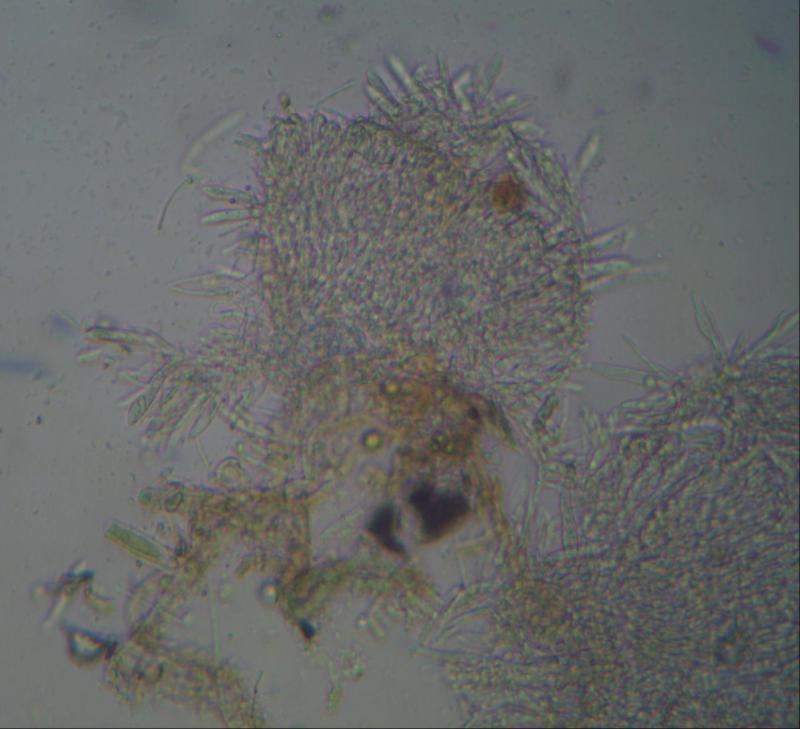
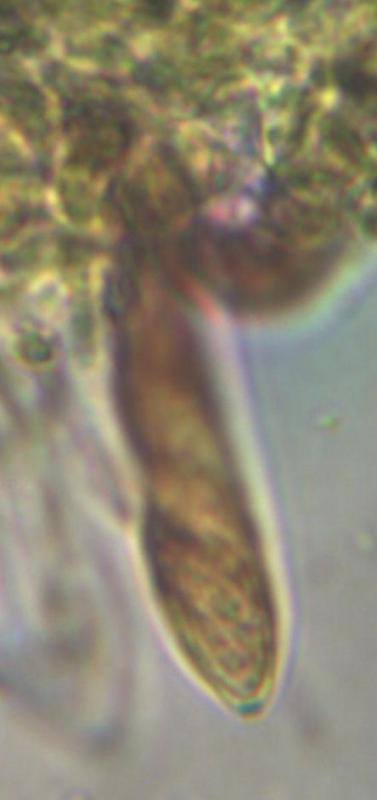
Asques 8-sp., sp. bisériées; IKI BB
Sp. mesurées dans l'asque (spécimens pas assez mûrs) 9-10.5 x 2.5-3 µ, hyalines, huile = 0; quelques inclusions sont visibles une fois les sp. hors de l'asque.
Paraphyses cylindriques, un peu renflées au sommet, ne dépassant pas les asques, hyalines, avec quelques inclusions, x 1.5-2 µ.
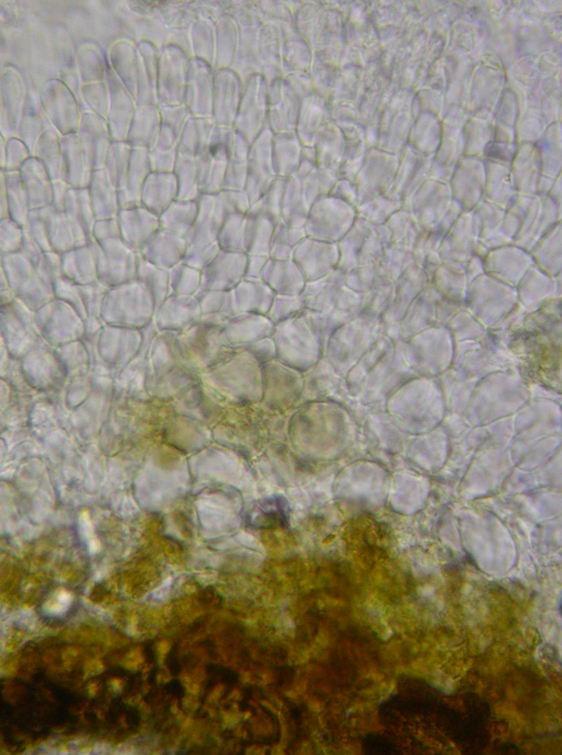
Exc. ectal de texture pseudoparenchymateuse; pas de poils.
Une idée?
Amitiés - LUC.


Hans-Otto Baral,
30-06-2011 07:54

Re : Pulviné, s/ Typha latifolia
Hi Luc
that belongs perhaps in the group of "Helotium" microspis. I cannto tell at present if there are several species which might deserve that name, and which is the correct one.
In England we ha d an abundant collection, but spores were longer and narrower there: *8.3-12.7 x 2-2.7 µm?.
Zotto
that belongs perhaps in the group of "Helotium" microspis. I cannto tell at present if there are several species which might deserve that name, and which is the correct one.
In England we ha d an abundant collection, but spores were longer and narrower there: *8.3-12.7 x 2-2.7 µm?.
Zotto
Hans-Otto Baral,
30-06-2011 08:02
Re : Pulviné, s/ Typha latifolia
here another photo. How is it possible to add several photos at once?

Alain GARDIENNET,
30-06-2011 09:50

Re : Pulviné, s/ Typha latifolia
Hi Zotto, it's easy : when you join a photo, you click on "Nouvelle photo" (or perhaps "new photo" for the english users).
Alain
Alain
Luc Bailly,
30-06-2011 10:59
Re : Pulviné, s/ Typha latifolia
Thank you, Zotto.
If needed, I know the place quite well, I can check and see if I find further specimens if needed.
Cheers - LUC.
If needed, I know the place quite well, I can check and see if I find further specimens if needed.
Cheers - LUC.
Hans-Otto Baral,
30-06-2011 12:26
Re : Pulviné, s/ Typha latifolia
Alain: I clicked nouvelle photo after adding the first, but then the first was replaced by the second.
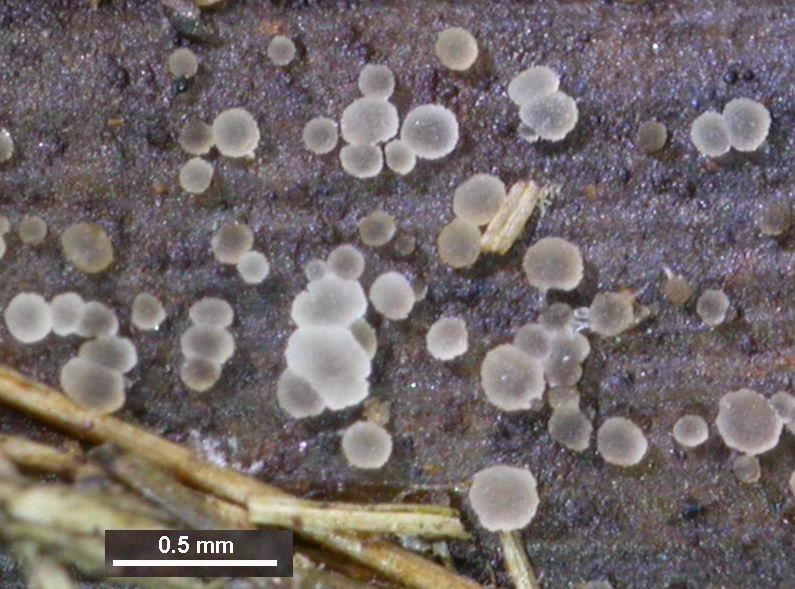
Here I add a macro of the English find on Juncus
Here I add a macro of the English find on Juncus
Hans-Otto Baral,
30-06-2011 12:30
Re : Pulviné, s/ Typha latifolia
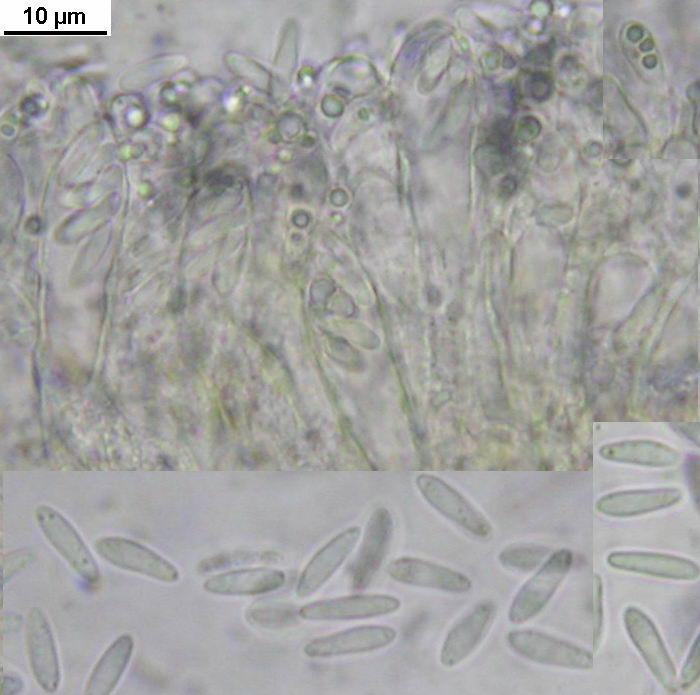
Luc, your collection might perhaps better fit to the present one (Mecklenburg, on Glyceria), because of the spores. But this has striking VBs in the paraphyses and marginal cells, which I did not see in the one from England. Maybe your specimen was not alive enough. So if you find it again, please have a look for these inclusions.
Now I try to attach two images....
Zotto
Now I try to attach two images....
Zotto

Hans-Otto Baral,
30-06-2011 12:32
Re : Pulviné, s/ Typha latifolia
Doesn't work. I attached a drawing by Stip, with the same VBs in the paraphyses, so probably the same species. Here the Glyceria-find:
Luc Bailly,
30-06-2011 14:14
Re : Pulviné, s/ Typha latifolia
Hi Zotto,
This is very similar, indeed. Okay, I'll check for better samples the next time I visit that bog.
It was very close to the water surface indeed, at the point I'm not surprised it could be an aquatic species.
Cheers - LUC.
This is very similar, indeed. Okay, I'll check for better samples the next time I visit that bog.
It was very close to the water surface indeed, at the point I'm not surprised it could be an aquatic species.
Cheers - LUC.