

22-04-2026 20:17
 Marian Jagers
Is anyone familiar with the Hyphomycetes genus Pse
22-04-2026 20:54
 Enrique Rubio
Hi to everybody.This Pyrenopeziza grew in moist le
22-04-2026 01:06
 Richard VALERI
Bonjour à tous.Je vous présente cette Nectria s.
21-04-2026 13:36
Gernot FriebesHi,I am out of ideas for this one. I collected Sal
21-04-2026 13:19
Gernot FriebesHi,this Lophodermium on Typha has ascospores measu
21-04-2026 13:05
Gernot FriebesHi,this hyphomycete feels familiar but I was not a
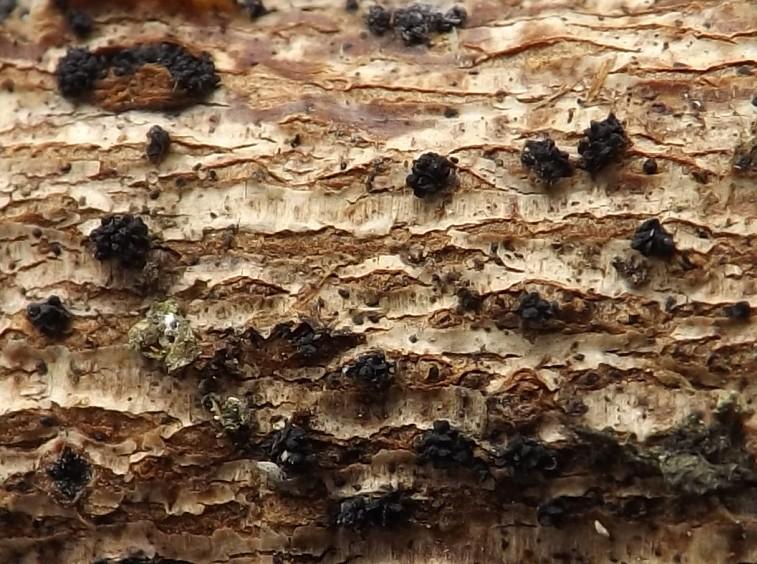
Gibberella sp? on Acer.
Mirek Gryc,
22-03-2021 14:23
Hi.
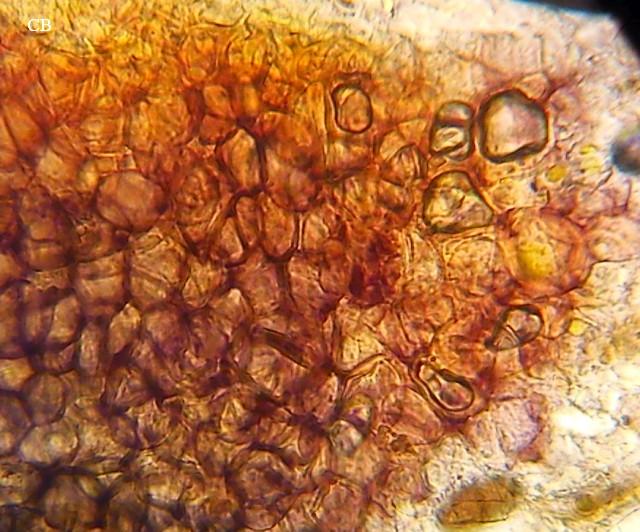
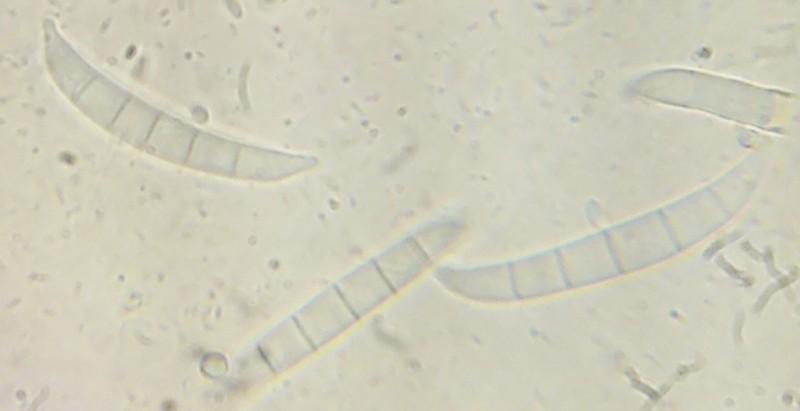
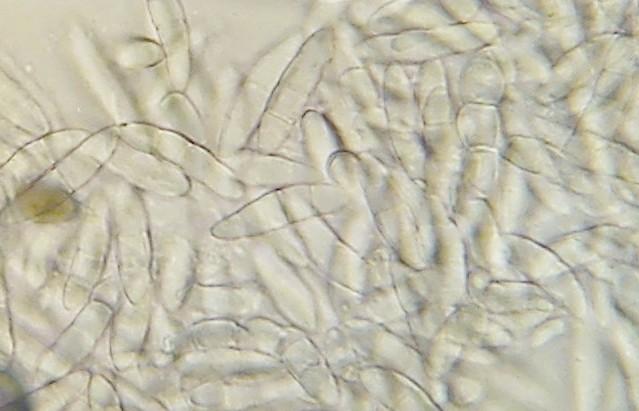
Many times I found species from this kind but have usually missed conidiophores. This time, however, both forms occur at the same time almost in every sample collected so I think conidiophores belongs to this species.
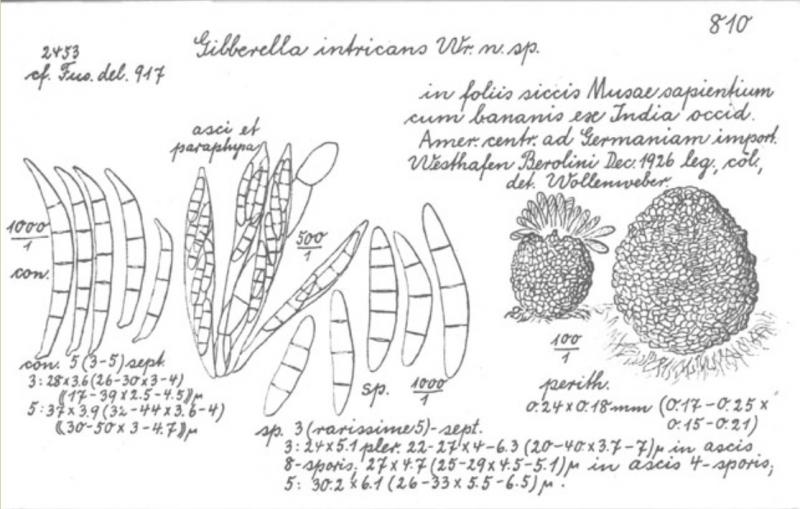
I looked through all the available articles on Gibberella but nothing could match. Finally, I found a drawing of Gibberella intricans, Wollenweber, H.W. Fusaria Autographic Delineata, EDN 3: I, 660-1100: 810 (1930).
In principle, all features match my collection.
Initially measured the spores overripe, I did not fit their width. I found a less mature fruiter whose spores with sizes correspond to those from the engravings.
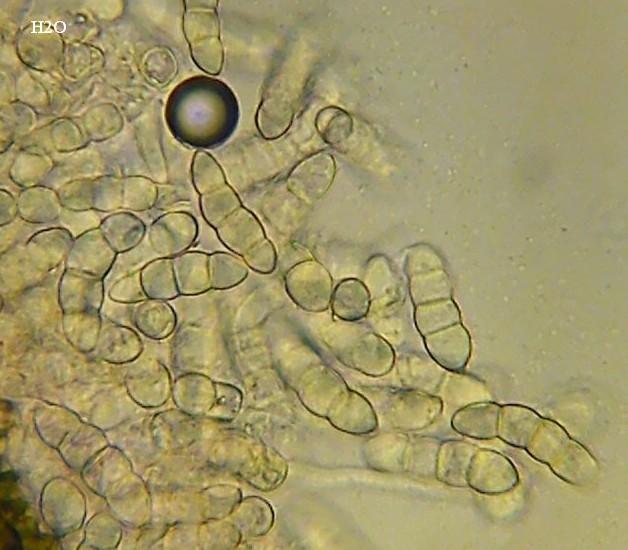
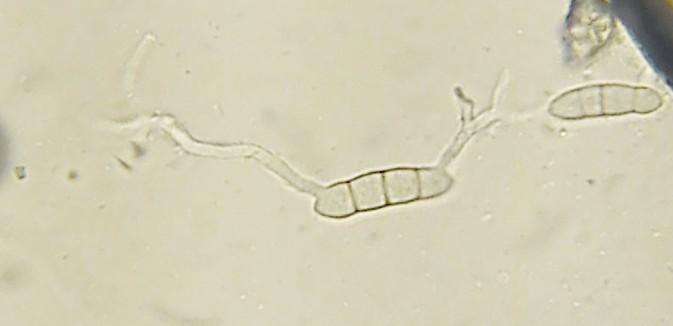
Relevant note is that the spores are in most 3-septata (rarely 5-septata).
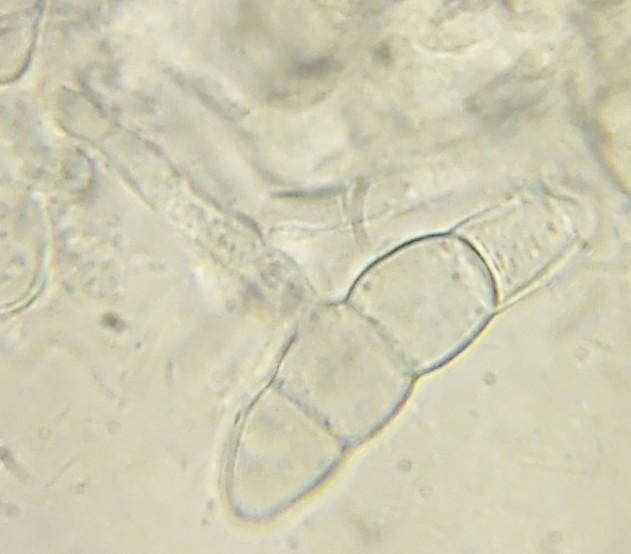
Spores;
(27.7) 27.8 - 31.2 (31.5) × (5.3) 5.9 - 7.3 (7.5) µm
Q = (3.9) 3.94 - 5.27 (5.3) ;
Me = 29.1 × 6.6 µm ; Qe = 4.4
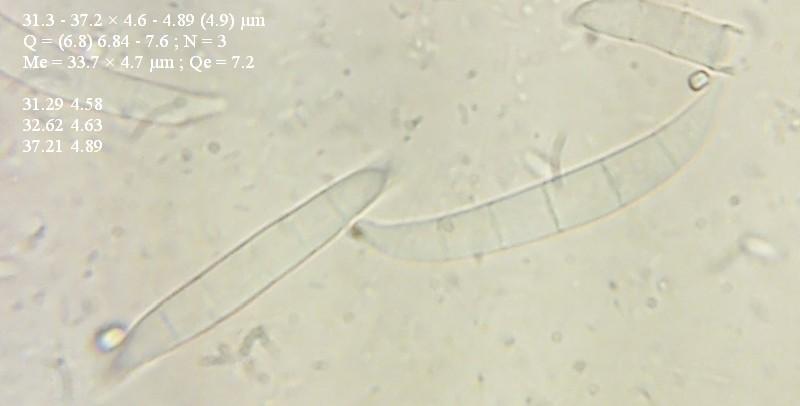
Conidia
31.3 - 37.2 × 4.6 - 4.89 (4.9) µm
Q = (6.8) 6.84 - 7.6 ;
Me = 33.7 × 4.7 µm ; Qe = 7.2
However, I am wondering a very poor reaction to KOH?
What is your opinion on it?
greetings
Mirek

Bernard Declercq,
22-03-2021 17:49

Re : Gibberella sp? on Acer.
Hi Mirec,
This is clearly a Fusarium ss. str.(syn.: Gibberella).
Compare with lignicolous species Fusarium lateritium Nees, ascospores as well as 3(5)-septate conidia seem to match.
Bernard
This is clearly a Fusarium ss. str.(syn.: Gibberella).
Compare with lignicolous species Fusarium lateritium Nees, ascospores as well as 3(5)-septate conidia seem to match.
Bernard
Mirek Gryc,
22-03-2021 19:43
Re : Gibberella sp? on Acer.
Hi Bernard.
Again, I had to look a bit of literature about it and compare my.
It seems to me that you are right. Features very good fit to the genre that you offered.
Thank you very much
Mirek
Again, I had to look a bit of literature about it and compare my.
It seems to me that you are right. Features very good fit to the genre that you offered.
Thank you very much
Mirek